
Loading the latest stories…
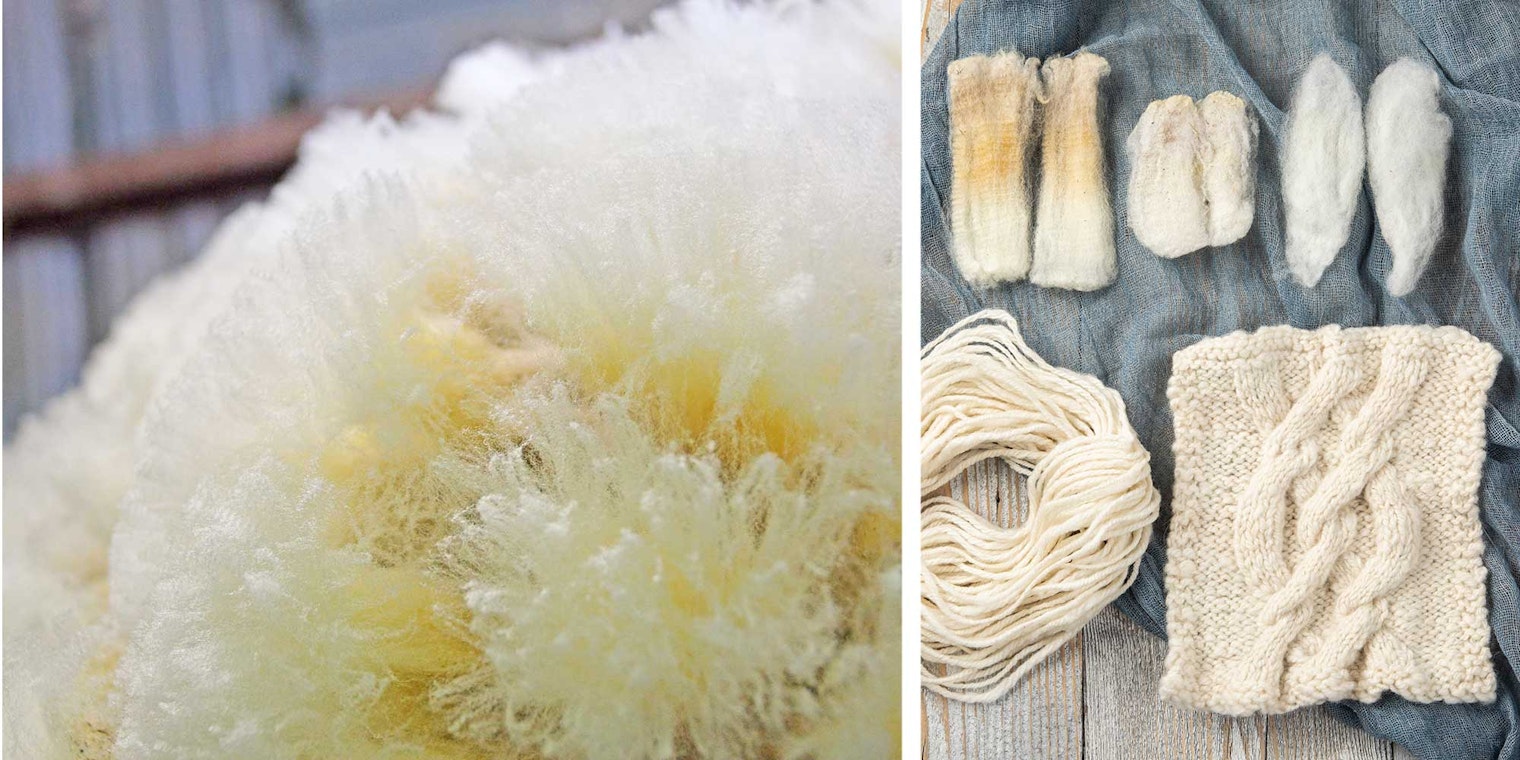
What makes Targhee a dream for knitters and weavers? Well, for starters, this springy, bouncy, medium-finewool holds its shape beautifully and is comfortable next to the skin.
Maggie Casey4 min read
Years ago I knit a vest that is still one of my favorites. At the time, it was quite an ambitious project since it was two-color knitting in the round and involved cutting steeks—all things I had never done. But I had fallen in love with some dyed Targhee braids that had just arrived in the yarn shop that I co-owned at the time, so I spun some yarn, made a gauge swatch, and started knitting the Four Corner Vest, by Cheryl Oberle. The spinning and knitting gods must have been very kind to me back then, because I finished the vest without any problems. Years later, that vest still looks great. It hasn’t pilled or stretched out of shape, it drapes just as it should, and the steeks are as strong today as when I did them.
 Maggie's knitted vest demonstrates how well Targhee wears over time. Photo by Maggie Casey
What I knew then: the fiber was pretty and the pattern was very well written, with excellent instructions on cutting steeks. What I know now: I had unknowingly chosen a perfect wool for the vest. Targhee is a soft, lofty fiber with elasticity that holds its shape and wears well.
Targhee sheep were developed at the Sheep Experiment Station in Dubois, Idaho, in 1926. The plan was to create a dual-purpose sheep that could handle the climate of the cold, arid west, and produce high quality wool as well as meat. Rambouillet rams were bred with Lincoln/Rambouillet or Corriedale ewes and the lambs were then backcrossed. The Rambouillet side of the cross provided a fine, crimpy wool but with a shorter staple length, while the Lincoln/Rambouillet and Corriedales provided length and strength. Depending on who you reference, Targhee is classed as either a fine or medium wool. The staple length of fiber is 3–5 inches (I haven’t found any Targhee with a 5-inch staple, but I’m still looking). The micron count is in the 21–25 inch range. Targhees are named for the forest they grazed on and that forest is named for Chief Targhee, a member of the Bannock Tribe.
At the 2023 Spin Off Autumn Retreat (SOAR) last October, one of the classes I taught was Targhee: A Sheep of the Wooly West. In the class, we spun a variety of Targhee preps, from handwashed locks to commercially prepared fibers that included hand-dyed braids and blends. We compared the yarns and came up with ideas for their use. The class is long over, but I am still spinning Targhee. I’m spinning it in as many different ways as I can imagine and then swatching. Each sample gives me more information, and results in more questions and more ideas.
Editor’s note: Learn more about spinning with Targhee and find inspiration for projects to make using Targhee in the following roundup of articles and projects.
 Top row: Debbie Held's Targhee socks and shawl. Bottom row: Renee Strouts's crocheted socks combine Targhee with Merino and Barbara Daiker's handwoven jacket features her handspun cabled yarn. All photos courtesy of the authors
Top row: Debbie Held was positive that she didn't love spinning Targhee as much as other sheep breeds and blends—that is, until she tackled an unfinished pair of socks. To her surprise, she discovered that spinning Targhee—especially as a sock yarn—is actually a rewarding and stellar endeavor. And Debbie explained that the handspun used in her beautiful striped shawl exhibits the essence of Targhee: a soft wool with bounce. Her advice? Spin and knit what you love (which is the reason she has knitted so many shawls)!
Bottom row: Renee Strouts’s crocheted socks are a great example of how Targhee plays nice with other types of fiber! Once she settled on a project that would use some of her growing stash of handspun leftovers, Renee used a mix of Targhee and wool and enjoyed changing the colors often, resulting in this colorful striped pair. And this beautiful handwoven jacket was the result of Barbara Daiker's goal of making an entire garment, which had to be multicolored so she wouldn't get too bored with spinning a single color, and had to feature a yarn that could handle the reed and tension of a floor loom. According to Barbara, she chose Targhee for its ease of spinning and lovely bouncy hand.
 Devin Helmen washed and rewashed the somewhat-sticky Targhee, which makes processing easier and allows more VM to fall out during processing.
Devin Helmen set out to make a hat using something soft and lofty, and thought that Targhee would be a good choice. The fleece had dirty tips that remained even after washing, and parts of it had fairly large amounts of vegetable matter, so Devin set out to card the wool. In the end Devin found out that, due to the nature of Targhee fleece, it easily dropped all of its gunk!
Ready to give Targhee a spin? Share your photos with the Spin Off team via our email address.
Maggie Casey is the author of Start Spinning (Interweave, 2007) and numerous spinning videos, including Start Spinning, Getting Started on a Drop Spindle, Predrafting for Spinning, and Big and Lofty Yarns, all of which can be found in the Long Thread Media Shop here. She loves teaching spinning because she learns so much from her students.
More from Spin Off
 Celebrate a Century of Targhee SheepThis beloved cousin of Merino turns 100 this year.Spin Off Contributors · July 22, 2026
 Her Handspun Habit: Why Targhee Makes For Great Handspun, Handknitted SocksI was sure I didn’t much like spinning Targhee, nor did I love knitting socks. That is, until I came across a pair of socks so sensational that they called into question whether I knew myself at all.Deborah Held · December 25, 2023
 Your Finished Object: Epic JacketA handspinner sets a goal to challenge herself, and the result is a stunning handspun, handwoven jacket, featuring cabled yarns.Barbara Daiker · June 2, 2021
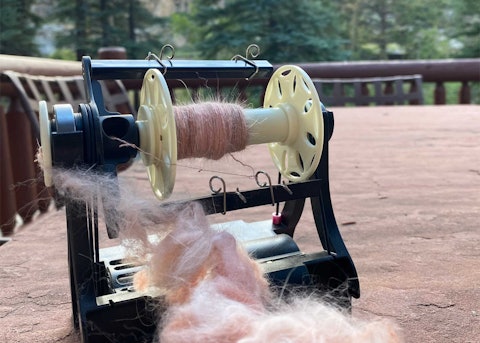 Tour de Fleece 2026: Check Point, Plus How Do You Tour?We’re checking in on Tour de Fleece progress, planning for Tour de Femmes, and we want to hear from you!Stefanie Johnson · July 17, 2026
 Twisted Love: An Artist Measures Twist & GristJoin Sahara as she talks about her approach creating yarns for a variety of projects.Sahara Briscoe · July 15, 2026
 Getting Started with Wool CombsJoin us as we start a new course with expert instructor Heavenly Bresser, and discover the secrets to successful wool combing.Pamela K. Schultz · July 8, 2026
 Spin Off Submissions Summer 2027: Summer BreezeTell us how you make summer spinning and fiber prep a breeze. Submit your idea for the Summer 2027 issue today!Pamela K. Schultz · July 6, 2026
 Wrapping Up 5 Ways to Prep and Spin a Braid As this course comes to an end, the Spin Off community reflects on colorful discoveries and celebrates the joy of learning through hands-on experimentation.Spin Off Editorial Staff · July 3, 2026
 Tour de Fleece 2026: Getting StartedWhether you want to spin a little or a lot, there’s space for you in the Tour de Fleece!Stefanie Johnson · July 1, 2026
 Choosing the Whorl to Make the Yarn You WantMake your wheel work for you by learning how ratios help you spin yarn with just the right amount of twist and thickness.Rudy Amann · June 26, 2026
Comments
No comments yet — be the first to share your thoughts.
Sign in to join the conversation — commenting is for signed-in members.