
A Short Spin on Natural Dyeing
Surprise and delight are often a given in natural dye experiments. But this author also found solace and healing.
By Linda Perry
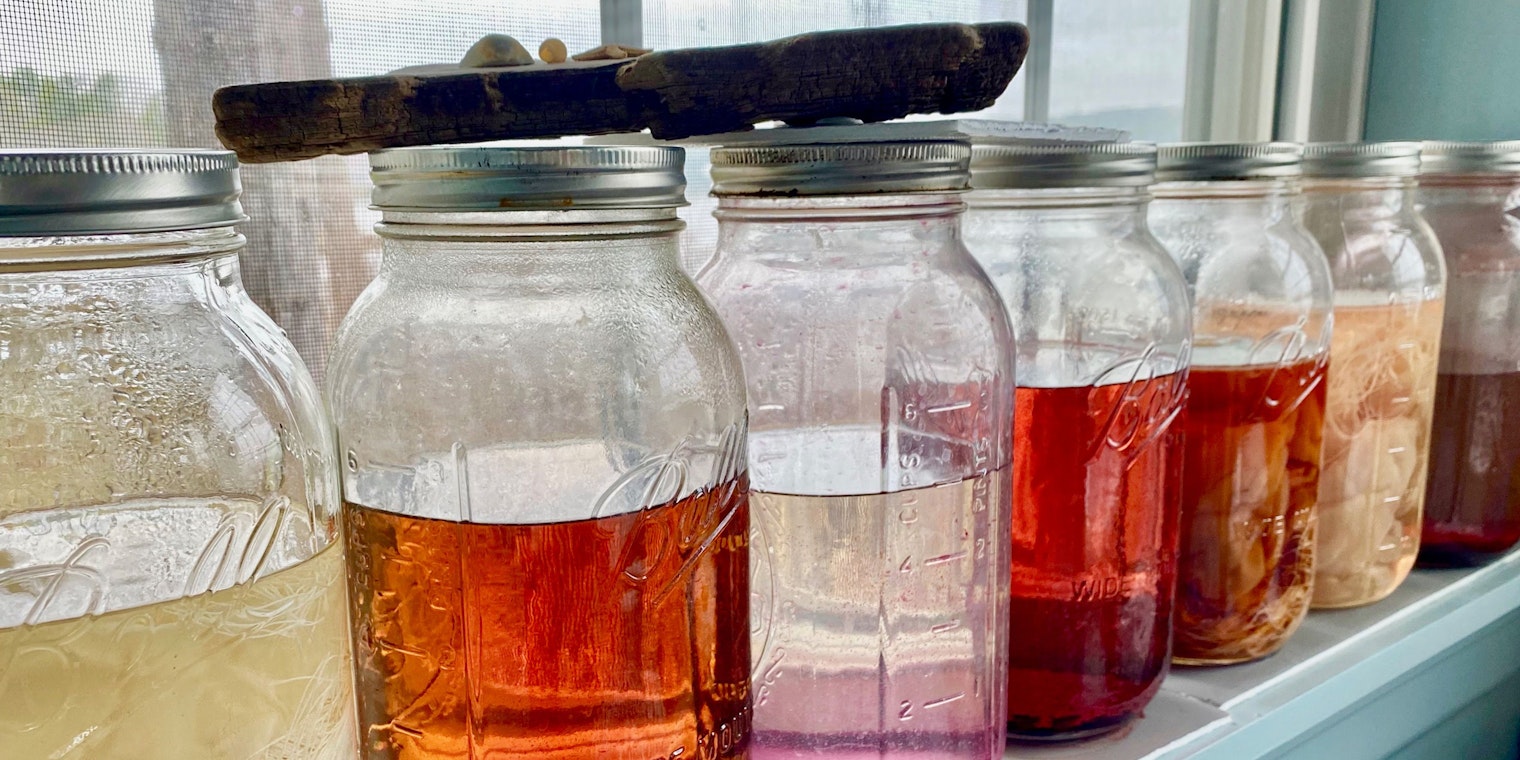
I am a fiber artist living on a small island in Maine, where I spend probably too much time dyeing and experimenting with natural dyes. My specialty is indigo, which I have been doing for about a decade, with both yarns and fabrics.
 Fall Out. A more relaxed experimental dyeing day, reflecting on the quiet changes of the season.
During the year of the pandemic, however, I had a transformative experience. You see, to me, the word “dyeing” is such an oxymoron to the word “dying”. When I dye, I am in a creative state of excitement, very much alive, and almost adrenaline crazed. But, exactly as the pandemic hit, my dad suddenly passed away—a whiplash kind of effect, and something that so many of us have similarly experienced. I needed to switch gears, and I threw myself into a productive frenzy. I found that during lockdown I had to look close to home for my resources for dyes other than indigo.
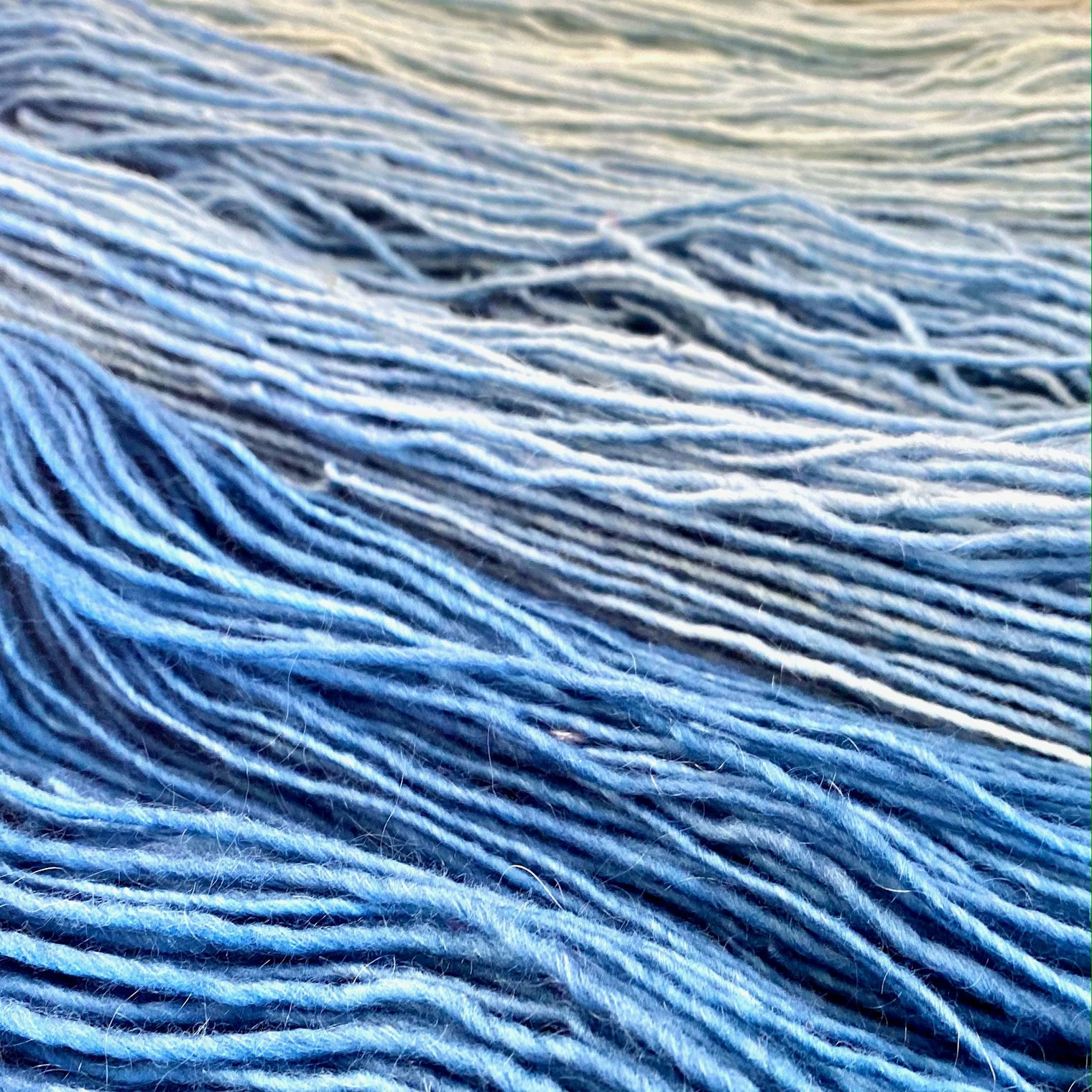
When I typically dye 24 skeins per session, I will get the first 6 skeins a deep blue, the next 6 a medium blue, the next 6 a paler blue, and the last 6, when the kettle is nearly exhausted, a very faint blue color resembling sea glass. I categorize and name the shades in order: High Tide, Ebb Tide, Slack Tide, and Low Tide.
I scoured my kitchen, my pantry, pulling out anything that would remotely work as a natural dye: beets, spinach, frozen blueberries and strawberries, red grapes, onion skins, turmeric, tea, and I even scrounged a little maraschino cherry juice! Next, I dove into my stashes for available natural cloth and yarns. Ready to dip!
Voila! I went crazy—no limitation, no formulas, like a wild child. I found so much peace in this therapeutic activity, such satisfaction. It truly saved my sanity and gave me solace from grief. And the best thing about it, I did it all in my dad’s kitchen. We lived next door to each other and we loved cooking meals together daily. It was special to be able to walk into his home and feel recovery through creativity. Cheers to his maraschino cherries—he made a mean Manhattan!
Maine seasons with a reason. Where living and creating is easy, just as life should be.

Winter's end: Merry melting moments with a backyard playground of shoreline and solar dyeing.
Resources
- Find recipes for easy natural dyeing experiments in the Easy Peasy Natural Dyeing eBook.
- Learn more about the joy and ease of solar dyeing.
Originally published October 6, 2021; updated April 24, 2026.
Dyeing Resources for the Beginner Dyer
Are you interested in dyeing your handspun yarn or fiber but need some beginner resources to help you follow along? We’ve gathered a few of our favorite resources to help you get started.
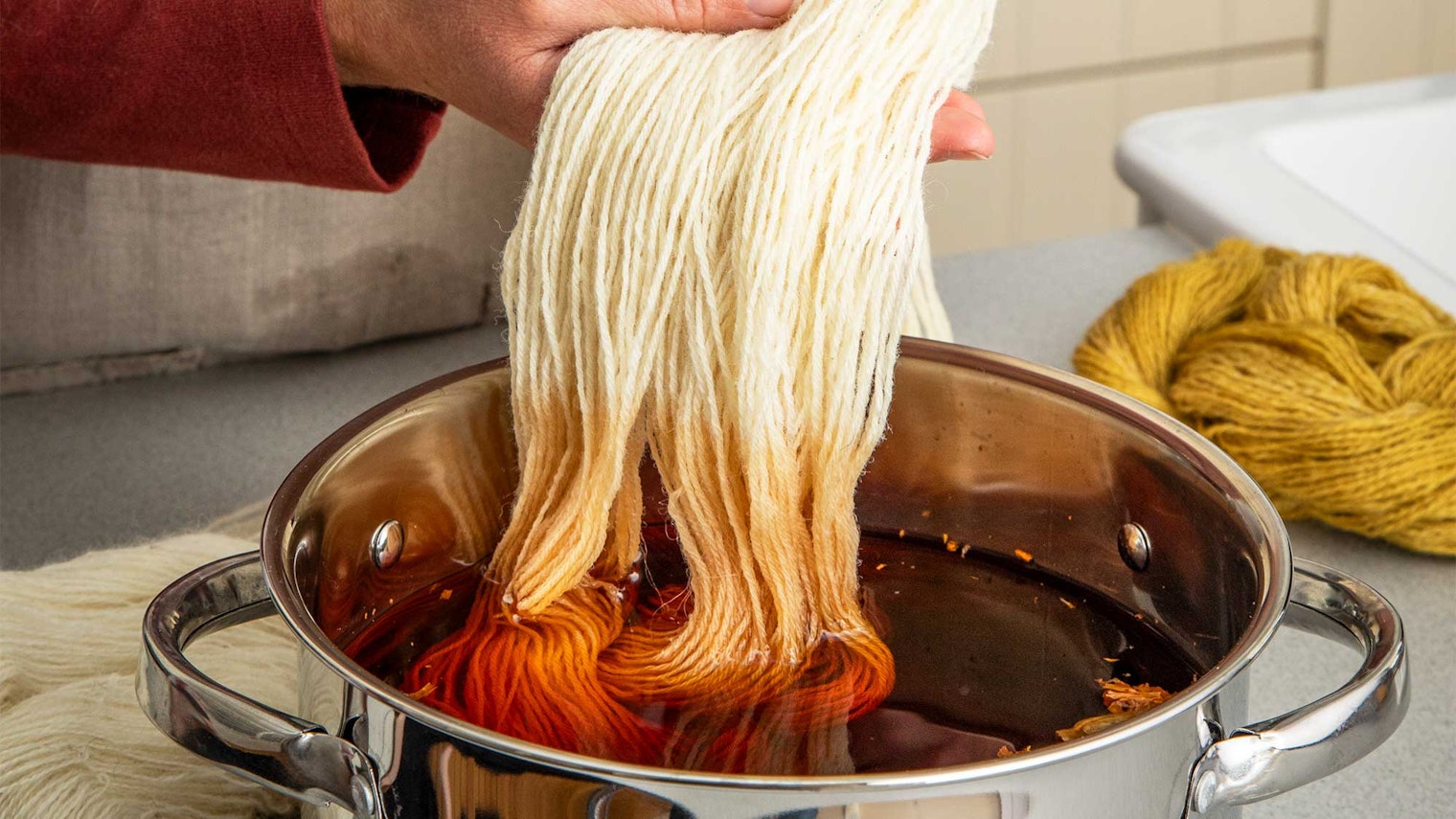
If you’re new to dyeing, it might be difficult to determine where to start, but learning how to dye your own yarn and fiber is easier than you might think. Here, we’ve gathered a few of our favorite resources to help you get started. Dyeing is fun to do and a wonderful way to experiment, whether you’re a beginner or a more seasoned spinner. As color expert Deb Menz says, dyeing your own yarn and fiber will yield a unique collection of yarns that aren’t available commercially.
Resources for the Beginner Dyer
Natural Dyes
There are different ways to approach natural dyes. Perhaps you are a forager, seeking color from yard waste, roadside plants, kitchen scraps, and even your spice cabinet. Or maybe you are interested in ancient dyes from around the globe, such as indigo, madder, cochineal, and more. Most dyers do a bit of both, and we have resources to get you started.
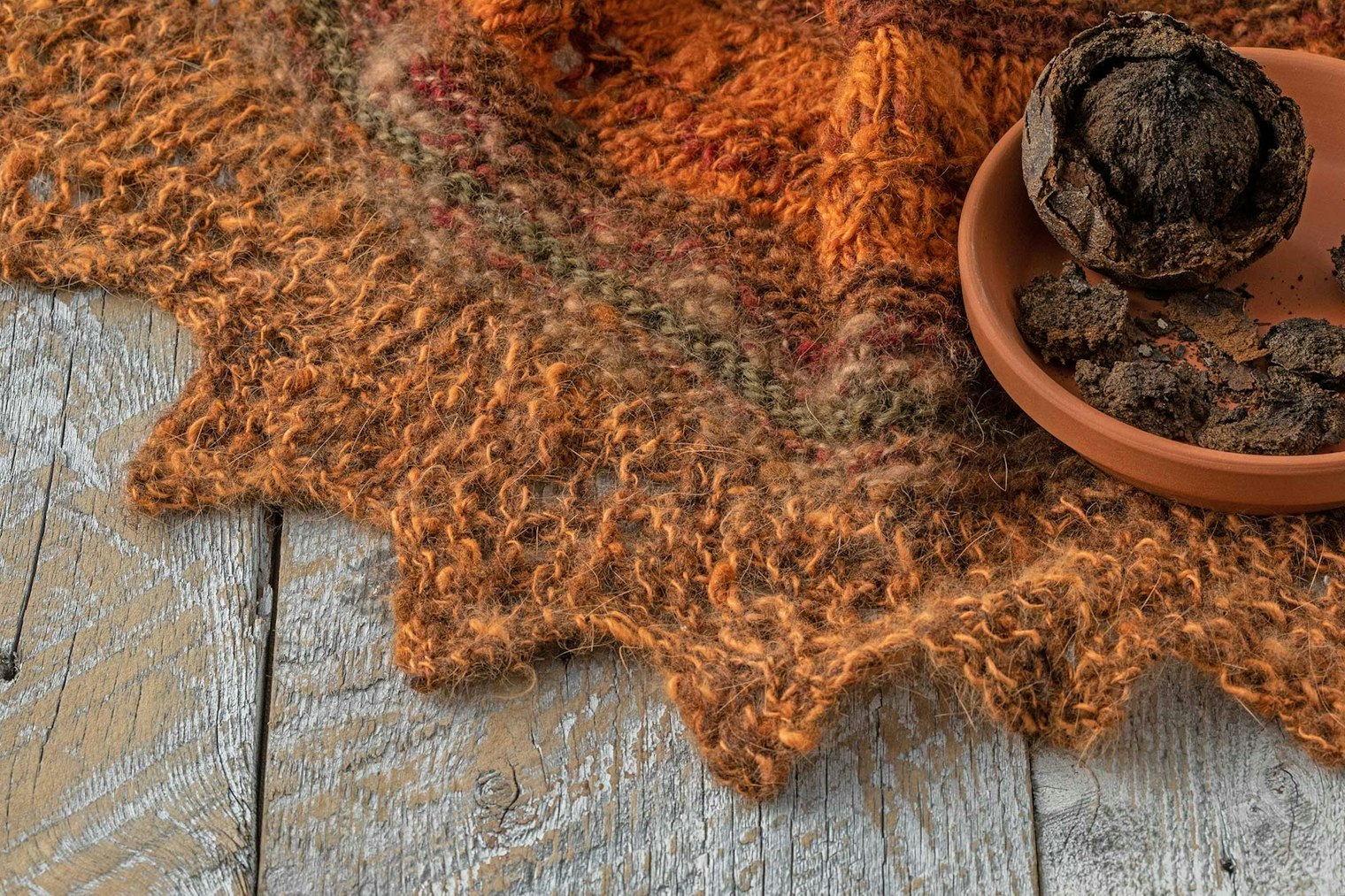
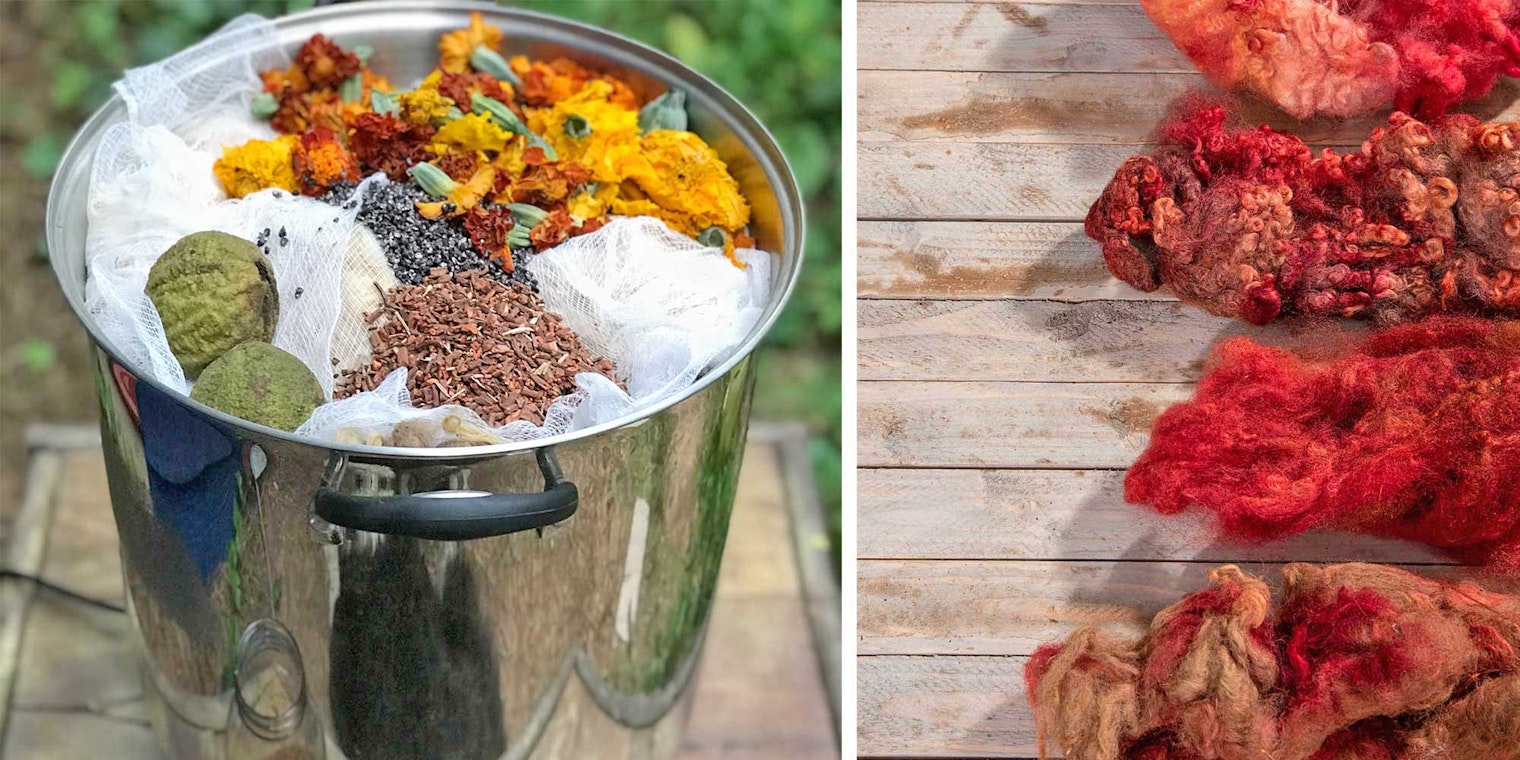
 From left: Dip your toe into natural dyeing as these authors have done with solar dyeing, marigolds and other plant material, and black walnut hulls. Photo credits (left to right): Sylvia McFadden, Martha Owen, and Devin Helmen
Easy Peasy Natural Dyeing eBook
Natural Dyeing with Dagmar Klos video download
Overdyeing with Natural Dyes by Dagmar Klos video download—catch a sneak peek below!
“Warm Browns from Black Walnuts” by Devin Helmen web article
“Kissed by the Sun: The Art of Solar Dyeing” by Caitlin Ffrench web article
Synthetic Dyes
Synthetic dyes, which include acid dyes for protein fibers and fiber-reactive dyes for cellulose, can create any color you can imagine with some practice. Find tips for immersion dyeing, resist dyeing, solar dyeing, and more using these resources.
 Synthetic dyes can yield vibrant colors on protein and cellulose fibers. Photo credits: (clockwise, from top left) Kim McKenna, Sukrita Mahon, Matt Graves, and Dyeing in the Kitchen with Deb Menz by Long Thread Media
“Acid Dyes: Step By Step with Mary Berry” web article
Dyeing in the Kitchen with Deb Menz online workshop
“Dyeing Silk Hankies: A Canvas for Color Work” by Kim McKenna, Fall 2007 Spin Off
“Solar Dyeing: Cushing’s Direct Dyes for Plant Fibers” by Joan S. Ruane, Spring 2021 Spin Off
“Handpainting Fiber: Exploring Food and Drink Dyes” by Sukrita Mahon web article
These authors cover the safety precautions you need to take to protect yourself and the environment. Dive into the basics of hand-dyeing yarn and fiber and create the colors you crave.
Also, remember that if you are an active subscriber to Spin Off magazine, you have unlimited access to previous issues, including those mentioned here. See our help center for the step-by-step process on how to access them.
Originally published February 22, 2024, updated October 31, 2025
Ramie: Blending, Plying, and Natural Dyeing
Learn tips for working with the queen of bast fibers—ramie—whether you’re spinning, knitting, weaving, or dyeing. Plus, discover how and why to blend ramie with other fibers.
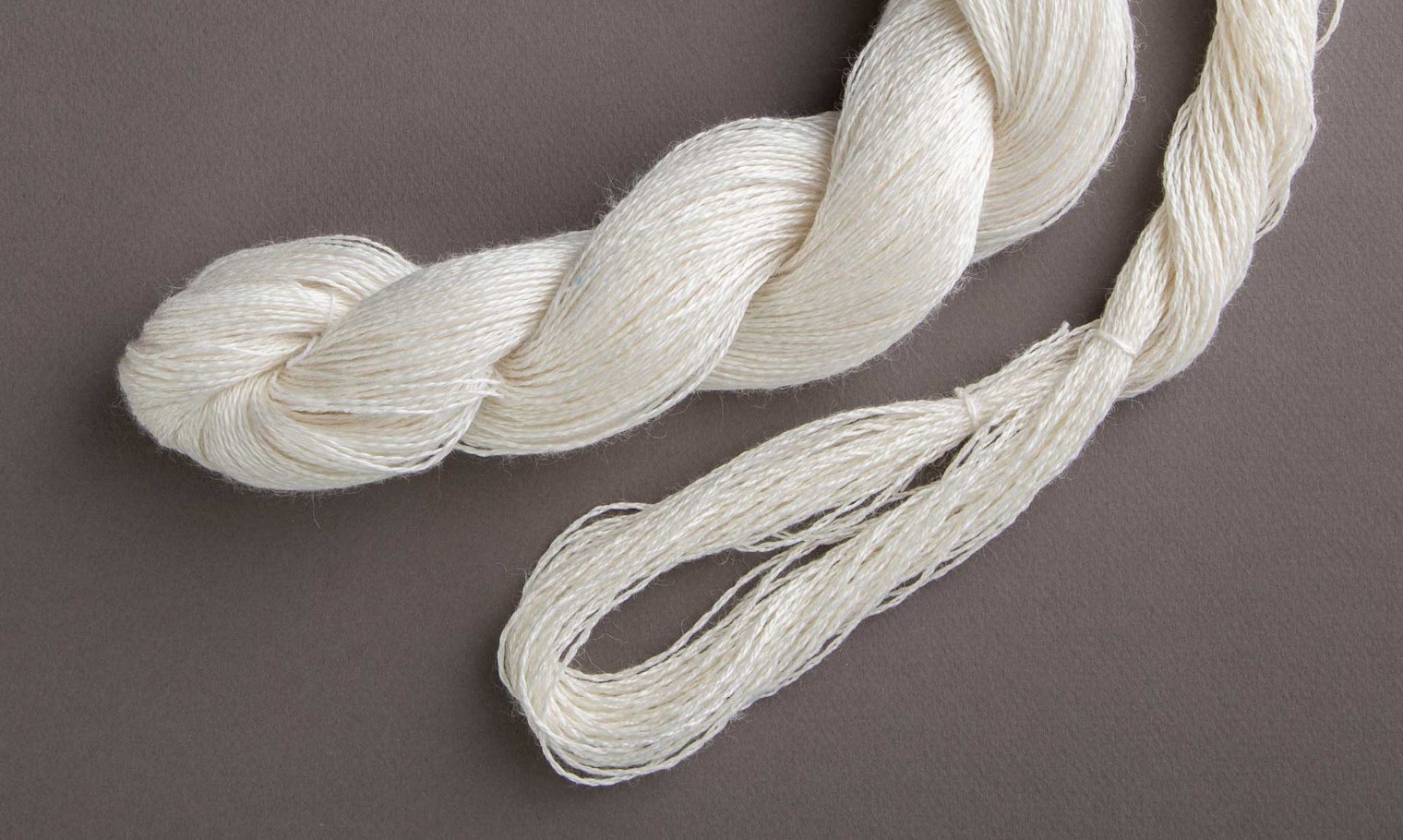
Bast fibers, such as flax, hemp, and ramie, are some of my favorite handspinning fibers. In addition to the pleasure I find in spinning such long, silky fibers, I also appreciate that they are easily grown in most climates and soils and have less negative impact on the environment than many other crops. Bast fibers usually require a fertilized soil but little to no pesticide or herbicide. In many parts of the world, bast fibers have long been used to make fabrics that are durable, comfortable, and easily laundered. Today, we still crave the exquisitely casual yet sophisticated appearance of bast fabrics.
Ramie is the queen of the bast fibers. It has the finest diameter, yet it is stronger and more resistant to wrinkling, shrinking, mildew, acids, and alkalies. Ramie is easy to wash, bleach, and iron, in addition to being absorbent and receptive to dye. The brilliant sheen of ramie fibers and fabrics are often compared to silk; and whether used alone or in blends with other fibers, ramie has a unique silky drape.
This article is for Spin Off subscribers. Subscribe to keep reading or open the full article.
Piece Dyeing: It’s Never Over
Looking for a great way to use up oddball skeins? See how one spinner knitted a shawl from bits of handspun, then overdyed it for a cohesive look!
By Martha Owen
This story starts like an old one, a story of handspun garment design and rejuvenation that begins, “Joseph had a little overcoat. It was old and worn. So, he made a jacket out of it and went to the fair.” Through the story, Joseph’s jacket is remade again and again. He should have tried dyeing!
Piece dyeing is a way to refresh a garment, unify a textile created with many odd bits of yarn, or alter a palette of many shades in a previous over-dye experiment. It is also a way to recover from an “oops!” color combination.
Can this be the same shawl? Click on the images below to get a closer look at Martha's shawl before and after piece dyeing.
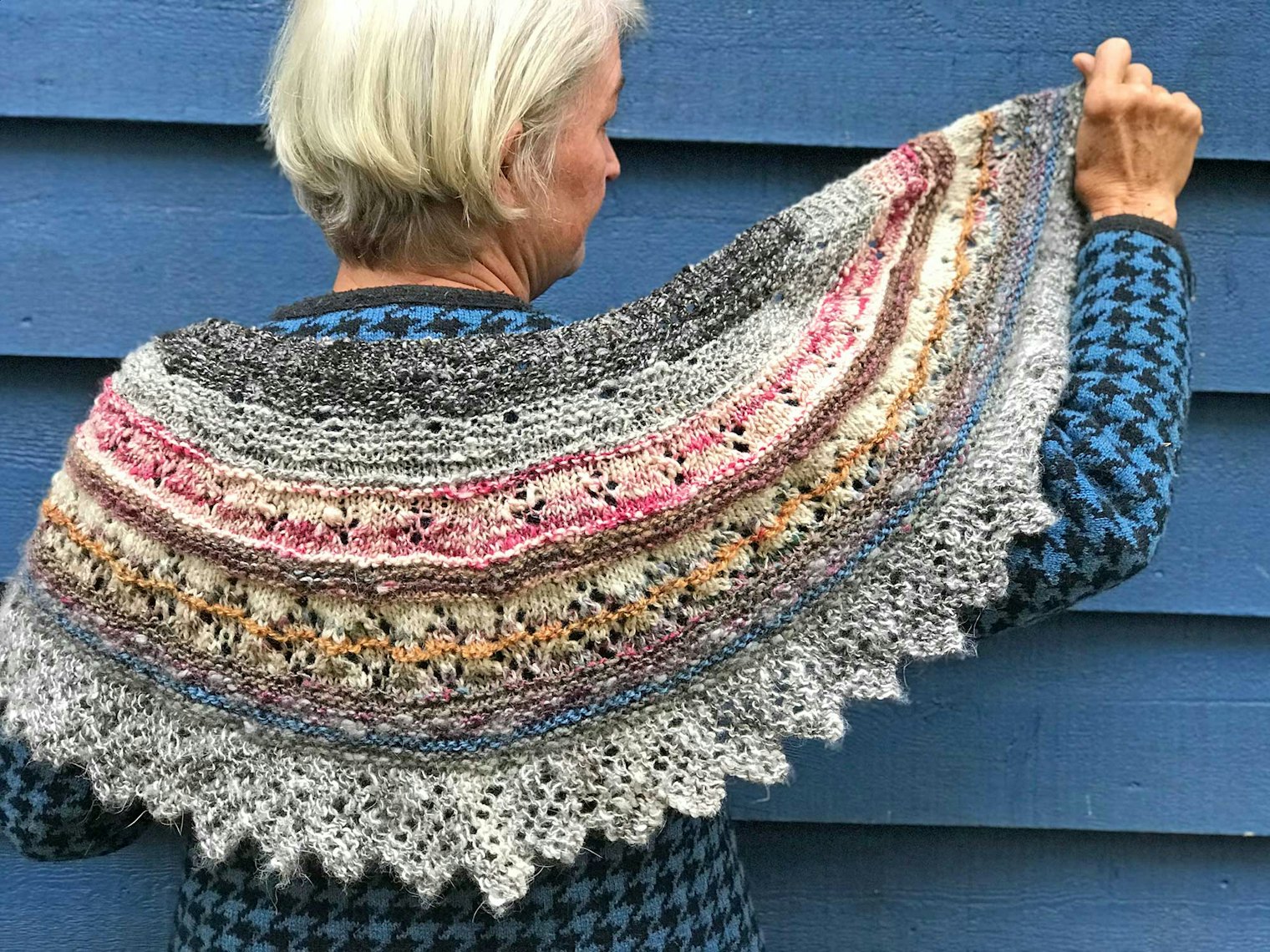
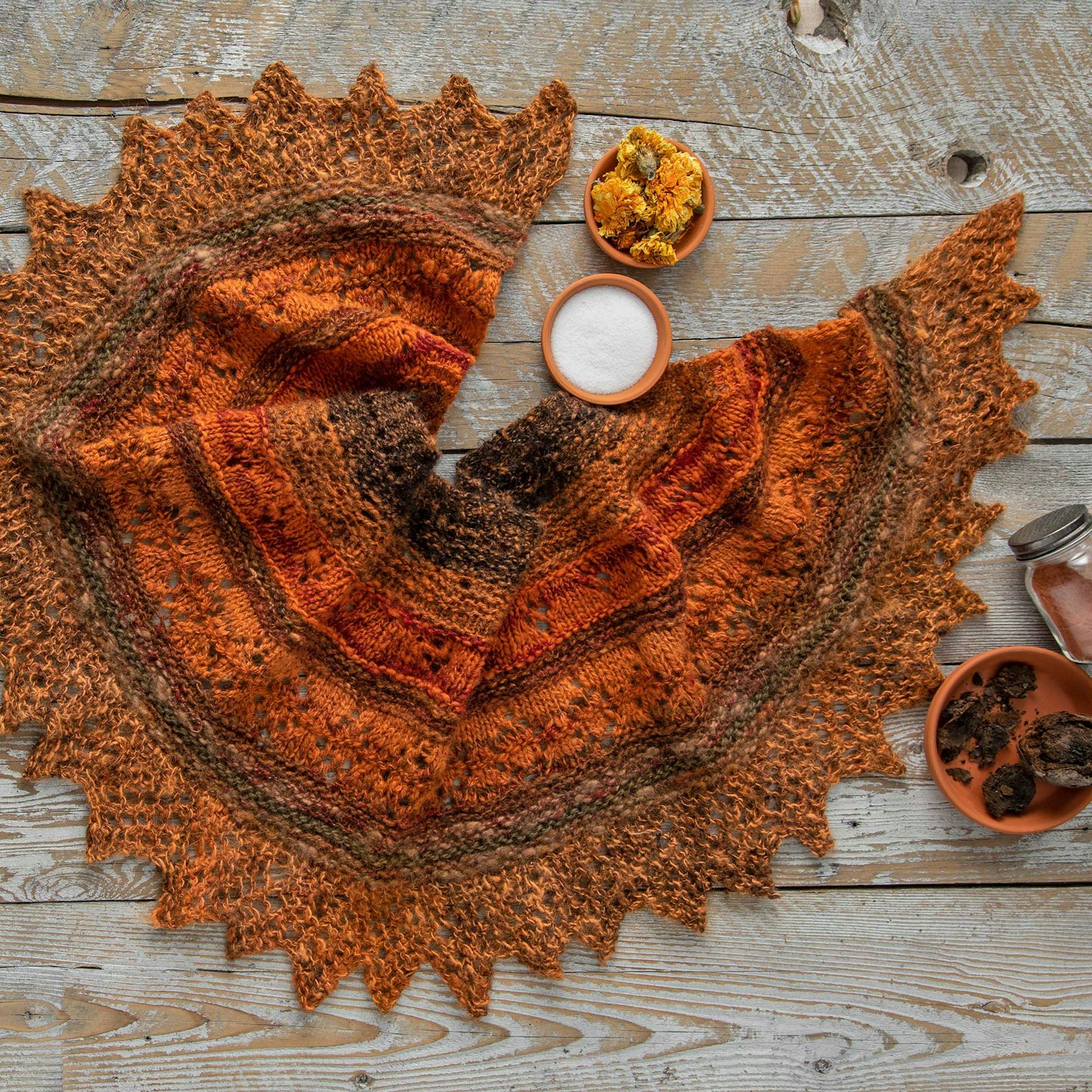
Samples are a nice thing in a well-planned life, but, of course, sampling doesn’t always happen. There is an enthusiasm that moves us from the wheel to the loom or needles! Piece dyeing offers us a way forward that does not involve starting over; it can create a fresh look by adding a uniting color to the entire textile. Close your eyes and imagine dyeing a multicolored sweater:
What will happen if I put the whole thing in a blue dyepot? What about yellow or walnut brown? Will the colors mix or layer?
Creating a Set of Swatches
I searched my baskets of handspun yarns with “no known destiny” and chose bottom-of-the-barrel combinations that were not so satisfying at the start. I chose those that were about the same gauge. These were forgotten odd bits of handspun, gifts of departed spinsters, and leftovers from long-ago
10 Things You Should Try This Year
Is trying a new craft on your list of New Year’s resolutions? See what the Spin Off team wants to try in the months ahead. One of these techniques just might pique your interest as well!
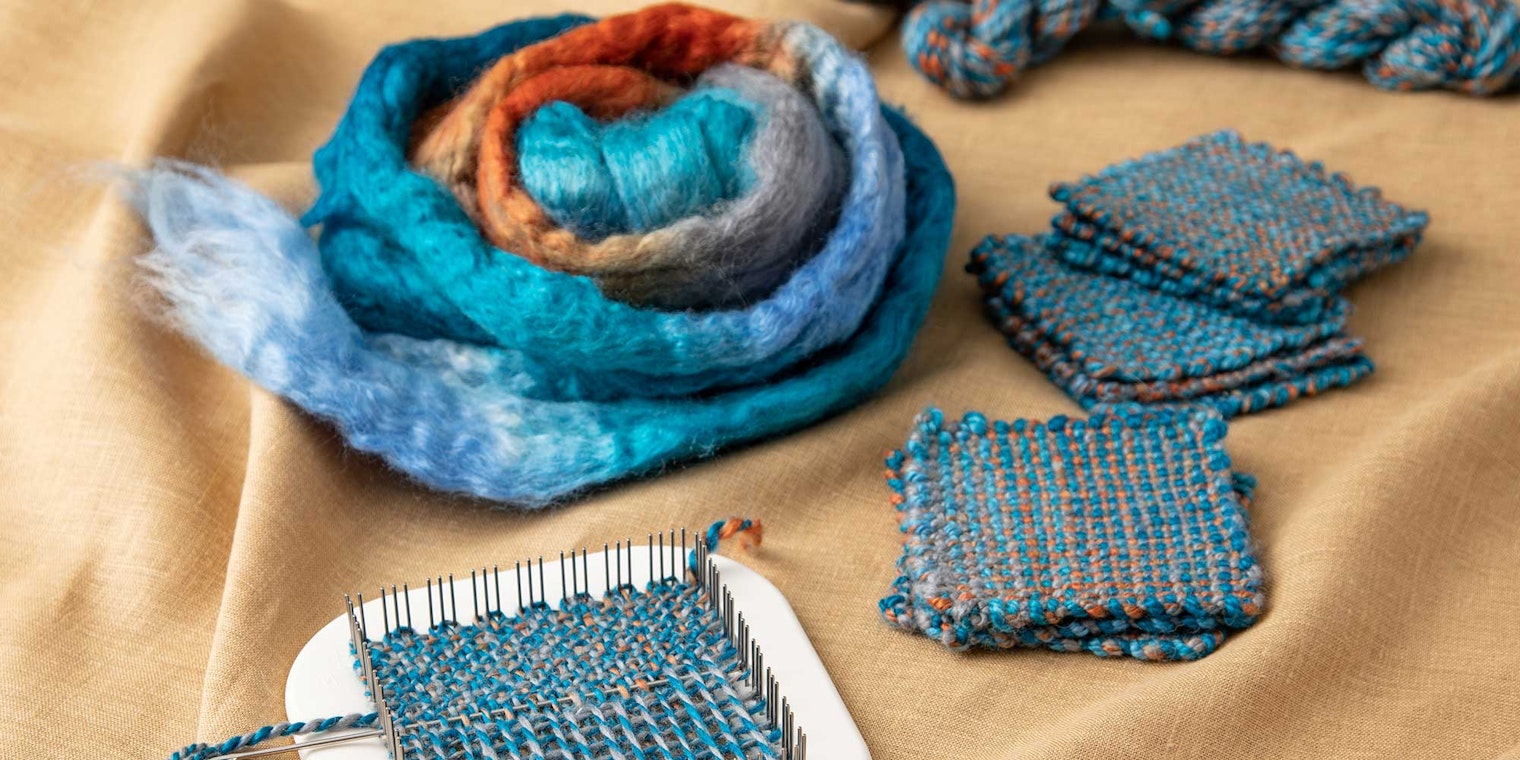
Spin Off editors are hard at work reviewing submissions, curating new content, and editing articles for the next press cycle as the calendar turns to a new year. But we take time for play, too! With crafting for the holidays behind us, are you itching to try something new? Here are our top 10 picks to try in the new year.
Spin Off Editor, Kate Larson
 Kate uses her handspun to repair, mend, and strengthen a favorite sweater. Photo by Kate Larson
1. Mend Boldly
Like all things, mending takes practice. With practice comes skill, but speed and confidence, too. On my to-do list for 2025 is to mend boldly. I love strident mends that add a bit of handspun color and texture to my clothes and home, but I often spend too much time mulling over my approach and materials. Days—weeks—slip by! I have to laugh at my worries about “ruining” a sweater that is currently unwearable because my mend might not be perfect. No more—I shall mend boldly. Will you join me?
Here is a post about choosing fibers for mending, and I created a short video tutorial about using a darning loom. There’s loads more in Spin Off’s “Mend, Renew & Make Do” issue from Summer 2023.
 Devin Helmen uses handspun cotton in their weaving. Photo by George Boe
2. Warping & Weaving with Handspun Cotton
I love spinning cotton—primarily on my charkha, but also on supported spindles and e-spinners. Most recently, I’ve been stitching and knitting with my handspun cotton yarns. But then I came upon Gisela Evitt’s sweet cotton dish-towel article in the All About Cotton eBook, and I’m inspired to gather my cotton odds and ends to weave towels for my loved ones. The eBook also includes knitting and crochet patterns—it’s free in the library!
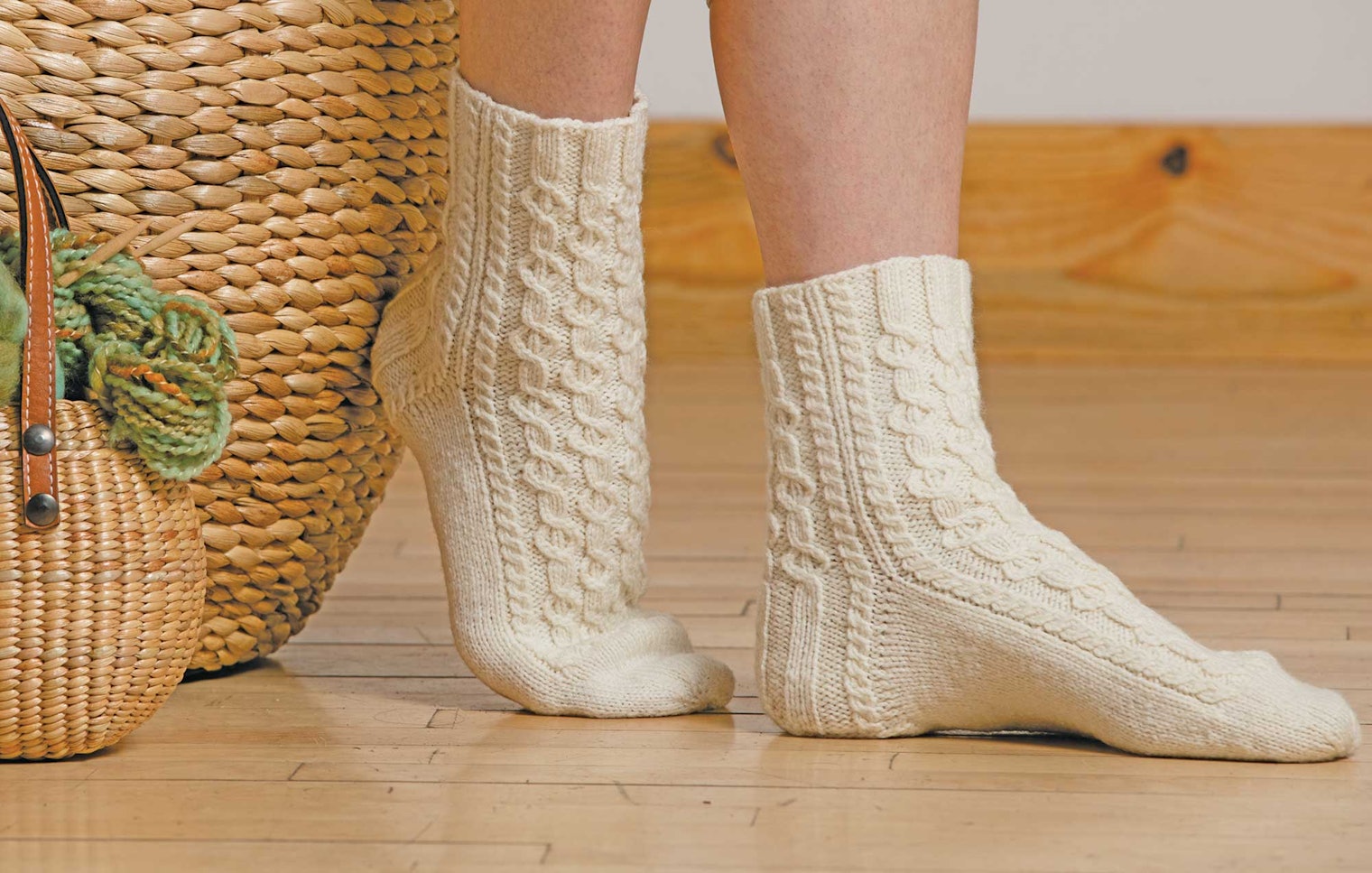 Tuck these cozy Double-Cable Socks into your spinning bag for guild meetings, gatherings, and workshops. Photo by George Boe
3. Cool Your Heels
Like many spinner knitters, I have knitted loads of socks with the same heel technique—a flap worked flat in alternating rows of slipped stitches. I’ve tried other styles, such as band and afterthought heels, that I know fit me better. With my love for sock knitting stirring in my heart this winter, I want to dive deep into a heel study this year. First up: I’ll finish my Socks Fit for a Spinner from Spin Off Fall 2024 with afterthought heels, and then I’ll start spinning for a new pair of the Double-Cable Socks, which combines cabled handspun, a cable-knit motif, and a band heel. Find it in the [Spin Your Socks 3 ebook](https://spinoffmagazine.com/library/185723496) or in Spin Off Summer 2017.
Spin Off Content Editor, Pamela Schultz
 Emonieiesha Hopkins noticed the difference right away between her freshly spun singles and those that were allowed to rest. Photo courtesy of Emonieiesha Hopkins
4. Rest Singles AND Remember to Ply Them
As I organized my spinning stash last fall, I found project after project where all the singles were on storage bobbins, and only one bobbin’s worth of yarn had been plied. It turns out that I’m great at spinning singles and letting them rest. Maybe letting them rest for three or four years is more than enough, so this year I resolve to ply a little bit sooner.
Find out more about resting your singles in Emonieisha Hopkins’s article, “To Rest, or Not To Rest, Your Singles Before Plying.”.
Then get some plying tips in Amy Tyler’s article, “Plying for Balance.”
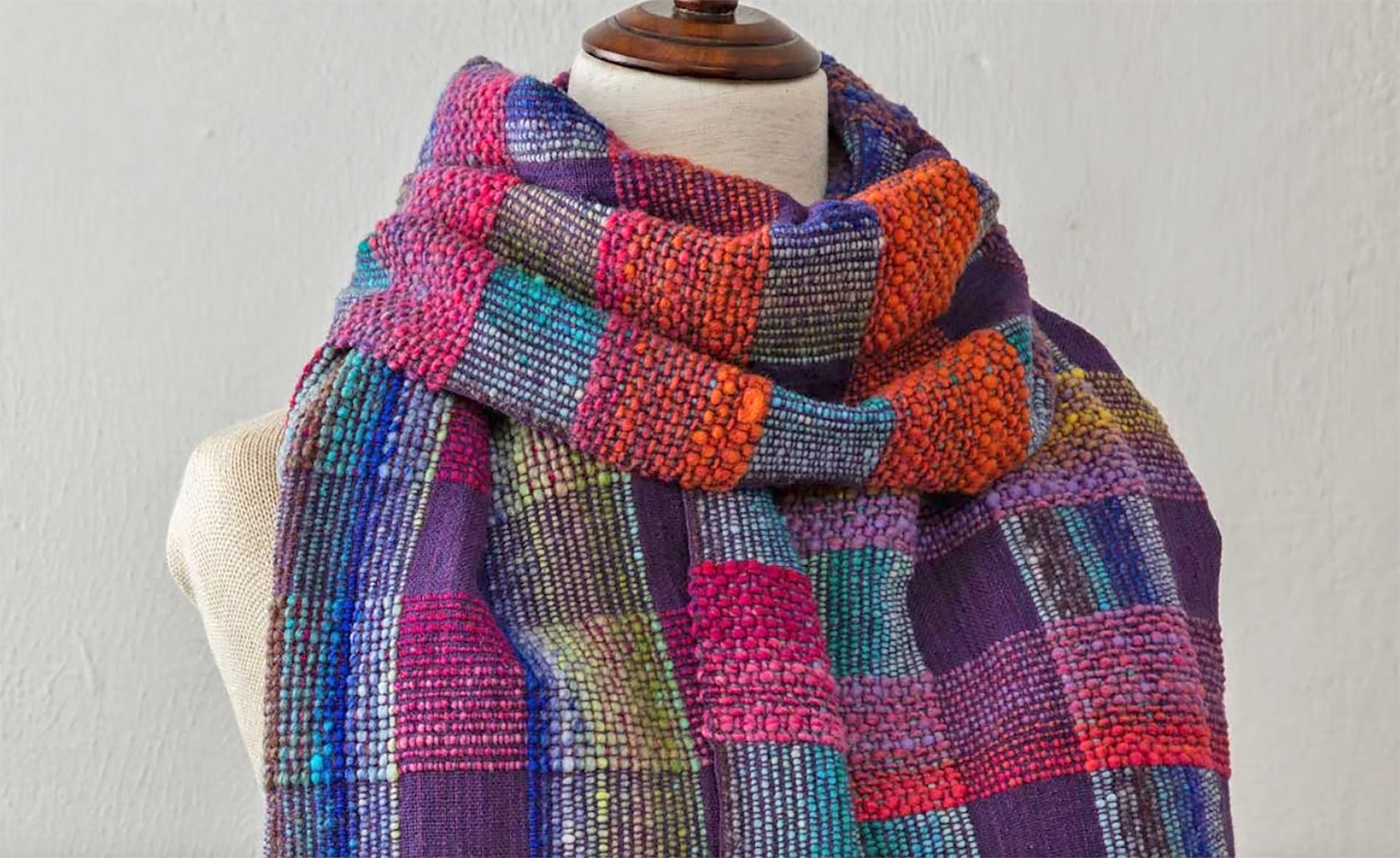 Véronique Perrot‘s Autumn Jewel Scarf uses knitting yarn in a design that combines blocks of diversified plain weave and plain weave. Photo by Matt Graves
5. Weave a Jewel of a Scarf
The Autumn Jewels Scarf combines thick wool singles with a thin commercial cotton yarn for a scarf that’s full of texture and color. While the pattern calls for Noro Kureyon as the wool singles, it would be a great way to stashbust handspun odds and ends (or those singles I keep forgetting to ply).
 Shoelaces are a great beginning tablet-weaving project or a fun, quick project for tablet weavers with more experience. Photo by Matt Graves
6. Spin and Weave a Pair of Silk Shoelaces
Every time I see someone tablet weaving, I think it’s the coolest thing ever. I’m hoping this is the year I finally wrap my head around the technique so I can make a pair of John Mullarkey’s Luxury Laces.
Spun from Bombyx mori combed silk top, a pair of shoelaces only takes 300 yards of 36 wpi two-ply yarn, a fun “spinning snack” in contrast to my usual sweater projects. Woven on an inkle loom, John promises it’s simpler (and quicker) than it looks.
Learn more about tablet weaving in John’s course, Tablet Weaving Made Easy.
Spin Off Associate Editor, Debbie Blair
 Balls of mud-dyed yarns including cottons and raffia. The colors are subtle in some cases, but beautiful. Photo by Susan E. Horton
7. Dive in to Natural Dyeing
During the 2023 SOAR event, I had the pleasure of serving as the classroom assistant for Maki Teshima during her workshop on Japanese dyes. I even got to try my hand at using Bengara mud mineral dye on a piece of linen fabric and a small skein of my handspun! A sustainable way of dyeing, Bengara uses less water than other immersion dyes and is totally doable at my kitchen table (see how the Handwoven and Little Looms editors tried mud dyeing for themselves!).
In addition to doing more mud dyeing, it’s about time I try Annamarie Hatcher’s ideas for using kitchen scraps to add color to my skeins. Read her article, “Exploring Natural Dyes: A Wealth of Color from Your Compost”, then give it a shot!
 The Cathedral Window Blanket by Gabi van Tassell, found in the Fall 2022 issue of Little Looms, combines elongated hexagons and squares formed on the pin loom. Photo by Matt Graves
8. Weave a Little Somethin’ on the Pin Loom
For my busy lifestyle, any craft that I can work on in bite-sized chunks fits the bill. Each time my copy of Little Looms arrives in the mailbox, I find two or three covetable projects that are done using a square or hexagon pin loom, such as these beautiful hexagon projects. I’ll be able to work up one small square at a time and then join them together into a beautiful scarf, handbag, or table runner. Plus, it won’t take much of my handspun to make each hexagon and I can mix and match my skeins.
 Just a little bit of art yarn can make a caressable accessory, like this adorable purse by Kathy Augustine. Photo by George Boe
9. Spin Intentional Art Yarn
I haven’t quite gotten the hang of spinning super-consistent singles time after time. So I would actually classify much of my handspun as thick-and-thin. But then again, I do love the look of chunky textured yarn. And skeins that are full of color? Even better!
Inspired by the photos of Debbie Held’s textured handspun yarn, I vow to spin beautiful (deliberate) textured yarn by first watching Esther Rodgers’s video, How to Spin Art Yarns. Once I get the hang of it, I’ll put my art yarn to use and knit this adorable Locked Up Bag.
 The Cavandoli friendship bracelet pattern lines move diagonally, but this technique is often worked horizontally. Photos by Ann Swanson
10. Learn Cavandoli Macrame
I love reading the end-of-year “wrap up” posts, listing the most-liked, most-visited, most-dowloaded articles across several communities I follow. As I browsed through the list of PieceWork readers’ favorite articles and projects of 2024, the Cavandoli friendship bracelet caught my eye. A form of macrame, Cavandoli utilizes three knots: the half hitch, overhand, and lark’s head. Having learned these particular knots when I was first learning to make jewelry, I know I can use some of my handspun to make one of these Cavandoli-style bracelets or a bookmark.
Have fun trying something new this year! —Spin Off editors
More resources to help you on your journey to trying the techniques listed above:
Mending
“A Spinner’s Take on Visible Mending—5 Top Tips.”
Handspun Cotton
Spinning Cotton Video Download.
“Ideas for Using Your Handspun Cotton Yarn.”
Plying
How to Ply: A Guide to Plying on a Spindle or Wheel eBook.
New Spinner's Guide to Plying Video Download.
Weaving
Long Thread Media weaving courses.
Natural Dyeing
“Natural Dyeing Safely at Home”.
“Dye Recipes from Your Kitchen Cabinets”.
Pin Looms
“Why Pin Looms? Well, Why Not Pin Looms?”.
Art Yarn
The Gift of Learning: Get the Easy Peasy Natural Dyeing eBook
As 2024 comes to a close, our wish is that you give yourself permission to play and learn! As a thank you, we are making our popular natural dyeing ebook free for a limited time.
As 2024 comes to a close, we like to reflect on all we’re thankful for. We are grateful for you, dear reader, as your support keeps us exploring ideas and sharing content that we hope will motivate you to keep growing, learning, doing.
As a thank you to the wonderful Spin Off community, we’ve selected one of our special eBook collections and made it free to everyone through January 15, 2025.
You can find the free eBook, Natural Dye Series: Easy Peasy Natural Dyeing, in the Spin Off Library. All you need to do is create a free account if you haven’t done so already. (If you’re a magazine or All Access subscriber to Spin Off, you’ll have access to even more goodies!)
 Onions, members of the lily family, yield glorious color. Photo by Matt Graves
There are so many reasons that we might hesitate to plunge into natural dyeing. Sometimes we just don’t have the resources—time, brain space, budget, or all three—to devote to a craft that can have a steep learning curve. Or perhaps you are worried about “ruining” good fiber and ending up with a pile of beige skeins.
These are all very real concerns, and we hope we can help smooth your path. Three experienced natural dyers offer some easy ways to get started. Natural Dye Series: Easy Peasy Natural Dyeing includes:
- “An Ode to Onion Skins: Modifying a Humble Dyestuff,” where Madeline Keller-King shows you how to use common grocery items like onion skins, alum, and vinegar.
- “Naturally Beautiful Together: Unite Your Stash with Natural Overdyes,” where Dagmar Klos encourages you to dip into your stash yarns to create a cohesive palette by overdyeing with tea, black walnuts, and marigolds.
- “One-Pot Magic: Surprising Natural-Dye Rainbows,” where Martha Owen shares her “magic pot” method of combining multiple dyestuffs for a fun, multicolor effect.
 With a variegated dyepot, card multiple locks together for slow transitions of color, or flick card and spin lock by lock for shorter sparks of color in your handspun skeins. Photo by Matt Graves
This ebook is only free for a limited time, so get your copy today. Visit the Spin Off library to get your free copy of Natural Dye Series: Easy Peasy Natural Dyeing. We hope you find time to spin and be creative as you wind down this year and forge ahead into the next, and we hope this collection of natural dyeing articles inspires you to do just that.
Dyeing with Buckthorn
After three summers of dyeing, researching, and experimenting with different parts of buckthorn shrubs, I was able to achieve a surprising range of colors on wool.
By Cindy Craft
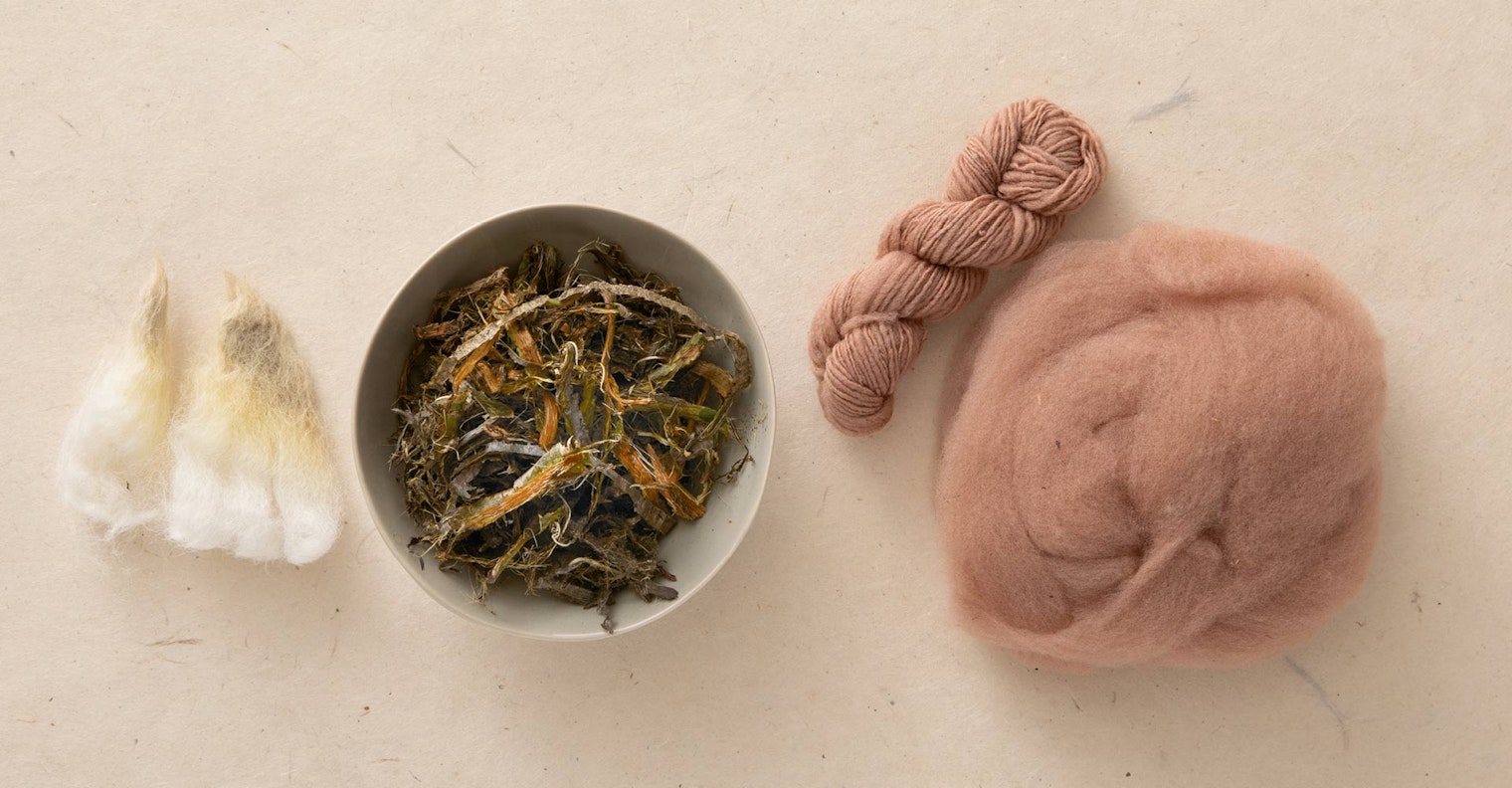
As a natural dyer, I am more of a forager than a grower of dyestuffs. Several years ago, I decided to create a 100 percent locally sourced sweater (see Resources) and began using foraged buckthorn as a dyestuff. A handful of berries that I was able to collect from this invasive shrub in late September gave me a lovely substantive green, which is a fairly unusual color in the world of natural dyeing. This first step led me to three summers of dyeing, researching, and experimenting with different parts of buckthorn shrubs to achieve a surprising range of colors on wool.
What Is Buckthorn?
Buckthorn is a huge genus of shrubs. In my research, I have focused on two of the species in the genus. The first is Rhamnus frangula (also known as Frangula alnus), known as glossy buckthorn, alder buckthorn, breaking buckthorn, or black dogwood. The second species is Rhamnus cathartica, known as common, European, or purging buckthorn. Both species are invasive where I live in Massachusetts, as they are in most of North America. I had been removing glossy buckthorn from my yard long before I discovered its hidden potential as a dyestuff.
Where to Find Buckthorn
If you are an urban dweller living in North America and want to forage for buckthorn, most towns with conservation land and nonprofits who manage land are happy for you to come and collect any and all parts of the two invasive buckthorns I’ve described. (Always seek permission before foraging.) I have an abundant source of glossy buckthorn on my own land. I didn’t know where I could find common buckthorn in my area, so I contacted Trustees of the Reservation, a nonprofit in my area. They were able to put me in touch with folks who manage a park near me with a large stand of common buckthorn. One of the most appealing aspects of dyeing with buckthorn is that I can feel good about cutting down and using up an invasive plant.
The Colors of Buckthorn
Most of my dyeing has been done with glossy buckthorn because there is so much of it near my house. I’ve been able to get four distinct colors from buckthorn and lots of shades within each of those colors on wool. The colors are yellow, green, pinkish-red, and blue. All of the colors have proven to be washfast and relatively lightfast. I have several garments dyed with buckthorn, and most colors do not show evidence of fading. However, I do have one sweater that exhibited noticeable fading after being left in my solarium for a week.
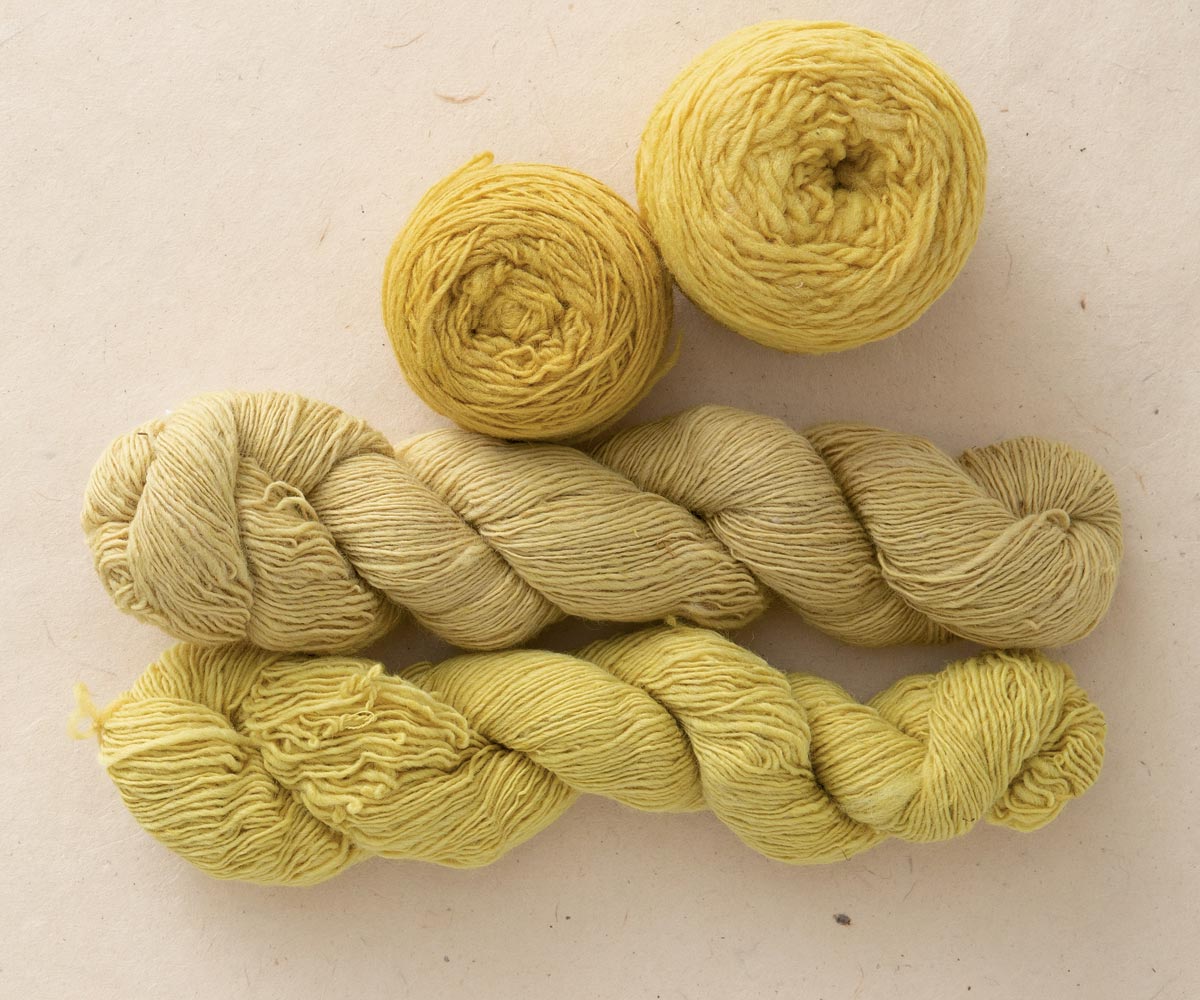
Yellows from buckthorn leaves on wool.
Yellow
Yellow is probably the easiest of all the colors to dye. You can get yellow from the green leaves, green berries, or bark. It’s as easy as collecting a bunch of leaves, throwing them in a pot of boiling water, and adding yarn or fiber mordanted with alum. The leaves produce a very clear bright yellow. The more leaves you use in the dyepot, the more intense the yellow produced. In my experience, green berries have yielded more of a butterscotch color. I have not tried dyeing with bark and water (without other reagents), but I have read that a yellow can be produced that way as well.
Where I live, glossy buckthorn will leaf out earlier than most other trees, and it often keeps its leaves for longer than other trees. This provides a substantial window for collecting leaves for dyeing. I have not tried freezing the leaves and then dyeing with them, but based on my experience with frozen berries, I would be surprised if frozen leaves didn’t dye almost as well as fresh leaves.
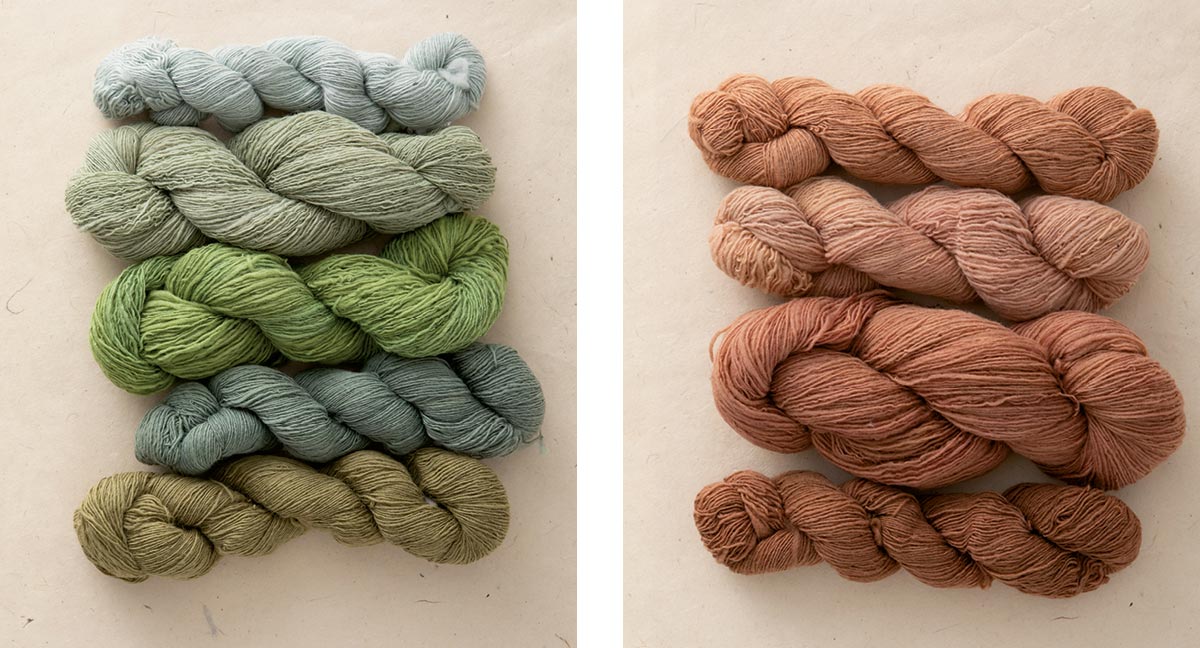
Left: Greens and blues from buckthorn berries on wool. Right: Pinks and reds from buckthorn bark on wool.
Green
Green is also an easy color to get from buckthorn. The plant’s berries turn from green to red to blackish-blue. To get green, you want to collect berries when they have fully ripened to blackish-blue. Glossy buckthorn produces ripe berries from July to October where I live, with the fruit ripening continuously over this period, so there is a large window for collecting. Berries can be frozen and used at other times of the year.
Dyeing with the berries is as simple as adding them to water in a dyepot, bringing it to a boil, and adding alum-mordanted yarn or fiber. Buckthorn green has proven to be lightfast and washfast, which is unusual for color from berries.
Pink
Pink or a rusty red color can be produced from buckthorn bark. The bark contains tannin, which acts as a mordant, and no other mordant is required to dye yarns and fibers. The process I use for dyeing with bark is a fermentation bath, which uses an alkaline solution to extract the dye over time. The recipe included here uses fresh bark, which can be collected at any time of the year. However, the bark is easily dried and saved for later use.
Blue
When I discovered that I could get a green dye from buckthorn berries, I couldn’t help thinking that where there was green, there must be blue and yellow. Blue is a notoriously difficult color to achieve with natural dyes, particularly natural dyes that you forage or grow yourself. Since almost all parts of buckthorn will give a yellow color, I theorized that it was the skins of the buckthorn berries that must be providing the blue, which mixed with the yellow-producing guts and seeds of the berries to give green.
I experimented by squeezing out the insides of the berries and using just the skins for dyeing; I got blue on my first try. As I tried to scale up the experiment and increase the volume of berry skins and fiber, I lost the blue and ended up with green. After many tests, I found that there were a couple of variables that seemed to affect the intensity of blue dye. First of all, higher temperatures correlated to greener results. However, some level of heat is required. The second variable seems to be timing of berry collection. My best blues were achieved from berries collected early in the season.
I’ve enjoyed exploring different methods of extracting color from buckthorn. These invasive plants hold a rainbow of color for us to explore. Collecting buckthorn allows us to create vibrant local color and benefit our landscape at the same time.
A Bit of Buckthorn History
Although common and glossy buckthorns are considered invasive plants in North America, in Europe and parts of Asia, they are native plants and have long historical use. In researching buckthorn dyes, I found that buckthorn berries were commonly used for making lake pigments used for paint or ink. Krista Vajanto’s scientific research on Iron Age archaeological samples from Finland has shown evidence of the presence of buckthorn-bark dyes giving red color. Subsequent articles show that buckthorn-bark dyes actually make the yarn stronger than undyed yarn (see Resources).
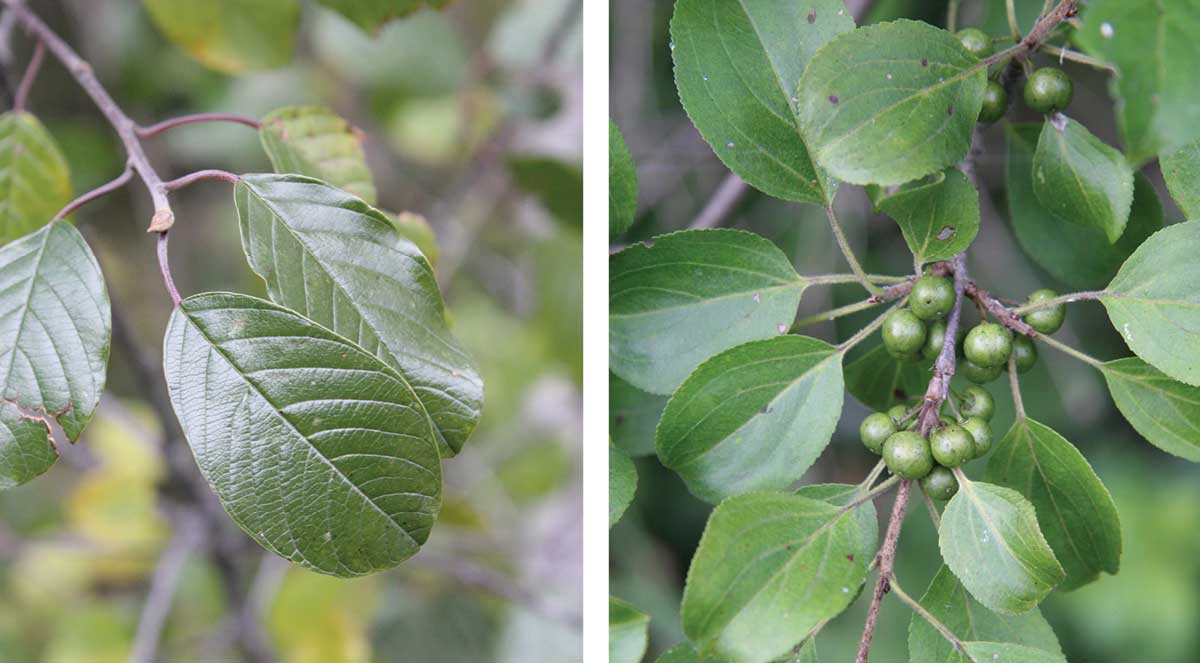
Left: Glossy buckthorn (Rhamnus frangula) is a large deciduous shrub that has glossy leaves, no thorns, splotchy bark, and berries that turn from green to red to blue-black. It is native to Europe, Asia, and Northern Africa, but is considered an invasive plant in North America. Right: Common buckthorn (Rhamnus cathartica) is a small deciduous tree with leaves with toothed edges, long thorns, and black berries. Unlike the glossy buckthorn, common buckthorn berries change from green to black with no red stage in between and all ripen at the same time. The bark, when peeled from the tree, is orange. Photos by Cindy Craft
Safety First
- It is always a good practice to have dedicated dye tools, such as dyepots, spoons, stir sticks, blenders, measuring cups, etc. Keep them separate from tools used for cooking food.
- Be careful when foraging in the landscape and learn about the poisonous plants in your area. Wear gloves and long sleeves when working with new dye materials that might cause allergic reaction.
- Keep children and pets away from dyestuffs and reagents.
Buckthorn Berries: Green Dye Recipe
I often use berries collected during the summer that are frozen until I am ready to use them. Label stored berries so they are not consumed—buckthorn berries can have a strong laxative effect.
For this recipe, I think the temperature of the dyebath when the fiber enters it plays a part in the color you get. My hypothesis is that a higher temperature will give colors toward the yellow end of the spectrum, and lower temperatures will give colors toward the blue end of the spectrum. Another interesting thing about this dye process is that as you pull the wool from the dyepot, it will look blue; as the liquid from the dyepot drains off the fiber or yarn, the color shifts to green.
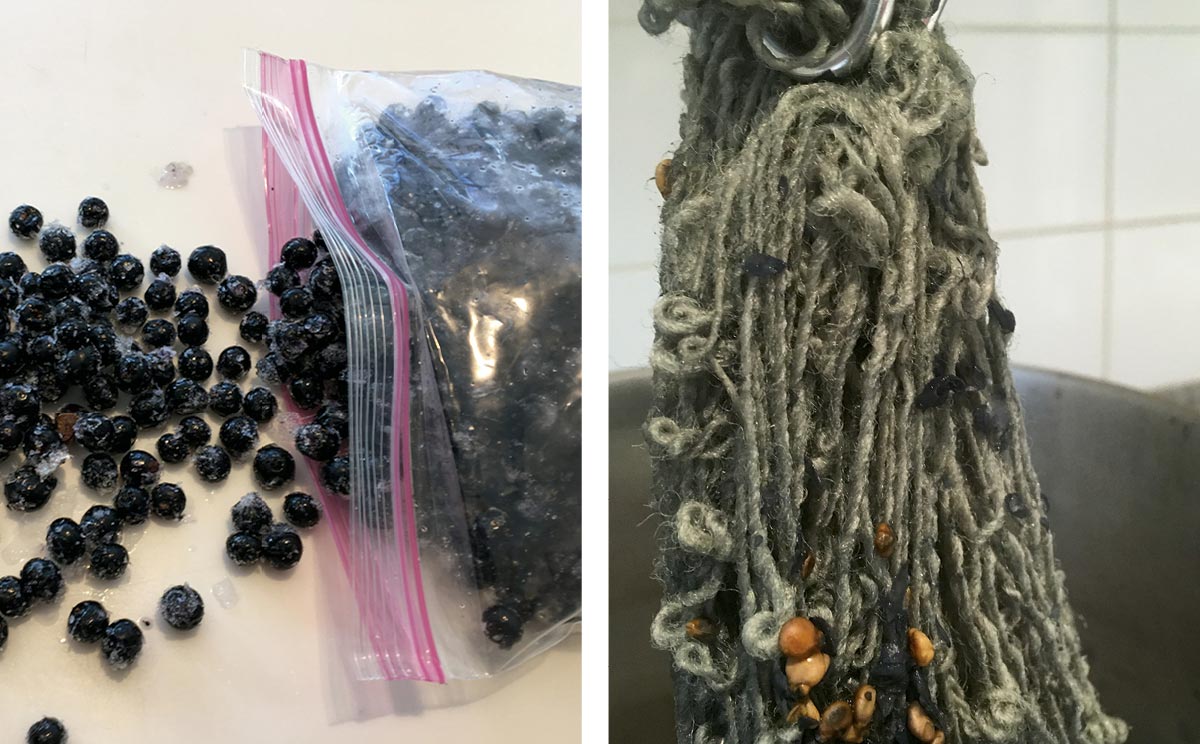
Left: Buckthorn berries are easily frozen. Right: Buckthorn green as it is pulled from the dyepot. Photos by Cindy Craft
- First, weigh frozen berries and yarn or fiber so that you have a ratio of two parts dyestuff to one part wool.
- Mordant your fiber or yarn with alum if you have not done so already. I use an alum solution that is 10 percent alum to weight of fiber, bring it to a boil, and then let it cool.
- Place berries and enough water to cover them in a bowl and blend. I use a stick blender that is used only for dye materials. Add this mixture to a dyepot with sufficient water to cover the fiber. The dyebath at this point should be an inky purple, blue-black color.
- Add the fiber or yarn to the pot and raise the temperature to a boil. Hold the temperature at a boil for 15–20 minutes.
- Leave the fiber in the dyepot until it cools and then remove the fiber from the dyepot and rinse. You can dye more fiber to exhaust the pot, which will produce a lighter shade of the first color.
Buckthorn Bark: Red Dye Recipe
The color in buckthorn bark is released in an alkaline solution. Alkaline solutions have a reputation for destroying wool, with effects ranging from making it brittle to actually dissolving it. After experimentation at medium heat, low heat, and no heat, I found that I got the best color with no heat over a fairly long period of time. I also discovered that a very alkaline dyepot with no heat doesn’t seem to damage the wool in any noticeable way. Buckthorn bark has tannin in it, so a mordant isn’t required.
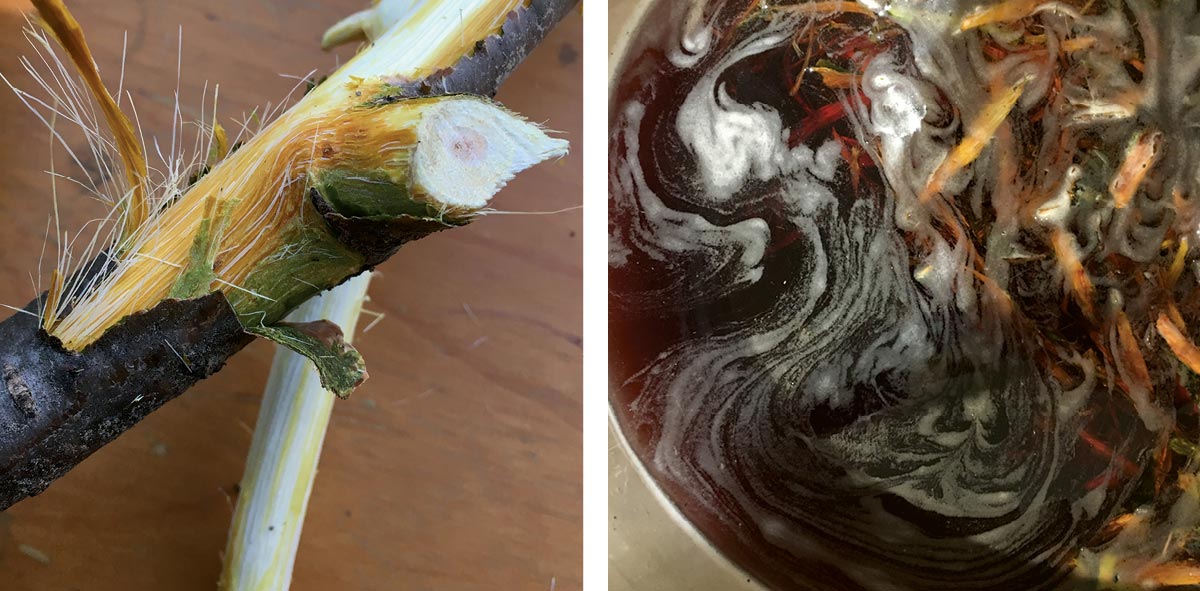
Left: Bark from the common buckthorn will have a green layer and orange layer when peeled. Right: After adding washing soda, the bark bath will change to a wine color. Photos by Cindy Craft
- Collect some common buckthorn (Rhamnus cathartica) branches. Cut 6–10 branches that are 18 inches long and have diameters of ½–1 inch or so. The bark I used was gray on the outside, followed by a green layer and then an orange layer. The larger the diameter of the branch, the darker and thicker the orange layer of the bark seems to be. Trim the smaller branches off and strip the bark from the branch by pulling and scraping with a serrated knife.
- Weigh the bark and the fiber you want to dye and add or subtract bark until you achieve a 2:1 ratio of wool to buckthorn bark.
- Add water to a dye vessel (I use a five-gallon plastic paint pail) and add the buckthorn bark. The amount of water isn’t important, but it should provide space for the fiber and yarn that will be added.
- Add a tablespoon of washing soda to the water and bark. The washing soda will create a very alkaline solution with a pH of 11–13, and the color of the dyepot will change from light orange to a deep red or wine color. Check the pH with test strips, which I purchase at my local drugstore, although they can also be ordered online. Even though the pH is very high, my experiments have shown that you can safely add yarn and fiber to the bath without noticeable damage as long as there’s no heat.
- Add the wool, cover the dyepot and place in a cool spot. I check the dyebath once a day for a week or so to see how the color is developing and to make sure the pH is still at least 10. If the pH has dropped below 10, remove the fiber, add another tablespoon of washing soda, and stir in the washing soda before returning the fiber and yarn to the pot. I have left yarn in the dyebath for as long as a few weeks.
Working with Buckthorn-Dyed Yarns
Sweater
I knitted this sweater a couple of years ago to illustrate the range of colors you can achieve from buckthorn. From top to bottom, the stripes are dyed from buckthorn bark (pink), buckthorn berry skins (blue), buckthorn berries (green), and buckthorn leaves (yellow). I used handspun Polled Dorset singles on a flatbed knitting machine. The sweater is machine-knitted from hem to armholes and then handknitted in the round from the armholes to the neck.

Hat
The hat is knitted from two shades of buckthorn-berry green, two shades of buckthorn-bark red, and white undyed wool. As with many natural dyes, buckthorn dyes and shades are difficult to repeat exactly. Berries in particular can give greens that range from olive green all the way to blue-greens and everything in between. The colors from buckthorn dyes lend themselves well to Fair Isle patterns. The hat was made using handspun Polled Dorset singles on a flatbed knitting machine to the decreases and then finished by hand.
Scarf
My daughter wove this piece during a textile class. The warp is Polled Dorset singles in a series of colors from buckthorn: two shades of red from bark, two shades of yellow from leaves, and three or four shades of green from berries. The weft is the same yarn, but undyed. Some of the greens in this piece have faded.
Resources
- Vajanto, Krista. “Textile standards in experimental archaeology.” Monographs of the Archaeological Society of Finland 3, (2014), 62–75. www.sarks.fi
- Craft, Cindy. “A Sweater from My Backyard.” Spin Off, Winter 2017, 86–88.
Cindy Craft is a spinner, knitter, knitting-pattern designer, felter, cranker, and dyer among other things. Cindy and her daughters are the team behind Subito Farm. You can find them at www.subitofarm.com and at fiber shows throughout the East Coast states.
Originally published January 6, 2020; updated December 4, 2024.
Long Thread Podcast: Nanne Kennedy, Polwarth Shepherd & Seawater Dyer
Season 10, Episode 5: From importing a new breed of sheep to developing her own dye method to developing local products, shepherd Nanne Kennedy cultivates a uniquely Maine farm and flock.
By Anne Merrow
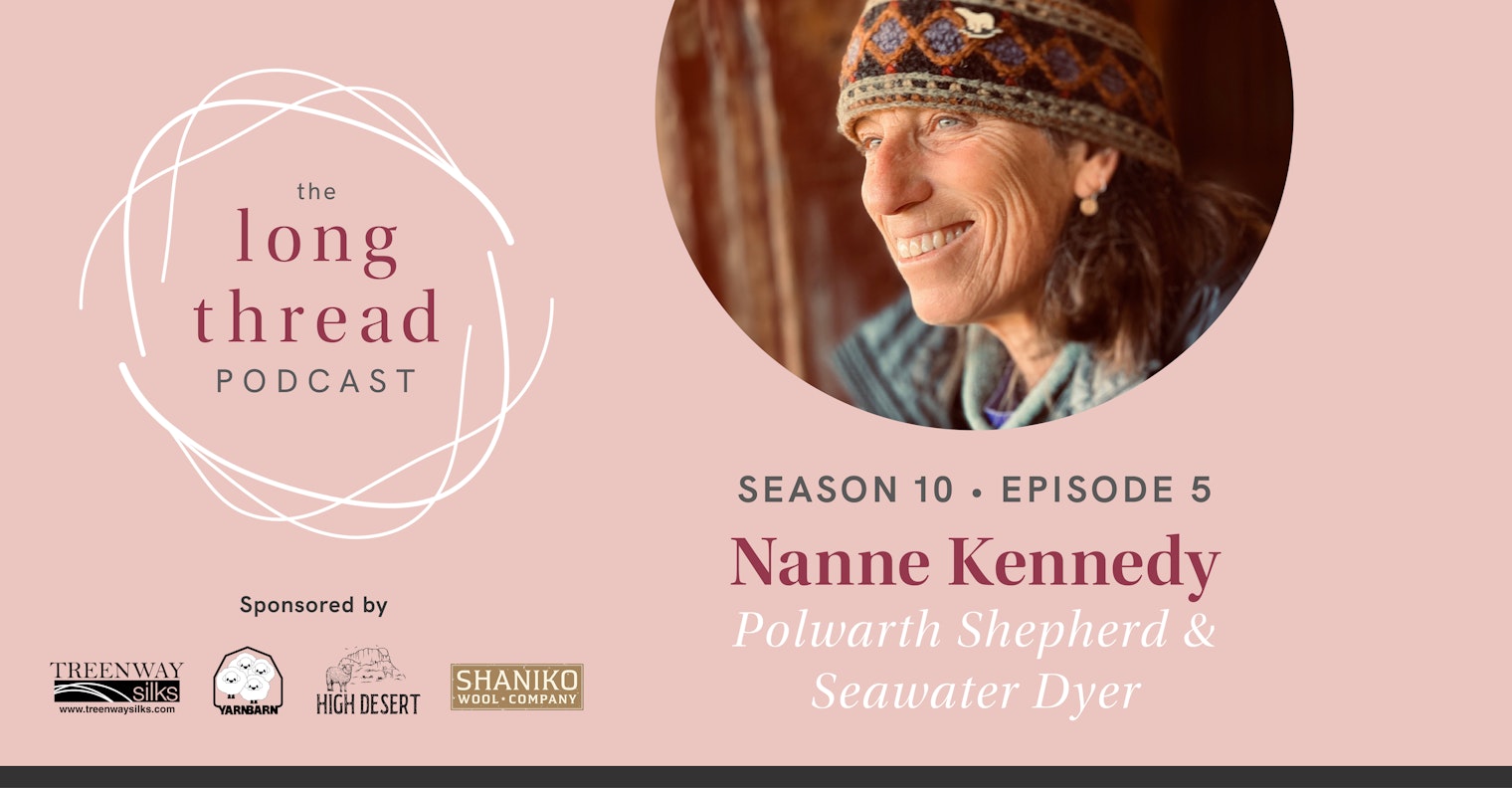
Nanne Kennedy has her feet firmly planted in the soil of midcoast Maine. Growing up on a farm near the ocean, she could smell the salt air and small local factories, and she started saving in her “future farm fund” when she was 12. Eminently practical, she looked for ways that her farm could make her a living. “I'm a New England Yankee, and self reliance is really important,” she says. “So it’s always been a critical theme to me that, yes, you do the right thing, but it sure as heck has to make economic sense in a way that is good today, but good forever.”
Raising sheep could offer multiple sources of income, but the available finewool sheep were poorly suited to her climate. Studying in New Zealand, she grew interested in Polwarth sheep, which combine finewool and longwool genetics. Nanne imported genetic material from New Zealand and set about establishing the breed in the United States, seeking sheep with dense, fine fleeces; long staples; excellent parasite resistance; and sound feet. After decades of careful breeding, her flock has exceeded her expectations for wool and healthy animals.
To increase the value of her wool, Nanne learned to dye yarn. Once again seeking an economic and environmental solution, she developed a unique system using seawater to provide the salts and sunshine to warm the dyepaths. Seacolors Yarns are what Nanne calls bioregional, produced within 5 hours of Meadowcroft Farm.
Like many farmers, Nanne works on a variety of projects at the same time. She runs a short-term farmstay and also offers educational opportunities for aspiring shepherds. She vends at farmer’s markets and hosts fiber art classes. The popular Maine blankets she developed in partnership with other small textile manufacturers have hit a snag with the retirement of the napping machine used in finishing, but she partners with local knitters and crocheters to offer unique handmade sweaters.
At least, that’s some of what she was doing when we spoke. By the time you hear this interview, who knows what Nanne Kennedy will have dreamed up to benefit her animals, ecosystem, and regional economy?
Links
Visit Nanne Kennedy’s farm, yarn store, and other projects at GetWool.com.
Learn about the dye process for Seacolors Yarn and buy it online.
Meadowcroft Farm raises Polwarth sheep. Naturally colored roving is available on the Seacolors Wool website.
Watch a video of Meadowcroft Farm, Polwarth sheep, and Nanne in the video The Science of Soft.
Stay in the farm’s Airbnb, or stay longer with a Small Ruminant Residency or Sheep Doula Apprenticeship.
This episode is brought to you by:

Treenway Silks is where weavers, spinners, knitters and stitchers find the silk they love. Select from the largest variety of silk spinning fibers, silk yarn, and silk threads & ribbons at TreenwaySilks.com. You’ll discover a rainbow of colors, thoughtfully hand-dyed in Colorado. Love natural? Treenway’s array of wild silks provide choices beyond white.
If you love silk, you’ll love Treenway Silks, where superior quality and customer service are guaranteed.
You’re ready to start a new project but don’t have the right yarn, or you have the yarn but not the right tool. Yarn Barn of Kansas can help! They stock a wide range of materials and equipment for knitting, weaving, spinning, and crochet. They ship all over the country, usually within a day or two of receiving the order. Plan your project this week, start working on it next week! See yarnbarn-ks.com to get started.
Sustainability and regenerative ranching have been a way of life for the ranches of Shaniko Wool Company for decades. They are the first “farm group” in the U.S. to achieve certification to the rigorous international Responsible Wool Standard and NATIVA Regenerative. Shaniko ranches raise Merino/Rambouillet sheep in the Western United States, delivering a fully traceable wool supply that gives back to the Earth and its ecosystems. To learn more, and discover Shaniko’s yarn partners, visit ShanikoWoolCompany.com.

The Adirondack Wool and Arts Festival is the perfect way to spend a weekend surrounded by over 150 craft vendors in Greenwich, New York. Discover a curated group of vendors featuring the best of wool and artisan crafters. Throughout the weekend enjoy workshops, free horse drawn wagon rides, free kids’ crafts, a fiber sheep show, and a sanctioned cashmere goat show. Join us September 21 & 22, 2024, and every fall! For more information visit adkwoolandarts.com.