
Loading the latest stories…
Learn tips for working with the queen of bast fibers—ramie—whether you’re spinning, knitting, weaving, or dyeing. Plus, discover how and why to blend ramie with other fibers.
Gayle Vallance12 min read
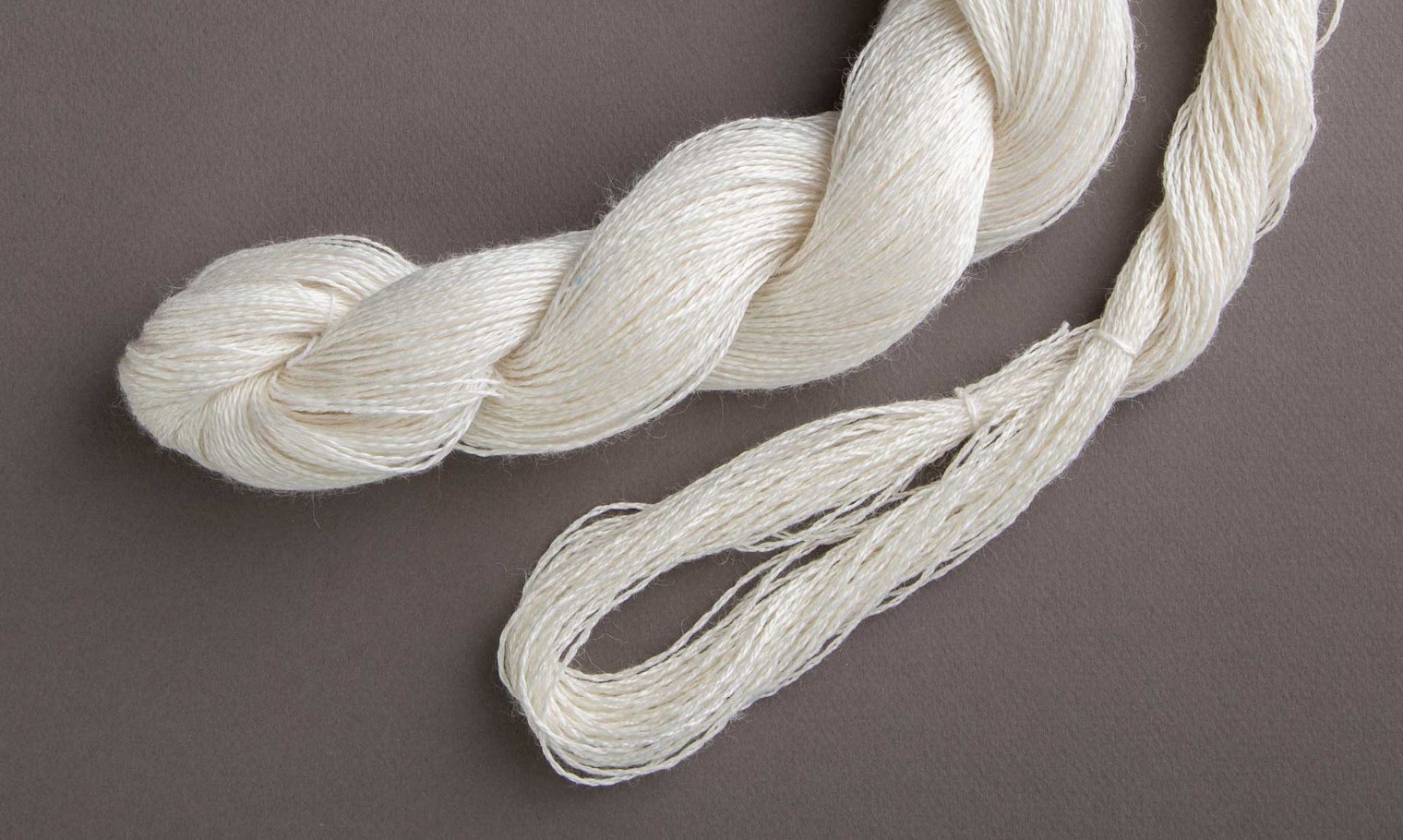
Bast fibers, such as flax, hemp, and ramie, are some of my favorite handspinning fibers. In addition to the pleasure I find in spinning such long, silky fibers, I also appreciate that they are easily grown in most climates and soils and have less negative impact on the environment than many other crops. Bast fibers usually require a fertilized soil but little to no pesticide or herbicide. In many parts of the world, bast fibers have long been used to make fabrics that are durable, comfortable, and easily laundered. Today, we still crave the exquisitely casual yet sophisticated appearance of bast fabrics.
Ramie is the queen of the bast fibers. It has the finest diameter, yet it is stronger and more resistant to wrinkling, shrinking, mildew, acids, and alkalies. Ramie is easy to wash, bleach, and iron, in addition to being absorbent and receptive to dye. The brilliant sheen of ramie fibers and fabrics are often compared to silk; and whether used alone or in blends with other fibers, ramie has a unique silky drape.
More from Spin Off
From the Library


Comments
No comments yet — be the first to share your thoughts.
Sign in to join the conversation — commenting is for signed-in members.