
Meet the Sheep
As spinners, we often think of sheep breeds as broad traits that apply to every sheep within the breed—Merino is soft, Shetland comes in an array of natural colors, and Corriedale is easy to spin. Even though these broad generalizations are often true, each sheep is unique, and shepherds often breed with specific qualities in mind.

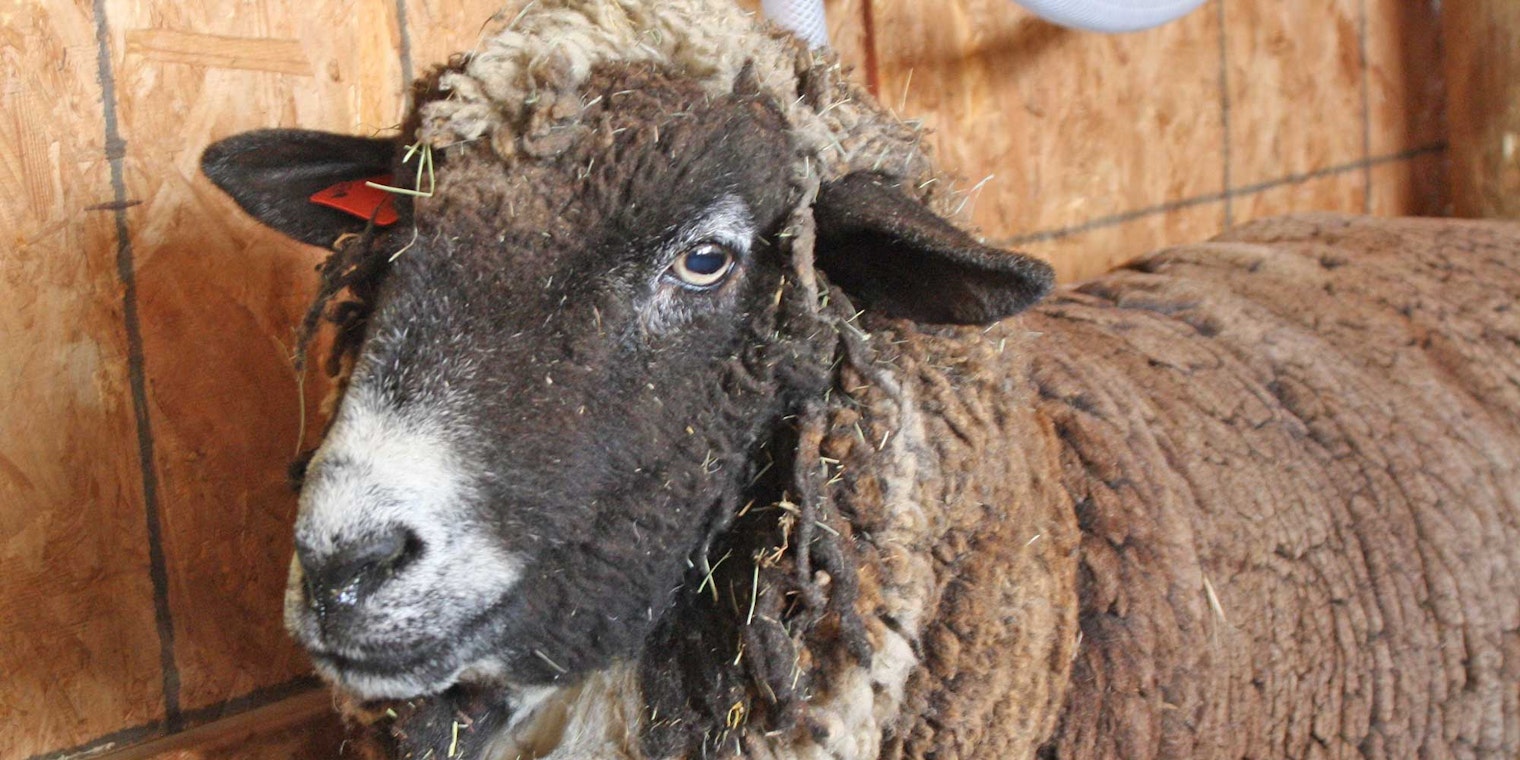
A Navajo-Churro ewe and lamb. Photo by Nikyle Begay
Exploring Breed Characteristics
Whether you work from freshly shorn fleece or commercially combed top, each sheep breed has something exciting to offer. Some take dye exceptionally well, while some come in beautiful natural colors that are nearly impossible to replicate with dye. Others make strong and sturdy socks, and some really are softer than a cloud.
As spinners, we love to feel the fibers in our hands, and many of us have embarked on breed studies to help us understand how fiber varies from one breed to the next. We spin and sample and take notes that often even more curiosity. What about the sheep themselves? Where can we meet them? How can we go beyond the books and breed studies to deepen our understanding of one of our favorite materials?
Discover What Makes Each Flock Unique
In our “Meet the Sheep” series, we’ve gone straight to the shepherds to learn about their flocks. Why did they choose that breed? What makes it special? And what are their sheeps’ personalities like—are they playful, peaceful, or affectionate? You’ll find these answers—and more—in the articles below.
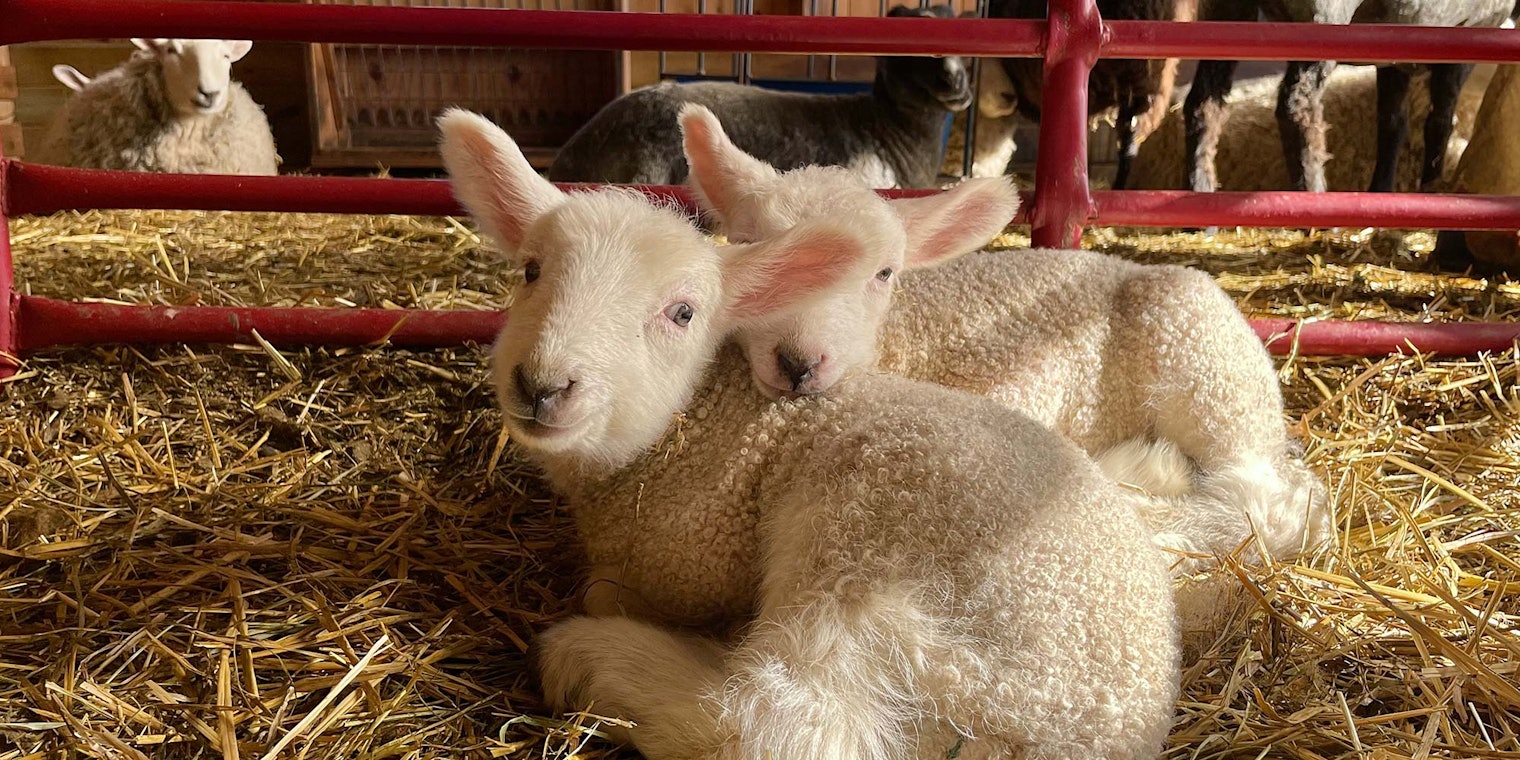
Border Leicesters Willa (front) and her brother, Gus, on a cool April morning. Photo by Kate Larson
Celebrate a Century of Targhee Sheep
This beloved cousin of Merino turns 100 this year.
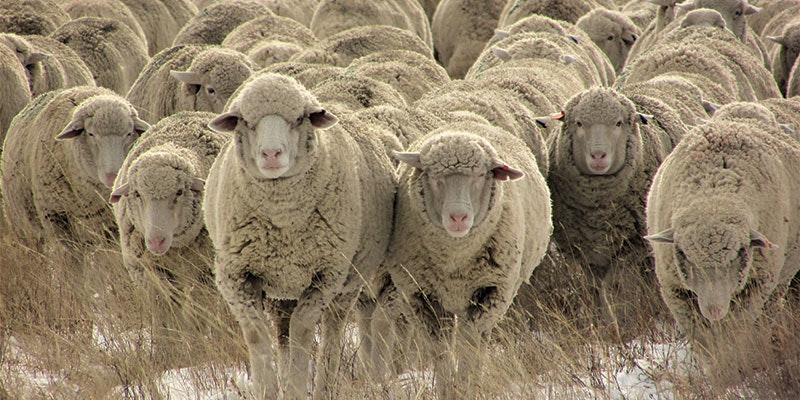
You might have heard of Targhee sheep, and even spun their wool, but did you know they’re a relatively new breed, developed in the United States 100 years ago? Read on to learn about this breed and their wool.
—Spin Off editors
What is Targhee and Why Should I Spin It?
Adapted from “Targhee for Knitters and Weavers” by Maggie Casey
Targhee sheep were developed at the Sheep Experiment Station in Dubois, Idaho, in 1926. The plan was to create a dual-purpose sheep that could handle the climate of the cold, arid west, and produce high quality wool as well as meat. Rambouillet rams were bred with Lincoln/Rambouillet or Corriedale ewes and the lambs were then backcrossed. The Rambouillet side of the cross provided a fine, crimpy wool but with a shorter staple length, while the Lincoln/Rambouillet and Corriedales provided length and strength. Depending on who you reference, Targhee is classed as either a fine or medium wool. The staple length of fiber is 3–5 inches (I haven’t found any Targhee with a 5-inch staple, but I’m still looking). The micron count is in the 21–25 range. Targhees are named for the forest they grazed on and that forest is named for Chief Targhee, a member of the Bannock Tribe.
Years ago I knit a Targhee vest that is still one of my favorites. At the time, it was quite an ambitious project since it was two-color knitting in the round and involved cutting steeks—all things I had never done. But I had fallen in love with some dyed Targhee braids that had just arrived in the yarn shop that I co-owned at the time, so I spun some yarn, made a gauge swatch, and started knitting the Four Corner Vest, by Cheryl Oberle. The spinning and knitting gods must have been very kind to me back then, because I finished the vest without any problems. Years later, that vest still looks great. It hasn’t pilled or stretched out of shape, it drapes just as it should, and the steeks are as strong today as when I did them.
 Maggie's knitted vest demonstrates how well Targhee wears over time. Photo by Maggie Casey
A Unique Fleece
Adapted from “Targhee: A Resilient Western Wool” by Madeline Keller-King
Eastern Montana and the Great Plains can be a harsh environment, and this landscape was one of the things considered in the early twentieth century by the folks at the US Department of Agriculture (USDA) Sheep Experiment Station in Idaho as they developed what would later be named the Targhee sheep breed. (To learn more about the USDA station in Dubois, Idaho, and the sheep breeds developed there, see Spin Off, Winter 2018.)
The Targhee breed was developed to meet commercial demands, so most fleeces are white, although I have heard of the occasional colored Targhee. And the wool! The stuff is soft, having an almost cottony feel when clean and carded, and it has a matte finish.
This unique fleece brings with it the possibilities of endless comfy garments and accessories. Targhee has an unusual balance of crimp and elasticity with delicious warmth and softness—an inspiring combination. ![At left: Targhee fleece is soft and durable with a lively crimp; photo courtesy of Kami Noyes of Ranching Tradition Fiber. At right: Madeline Keller-King's exploration of Targhee resulted in a chain-plied yarn and a cable-knit swatch; photo by Matt Graves]
 At left: Targhee fleece is soft and durable with a lively crimp; photo courtesy of Kami Noyes of Ranching Tradition Fiber. At right: Madeline Keller-King's exploration of Targhee resulted in a chain-plied yarn and a cable-knit swatch; photo by Matt Graves
Plenty to Spin—and to Share!
Targhee sheep grow big fleeces. Mature Targhee ewe fleeces average 10 to 12 pounds of raw wool each year. The wool is remarkably consistent across each fleece—one of the standards of the breed. After scouring, the clean fleeces typically weigh 5 to 6 pounds. That’s more than enough to keep you spinning for a while—or split with some of your spinning friends!
Resources
- Robson, Deborah and Carol Ekarius. The Fleece and Fiber Sourcebook: More Than 200 Fibers, from Animal to Spun Yarn. North Adams, Massachusetts: Storey Press, 2011.
- Find project inspiration for your Targhee fibers in “Targhee for Knitters and Weavers” by Maggie Casey
- Read Madeline’s full article in Spin Off Winter 2023.
- Discover more about the United States Sheep Experiment Station in Spin Off Winter 2018
Bakarwal Crafts: Bringing Back Bakarwal Wool
Learn about this bold enterprise that is working to preserve the traditions and pastoral wealth of nomadic peoples.
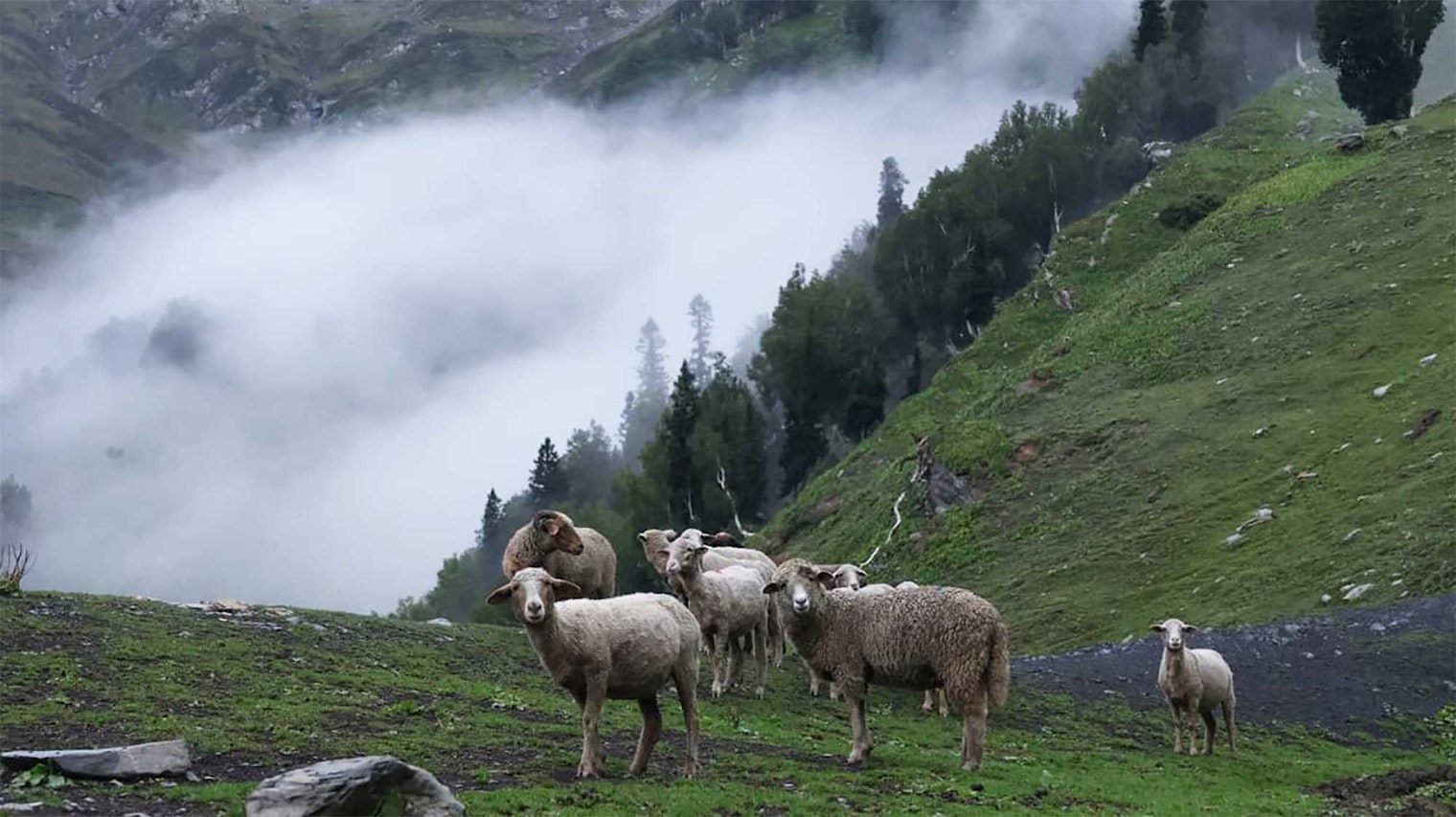
Shepherds often face an uphill battle in selling their sheeps’s wool at a profit. The Desi Oon initiative works to assist sheep herding communities and wool artisans in enhancing wool’s profitibility. Writing on the initiative brought me in touch with a lot of organizations, little companies, and social enterprises which are working to keep the pastoral community and their flocks of indigenous sheep alive. One such is the Bakarwal community, a little-known nomadic pastoral group primarily located in the Jammu, Kashmir, and Ladakh regions of India.
Desi Oon organizes a little festival or bazaar every year around the 10th of December. Many people come and sell their products. It was at Desi Oon that I met Mr. Faisal Raza Bokda, who started Bakarwal Crafts in a bid to preserve the cultural history and heritage of his community.
Faisal says, “when I first visited Desi Oon, I saw how others were exhibiting their traditional crafts and indigenous wool. I realized that the Bakarwal sheep, Bakarwal goat and of course the Bakarwal dog were conspicuous by their absence.” The Bakarwal community is known for its particular breed of sheep and goats which is referred to as Bakarwali sheep and Bakarwali goats. Faisal says, in their spoken language, Gojri, it is “bhed for sheep and Pahari bakr for goats.”
 Faisal poses in front of smaller shawls, worn by Bakarwal men. Photos by Chitra Balasubramaniam unless otherwise noted.
Bakarwal Sheep and Goats
Speaking of the community Faisal says, “we are basically nomads and spend six months of Winter in the plains of Jammu. In the remaining six months of the summer we move to Kashmir.” Faisal’s family is settled in the Samba District in the Indian State of Jammu. He adds, “we are not totally nomadic. I have 20–30 goats. I give [the herd] to shepherds who take it higher altitudes for grazing. They take it and bring them back to me to look after during the winter months.”
The Bakarwal goat is beautiful! The goat has long hair which is sheared—otherwise it gets stuck in branches in the forest. Speaking of sheep rearing, Faisal says, “ten years ago, individuals had huge herds of sheep. It used to easily number 1,000–1,200 Sometimes even going up to 1,500. Today, it has come down to around 200–300. The maximum going up to 500 sheep.”
 Bakarwal goats being herbed by a shepherd. Image courtesy of Faisal Raza Bokada—Bakarwal Crafts
Beginning of Bakarwal Crafts
The Bakarwal Craft initiative began three or four years ago. Faisal says, “I dd not have any direction or plan in mind. Just like all the others were trying to preserve their tradition and craft, we should also do it.”
When he started researching, he discovered that old practices and customs were being forgotten. He adds, “a lot of handmade things were made using sheep wool. We used to make a lot of products for personal use. Now, nobody wants to make it. Alternate products from the market are easily available. They are cheaper and attractive.”
Shearing
The Bakarwal sheep is reared for mutton, the goat for its milk. The wool today has become a nonentity with little value to it—a paltry 10–12 rupees per kilogram, or less than six cents a pound in US weights and measures. The wool is shared at high altitudes and simply thrown away in the hills, since the cost of bringing it down is more than price shepherds can get for the wool.
“Shearing is a necessity, it is done and wool is left behind. Faisal says, “I made a documentary. I travelled to the high altitudes last year and have photos of meadows simply covered with wool.” Faisal received the Royal Enfield green hub fellowship to document the life and tradition of the community.
 Bakarwal sheep. Faisal Raza Bokada–Bakarwal Crafts
Carding and Spinning Bakarwal Wool
Faisal explains, “earlier in our village every woman spun wool using the Gandhi charkha. Today, no one does it.” He remembers every family had its own herd of sheep. After the shearing, there used to be a celebration in every home. All the women would go to one house with their charkhas and spin the family’s entire clip of wool. Then they went on to the next family’s home. No money was given or taken—it was a community affair. The women would have great fun, spinning, talking, laughing, and singing. The house where they had congregated for spinning would organize a sumptuous lunch and provide warm drinks throughout the day.
Women card, clean, and spin the wool. The weaving is not done in the community. The spun yarn is given to Jammu weavers in the plains who weave a large, warm traditional blanket that gives excellent protection against the cold. A smaller shawl is woven which is used by the men. It is exceptionally warm and good against rain.
When the cloth becomes old or unusable, women used to cut them into small squares and embroider them all over. These small squares were joined to make carpets for the floor or were spread out when guests came to the home. Bakarwal women are skilled in wool embroidery. Traditionally, the wool was handspun and naturally dyed. Now acrylic yarn is used for embroidery.
 Embroidery done on worn out blankets using naturally-dyed yarn.
Bringing Back the Craft
With no one weaving or spinning, Faisal had an uphill task of trying to put together a team. His sister is well versed in embroidery. She and grandmother started working. Faisal also realized embroidery can generate employment and income. Now he has a team of 10 people, including his mother, wife and sister, and seven other people from the village.
Today, Faisal is buying pure handspun yarn dyed using natural colors from Kullvi Whims, social enterprise based in Himachal Pradesh in India. Kullvi Whims supports Bakarwal crafts by selling jackets that are woven by Kullvi Whims and embroidered by Faisal’s team.
 A jacket woven by Kullvi Whims and embroidered by Bakarwal Crafts.
The focus is on honing embroidery skills using wool. In addition to the jackets, the team is experimenting with small items for the market, such as bags and coasters.
Faisal has a lot of plans, including “to start a natural dyeing unit. Revive spinning on the charkha in the village. Offer better rates to the shepherds so that the wool is not wasted, make more blankets.” Getting a designer to help them make new products is an option Faisal is exploring. It is also a wonderful way of upcycling old woolen products. It is a brave bold attempt to preserve the tradition of Bakarwal crafts and their pastoral wealth.
Resources
Learn more about Desi Oon here. Find Bakarwal Crafts on Instagram @bakarwalcrafts.
Originally published April 15, 2026, updated May 4, 2026.
Meet the Jacob: Robin Lynde in Black and White (and Lilac)
Meet the Jacob sheep, a rare breed known for its multiple horns and soft, lofty, spotted fleece that’s favored by handspinners.
By Robin Lynde
Welcome to our series Meet the Sheep! We love hearing about sheep from the shepherds who raise them. These important perspectives can help us better understand the wool we spin and the people, animals, and landscapes that create it. Check out the series to meet more woolly friends. —Editors
I have been raising Jacob sheep since 1999, and my business has developed based on the wool my flock provides.
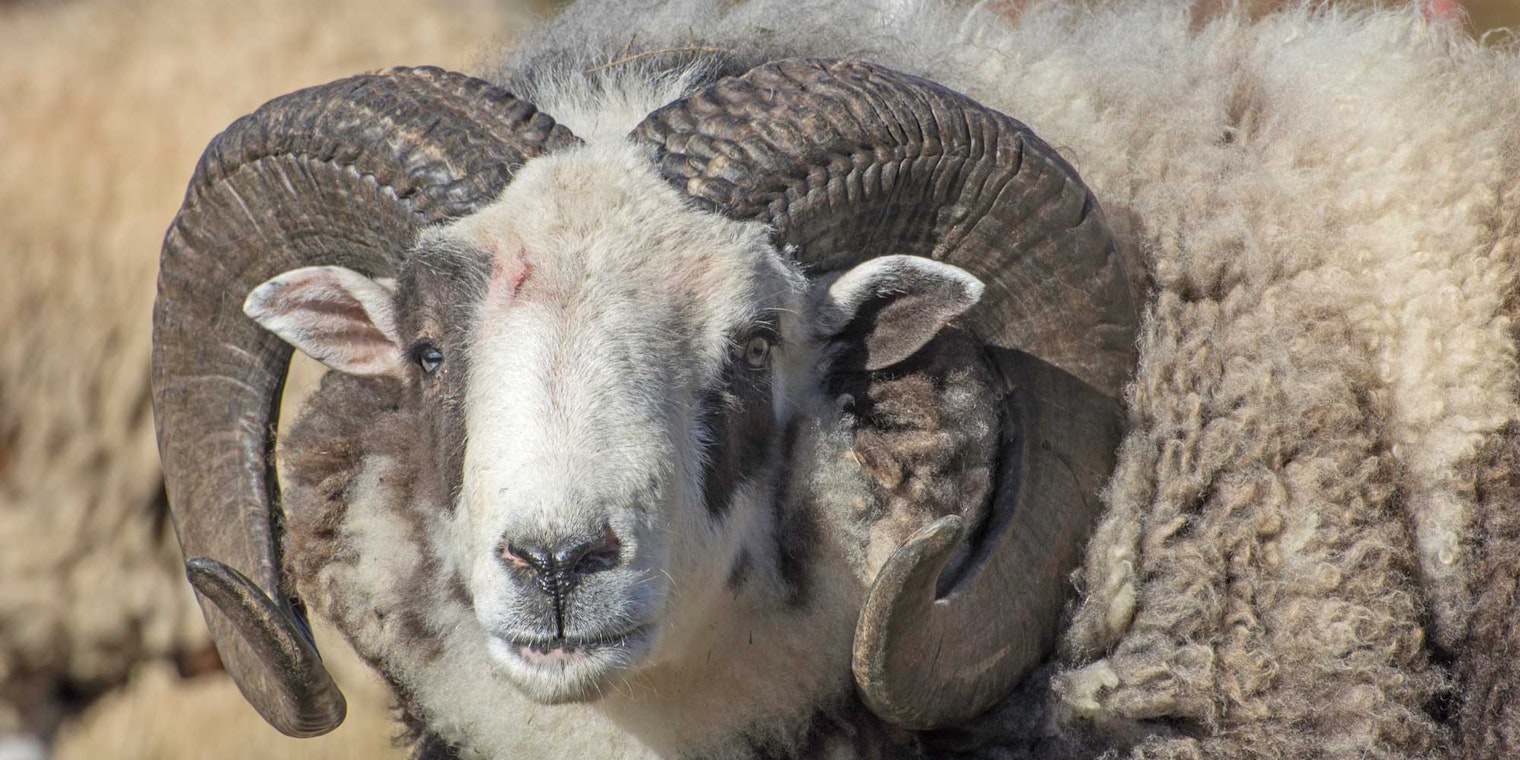
The Jacob is a rare breed of sheep, known for its black (or gray) and white face, spotted fleece, and multiple horns. Ewes and rams can have 2 or 4 horns (or sometimes 6), with the horns of rams sometimes reaching over 30 inches.
Most Jacob sheep are black and white. The black wool may appear brown from sun-bleached tips, but when you part the fleece, it will be black closer to the skin. The exception is the color pattern known as “lilac.” Lilac sheep have gray/brown facial markings, and the colored wool in their fleeces also follows that color pattern.
 Catalyst with Buster, a 4-horn black-and-white Jacob ram
Misty Origins
We know that Jacob sheep have been raised in England for at least 350 years, and may have originated about 3,000 years ago in what is now Syria. The breed was imported into North America for zoos in the 1950s and to early breeders in the 1960s and ’70s. In the United States today, Jacob is often considered more “true” to the earlier Jacob because British Jacobs have been selected for greater commercial productivity and size, and they may have been influenced by crossbreeding.
In 1988, enthusiasts in the United States created the Jacob Sheep Breeders Association (JSBA) to protect and conserve the breed. A comprehensive breed standard was written to encompass the range of phenotypic variability found in the earlier imported Jacob sheep, and to exclude sheep with evidence of crossbreeding and that addresses sheep health (or longevity) for traits such as split eyelids (a problem associated with multi-horned breeds) and deleterious horn growth.
I often hear from people who see spotted and/or horned sheep and assume they are Jacob, but that is not necessarily true. Each individual sheep in the United States that is a registered Jacob has been inspected by JSBA via photos to ensure that it complies with the breed standard.
 Meridian Jacobs ewe 1058, also known as Hot Lips, with her sweet triplets
Jacob sheep are often smaller than many modern domestic breeds, with fine bone structure and less body fat. They are resistant to many of the health problems that afflict other commercially geared sheep, lamb easily, and have good mothering instinct.
What’s the fleece like?
Jacob sheep in America are considered “primitive” or “unimproved,” however, flocks vary widely. Their wool is a favorite of handspinners due to the handle and color pattern. The breed standard describes a broad range of fleece types based on microns (26–36 microns is desirable; 23.5–38 microns is acceptable). Individual flocks may have varying wool characteristics depending on the traits the breeder emphasizes. Jacobs often have coarser wool on the back leg or “britch,” and I usually sort that during skirting for a different product than the rest of the fleece.
 A black-and-white fleece from Sandie. Look at that crimp and color!
Jacob fleeces are typically lofty, light, and open, weighing 3 to 6 pounds. When you start with a fleece you have several options: sort colors and spin them separately, blend black and white to make shades of gray, or spin the colors randomly to get a variegated yarn. All can be used in the same project.
I often like to spin a fleece after separating the colors to reflect the markings of that sheep, but I also like to spin the colors randomly. To sort the fleece, I separate the black and white wool, and what is left over will become gray when carded and spun. After choosing fleeces to sell or keep, I sort the rest for mill processing into roving or yarn.
Interested in learning more about Jacob sheep and Robin’s work? Check out her episode of the Long Thread Podcast with Anne Merrow.
Originally published March 15, 2023; updated April 8, 2026.
Driving a Century of Sheep Ranching Tradition in Utah
Eph Jensen Livestock has maintained a family tradition of sheep ranching for nearly a century.
By Sandi Rosner
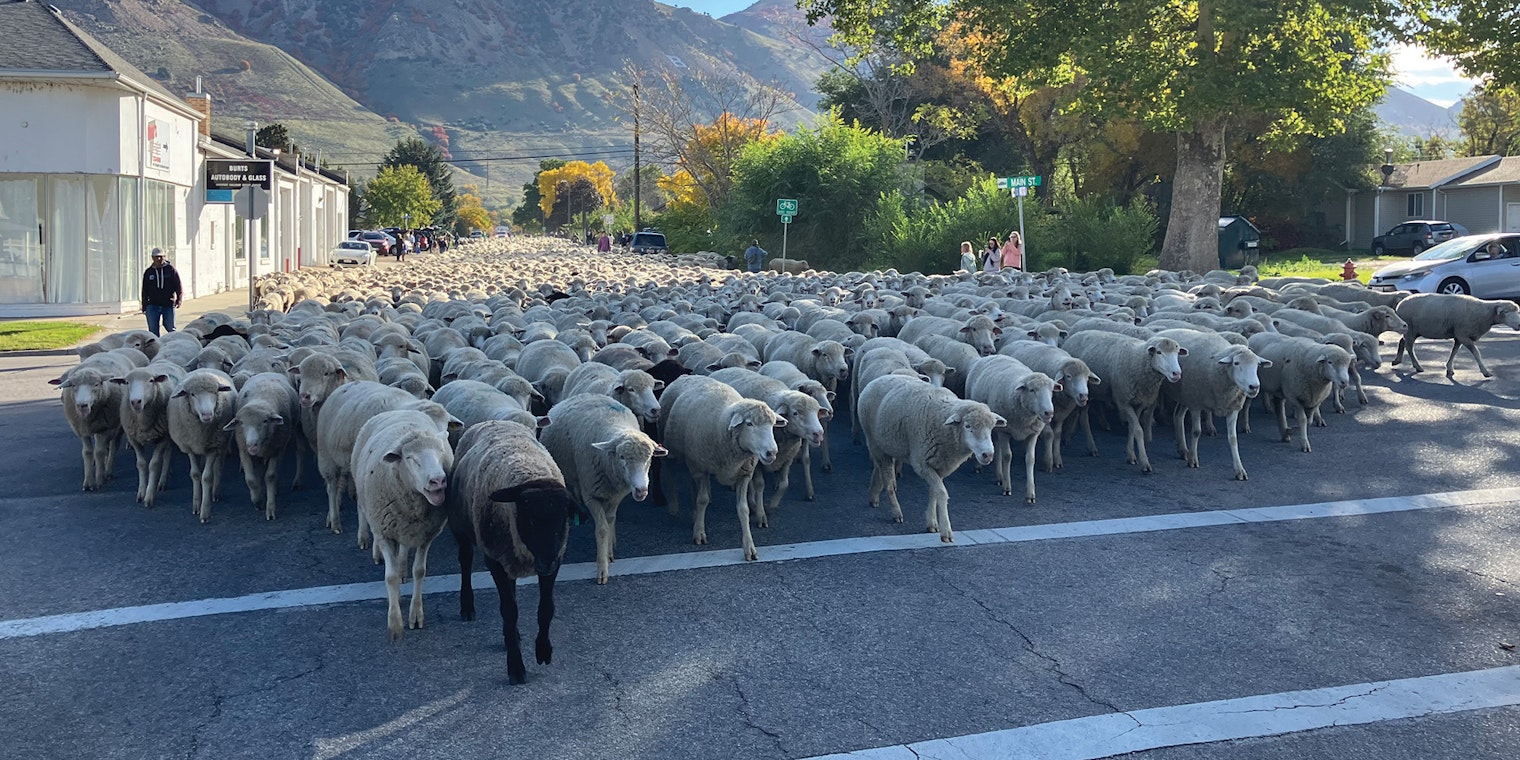
Each October, the residents of Brigham City, Utah (population 20,000), get a special treat. They eagerly follow local news outlets for the annual announcement. On a Friday or Saturday morning, people gather their children, set up the lawn chairs, and line the streets. The excitement builds as they peer down the road for a first glimpse.
Is it a parade? Not exactly. It’s the annual movement of more than 2,000 sheep from their summer range in the Wasatch Mountains to their winter range near Bear River City—a distance of more than 20 miles.
This year marks the 97th annual Trailing of the Sheep for Eph Jensen Livestock Company, a fourth-generation family ranch. The historic sheep trails have largely been turned into roads and highways, so Lane Jensen coordinates with local police, county sheriffs, and the state highway patrol to ensure safe passage for his sheep along the traditional route.
Jensen is proud of the ranch his grandfather Ephraim Jensen founded in the 1920s and is a fierce guardian of its traditions. Despite encroaching residential development, he preserves the sheep trails by continuing to follow the same route every autumn.
Panama Sheep
About a third of Jensen’s flock are Panama sheep. This breed originated in Idaho in 1912, the result of efforts by James Laidlaw, a Scottish immigrant, to develop a breed that would produce fast-growing lambs and dense fleece on dry western rangeland. The cross was established using Rambouillet rams and Lincoln Longwool ewes. Laidlaw’s new breed earned its name when three lambs were exhibited to great acclaim at the 1915 Panama-Pacific International Exposition in San Francisco.
Panama fleeces are nearly always white and have a fiber-diameter range of about 25 to 30 microns. A typical ewe fleece weighs 12 to 15 pounds in the grease, has a 60 percent yield, and has a staple length of 3 to 5 inches (7.6 to 12.7 cm). Mature Panama rams average 250 to 280 pounds (113 to 127 kg), and ewes average 180 to 210 pounds (82 to 95 kg).
Panama sheep never spread much beyond Idaho and Montana. Most ranchers preferred the Panama’s larger ovine cousin, the Columbia, which is the result of crossing Lincoln rams with Rambouillet ewes. A Panama breed registry was formed in 1951, but it is now inactive. The total number of Panama sheep in the United States is unknown.
 A Panama ewe with her twin lambs.
Panamas on the Jensen Ranch
Eph Jensen and his son, Karl, began buying Panama ewes from an Idaho rancher named Rupert Rich in the mid-1970s. Rich was a neighbor of the Laidlaws, the family who originally developed the Panama breed.
The Jensens found that the Panama’s relatively smaller stature, strong maternal instincts, and consistent fleece quality were well suited to their land and ranching practices. From the late 1970s until the mid-2000s, all of the Jensens’ flock were Panamas.
In 2007, the Idaho ranch from which the Jensens had previously bought new Panama stock ceased operations and dispersed its flock. Lane Jensen found he could not produce enough Panama ewe lambs on his own to maintain the size of his flock, and he began purchasing Rambouillet-cross ewes. These ewes are bred to Suffolk rams, and the resulting lambs are sold for meat.
However, Lane Jensen does not crossbreed his Panamas. All Panama ewes are bred to Panama rams to maintain and increase the size of his purebred flock.
 Lane Jensen and his crew sorting ewes in autumn.
A Year on the Ranch
The Jensen sheep are shorn in mid-March, before lambing. A shearing contractor from Wyoming arrives with his shearing trailer and a crew of seasoned shearers. With good weather and an experienced team both inside and outside the trailer, the shearing is completed in three days.
Lambing occurs in April. By July, the new lambs are strong enough to make the journey with the ewes to summer grazing in northeastern Utah’s Wasatch Mountain range. The late October trailing through Brigham City marks the beginning of winter grazing on fields of alfalfa and fall wheat leased from the farmers in Bear River Valley. The sheep spend January, February, and March on the native grass and sagebrush hills west of the valley. They are trailed down county roads for each of these moves.
While sheep are the focus of the Jensen family operation, they also have horses, which are used in herding the sheep. And dogs. Lots of dogs. Border collies are used for herding, and Akbash and Great Pyrenees serve as livestock guardians. An Old English sheepdog and a Saint Bernard keep things interesting at home.
In addition to the range sheep, the Jensens maintain a small flock of registered Lincoln Longwool sheep. The Lincolns live year-round on pastures near the family homestead.
Marketing the Wool
The bulk of the Jensens’ annual clip is sold to a wool broker. But Lane’s sister, Ann Jensen, is making some of the fleece available to handspinners and small-batch yarn producers.
Ann opened an Etsy shop, Eph Jensen Woolworks, to sell clean roving and combed top from the small Lincoln flock. In 2023, she decided to find out if there was any demand for Panama fleece. She was hesitant because this is range wool. The level of vegetable matter and dirt contamination is higher than what you’d find in wool from a small “spinner’s flock.”
Fleeces from the 2023 clip were sold to Fossil Fibers, who sells washed Panama fleece, and to Knudsen Knits, who had the fleece processed and spun into a worsted-weight yarn, which she then handdyed. Knudsen Knits also purchased fleeces from the 2024 clip.
Ann Jensen is planning to sell both raw wool and carded roving from the 2024 clip in the Eph Jensen Woolworks Etsy shop. (See Resources to find links for all of these businesses.)
 Trailing the flock to fresh winter grazing.
Will the Tradition Continue?
The centennial celebration of Eph Jensen Livestock is just a few years away, and Lane feels the weight of that heritage. Lane and Angie Jensen have raised their four children on the ranch. Of the four, three have not yet chosen a career path. Lane is hopeful that at least one of the three will remain rooted on the ranch and that yet another generation will continue to tend Ephraim Jensen’s legacy of sheep ranching in Utah.
Resources
- Ekarius, Carol, and Deborah Robson. The Fleece and Fiber Sourcebook. North Adams, MA: Storey Publishing, 2011.
- Eph Jensen Woolworks
- Fossil Fibers
- Knudsen Knits
- Torell, Clark R. “A Brief History of the Panama Sheep.” University of Idaho, January 1, 1952.
- Wheeler, Emilie H. “Running of the Sheep: Northern Utah Sheep Drives a Long Tradition, but Can They Continue?” HJ News, October 23, 2011.
This article originally appeared in Spin Off Winter 2025.
Meet the Sheep: Gulf Coast Sheep
In the Gulf Coast region of the southern United States lives a scrappy sheep with a history older than the oaks and pines that shade their pastures. Discover what makes this breed special.
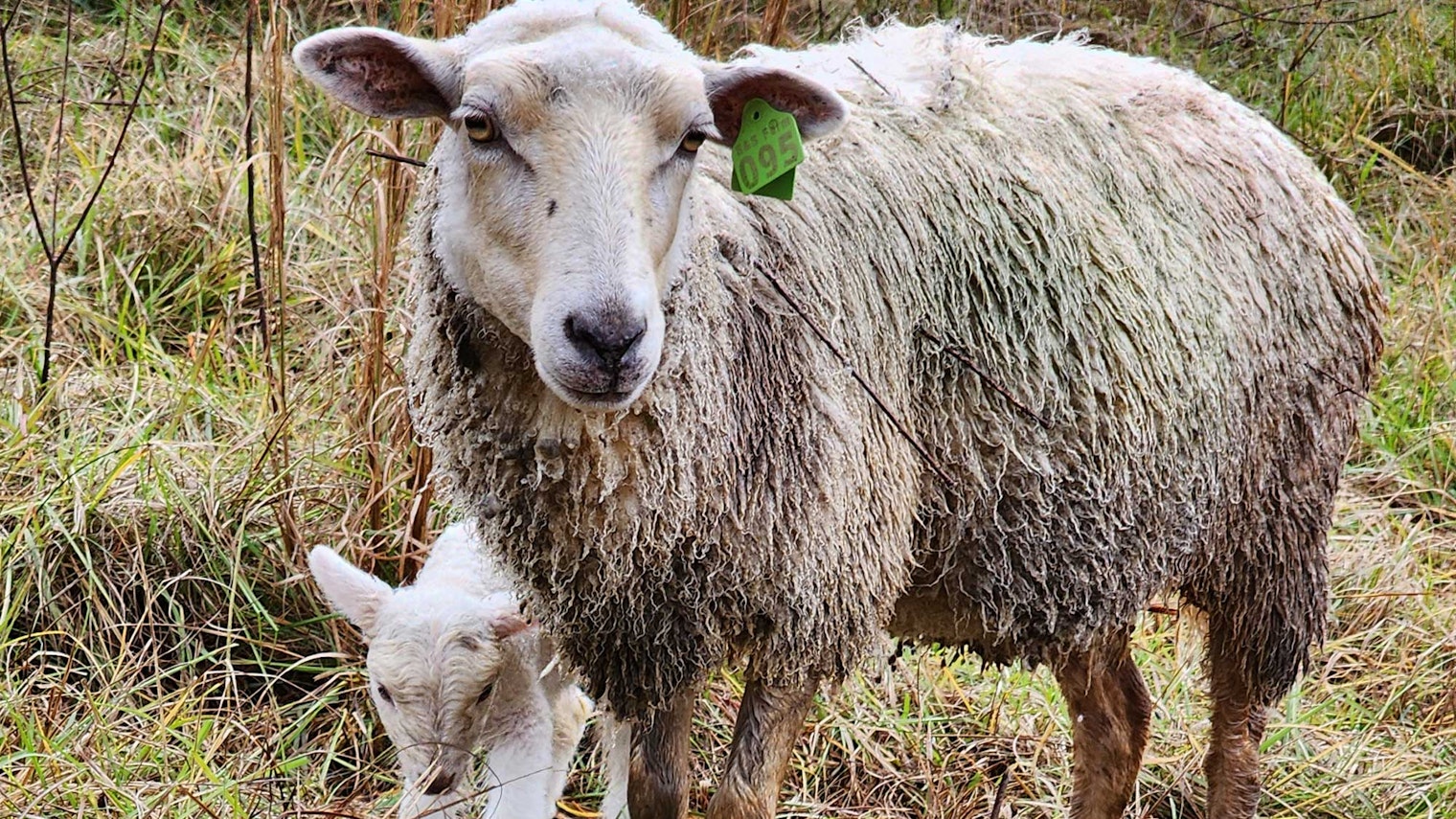
The Gulf Coast sheep, or Gulf Coast Native sheep, is one of North America's oldest landrace sheep breeds, shaped by centuries of survival in harsh conditions. Like many landrace breeds, Gulf Coast sheep produce many colors of wool. But there's so much more to explore about this breed!
 Three colors of Gulf Coast wool. Photo by Aleatha Shannon
History of the Gulf Coast Sheep
In the 1500s, the Spanish brought sheep to the Gulf Coast for meat, milk, and wool. Left to roam, only the toughest survived the region’s relentless summers. The result is a breed naturally resistant to foot rot and parasites, and hardy enough to raise lambs without help. Gulf Coast sheep lack wool on their faces, bellies, and legs—an adaptation that helps them cope with heat and humidity. For centuries, they were the primary sheep of the Southeast, raised mostly for home use on small farms. Although this breed developed in the southeast US, flocks of Gulf Coast Sheep have thrived in environments as different from the southeast US as Wyoming, Maine, and Michigan. But in the 20th century, as anti-parasite medications became common, many shepherds replaced them with larger meat breeds.
Today, Gulf Coast sheep are on the Livestock Conservancy’s conservation priority list. Their hardy genetics could prove vital in the future. As parasite resistance becomes more critical in a world facing increasing drug resistance, this humble breed may hold solutions for farmers everywhere.
A note on the name: “Gulf Coast Sheep” is the official name used by the Gulf Coast Sheep Breeders Association. Gulf Coast Native (GCN) is the traditional name and is used to distinguish some of the historical, closed-line flocks from the modern, mixed-line flocks. Many of the raw GCN fleeces I’ve purcahsed are from Allie Reeves, whose registered flock is from an old Louisiana line called the “Perkins” line. There are also other names used such as “Louisiana Native” and “Alabama Native.”
Four Facts About India’s Sheep
There are over 40 recognized indigenous breeds of sheep in India; learn about the characteristics of the wool and how it is used according to its coarseness, softness, or warmth.
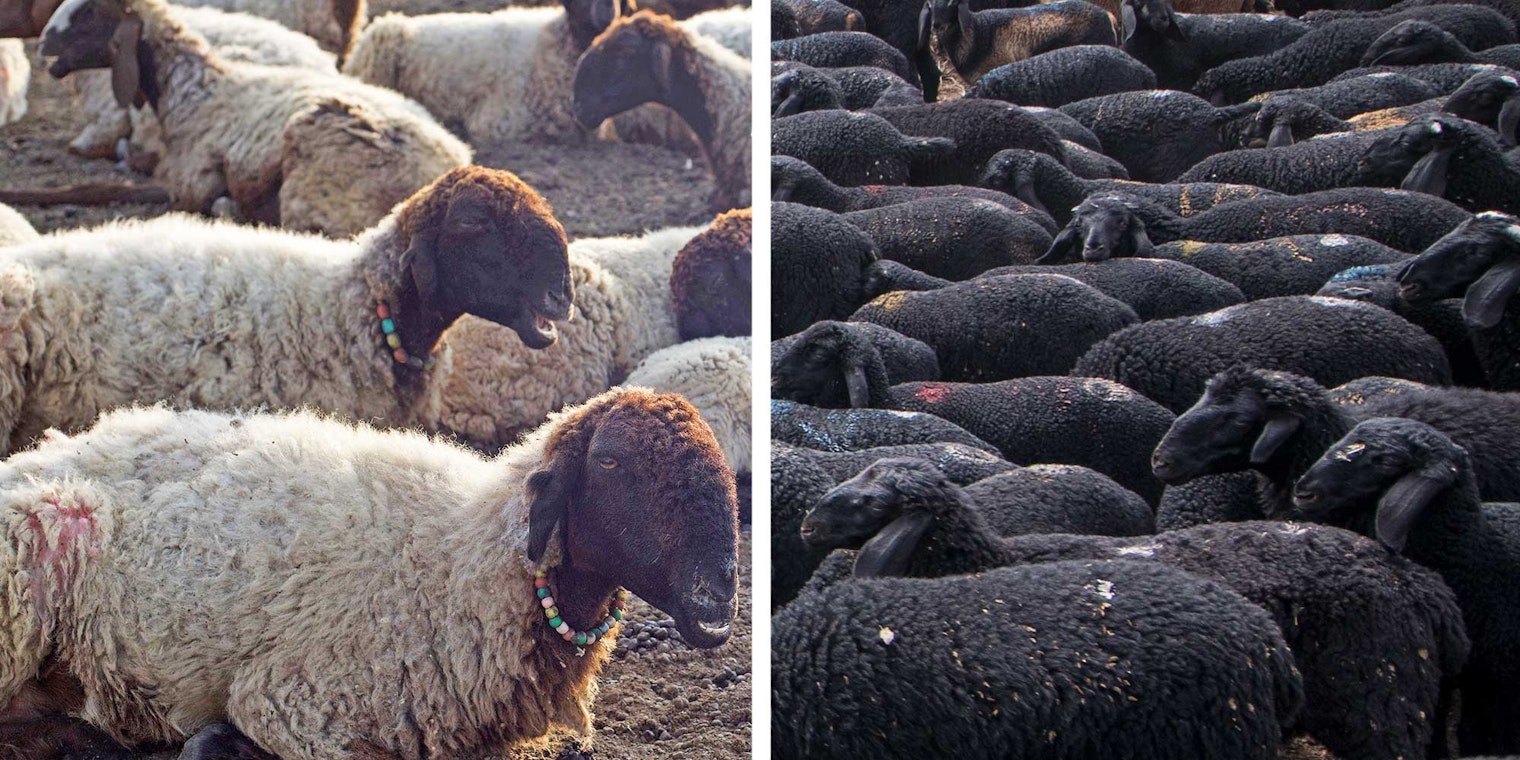
The Winter 2024 issue of Spin Off introduces us to the use of natural fibers in over a dozen countries: the wool of the Kainuu Grey and Finnsheep in Finland, flax in Sweden, Navajo-Churro wool in New Mexico, banana fibers in Micronesia, Timahdite wool in Morocco, suri alpaca fiber in Washington, the list goes on. As fascinating as all of these stories are, we were surprised to discover that India has the world’s second largest population of sheep!
Spin Off contributor Chitra Balasubramaniam wrote about the wealth of indigenous wool in India. The following text was excerpted from her article, “Desi Oon: Spinning India’s Indigenous Wool.” To read the full article, pick up a copy of Winter 2024 Spin Off. —Editors
While India is most known for cotton and silk production, Indian shepherds raise dozens of native sheep breeds. In 2022, the International Wool Textile Organization listed India as having the second-largest population of sheep in the world.
The indigenous wool fibers are short staple and difficult to weave or process. The wool is also coarser, and processing it into apparel as is makes it difficult to sell. The Centre for Pastoralism and Desi Oon, a collaboration of organizations working with indigenous wool and wool crafts, were set up to find a use for the wool so that it would become lucrative for the shepherds to retain their flocks and be able to view wool with pride.
 A shepherd stands near a variety of colorful sheep at a market in India (photo by Varsha Solanki, courtesy of Centre for Pastoralism)
Here, we introduce you to four facts about India’s sheep.
Diverse Heritage Breeds
The national Bureau of Animal Genetic Resources of India recognizes 44 indigenous breeds of sheep. Several other varieties of sheep have not yet been registered or recognized by the bureau. These include sheep from the Gangetic Plains, the central part of India, and other such regions. The wool of each of these heritage breeds has its own typical characteristics.
This diversity of wool is like icing on the cake, with a range of characteristics that make the wool amazing for spinners, weavers, and knitters to experiment with. The wool from the colder regions such as the Himalayan belt is longer and softer, while other regions produce coarser wool.
 Left: A woman spinning Deccani wool; right: A Gongadi, or black blanket, woven from Deccani wool (photos by Khyati Vinod, courtesy of Centre for Pastoralism)
Coarse Wool for Traditional Textiles
One of the breeds most spoken about is the Deccani sheep. Found in the states of Karnataka, Telangana, and Maharashtra, the natural-colored wool varies from black to dark brown to light brown. The wool is a coarse 30 microns. The black wool from the Deccani sheep is used to weave the Gongadi, a handspun, handwoven black blanket with colored stripes at the end. This blanket is given in marriages and is worn on special occasions, but the shepherds carry it with them at all times. It can also be called an all-weather jacket that wards off the cold, absorbs rain, keeps the wearer dry, and is excellent protection against the sun.
 Left: Women spinning wool on a charkha, a term that means spinning wheel in Hindi and does not specifically refer to box- or book-style charkhas (photo by Varsha Solanki; courtesy of Centre for Pastoralism); right: Gaddi Sheep near Kangra (photo by Hasmat Singh, courtesy of Centre for Pastoralism)
The Softest of Wools
The Gaddi is a breed from the Himalaya hills in Himachal Pradesh, the northernmost state of India. This breed can be seen in the Himalayan belt, and it produces one of the softest wools from India. The Gaddi is a crossbred sheep that has a double coat—a fine undercoat and a long overcoat. I’m told that the mix of long and short fibers makes it ideal for spinning. The sheep, its wool, and handspinning are woven into the cultural fabric of the area. The wool’s natural coloration ranges from creamy white to light brown to chocolate to bluish gray.
 Left: Patanwadi sheep (photo by Khamir, courtesy of Centre for Pastoralism); right: detail of a felted item (photo by Chitra Balasubramaniam)
Wool for Warmth
From the desert regions of Rajasthan, particularly Bikaner, comes the Bikaner Chokla sheep. The wool is the finest from the area and is known for its warmth. Patanwadi from Kutch comes in a naturally colored brown. Felting is carried out in almost all areas where sheep are found.
Efforts are underway to make it lucrative for the herders to continue breeding these heritage breeds and use the wool to their advantage. Desi Oon and others continue to work on smaller scales, helping to connect makers with markets for the wool products that form an important part of the heritage of India.
Resources
- Centre for Pastoralism, centreforpastoralism.org
- Desi Oon, desioonhub.org
This article was excerpted from Spin Off Winter 2024.
Also, remember that if you are an active subscriber to Spin Off magazine, you have unlimited access to previous issues, including Winter 2024. See our help center for the step-by-step process on how to access them.
Chitra Balasubramaniam writes about, collects, and experiments with textiles, following her passion for writing about food, travel, and heritage. She dabbles with stock investment analysis and research. She also runs a small travel log, visitors2delhi.com, and can be found on Instagram @visitors2delhi, and on Twitter @chitrabalasub.
Navajo Churro: Nikyle Begay on T’aa Dibé (The First Sheep)
Learn about the resilient and silky-fleeced Navajo Churro from Diné shepherd Nikyle Begay.
By Nikyle Begay
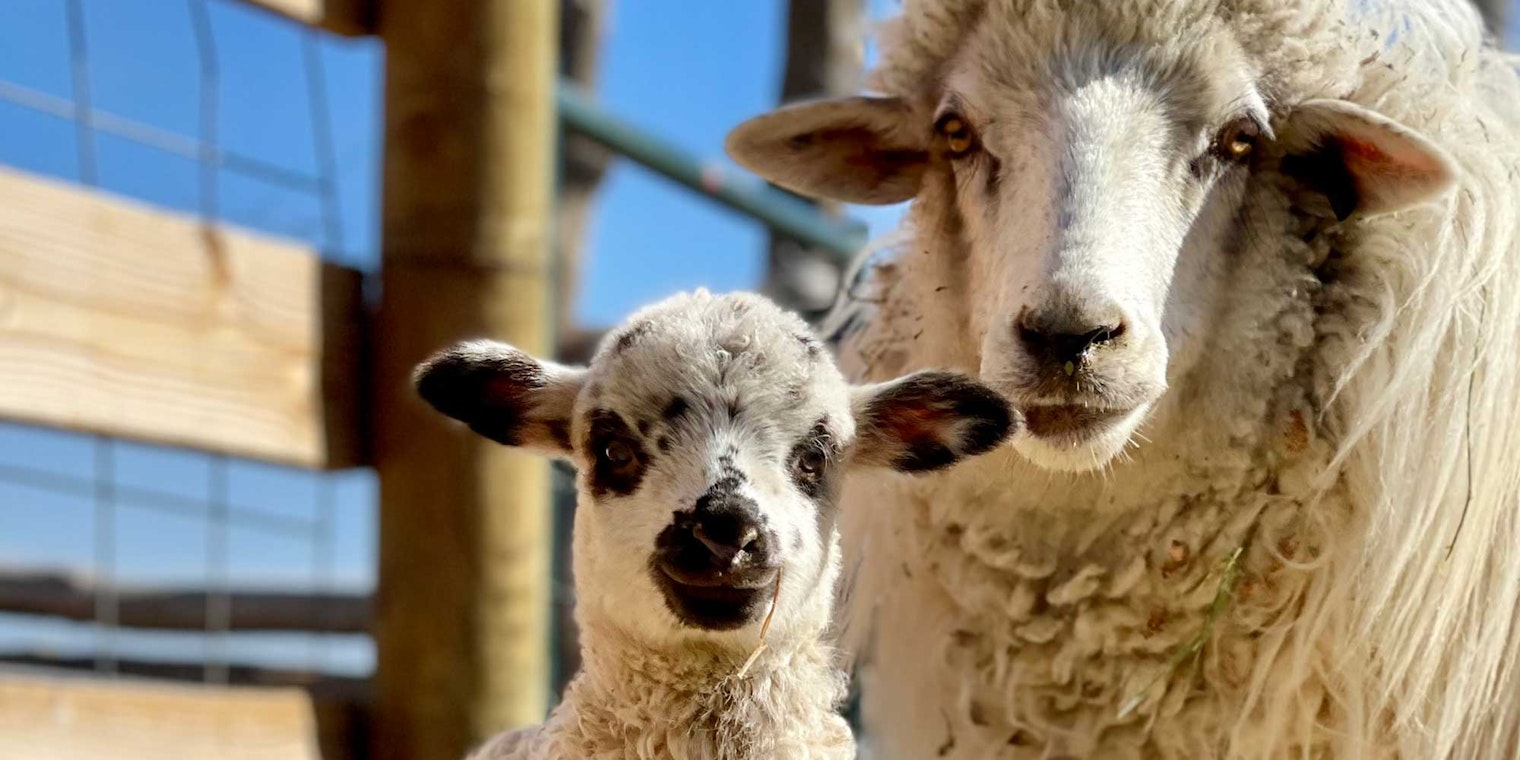
Welcome to our series Meet the Sheep! We love hearing about sheep from the shepherds who raise them. These important perspectives can help us better understand the wool we spin and the people, animals, and landscapes that create it. Check out the series to meet more woolly friends. —Editors
Navajo folklore says that t’aa dibé (the first sheep) were a gift from the Holy People. But as a failure of our own pride, those first sheep were taken away and promised to return when our humility was regained. History says that the Spanish Churra sheep were driven up from Mexico in the mid-1500s. This expansion led to the eventual acquisition of the sheep by my ancestors, a reacquaintance if you will, with an animal that they’ve remembered in their creation stories, sacred chants, and prayers.
Since then, there has been a timeline of fruitful years as well as involuntary reductions of what was once recorded as the “old-type” Navajo sheep. Today’s Navajo-Churro sheep are the result of selective breeding by Indigenous and Hispanic breeders. They are smaller than your average commercial and finewool breeds. They have a smaller frame and instincts that drive them to be good range foragers—being quite “deerlike.” These traits allowed these sheep to become well adapted to the arid Southwest and its variable terrain and climate.
 The Navajo-Churro are well-equipped for foraging in the semi-arid and arid terrain of the Southwestern United States.
The silky, lustrous wool produced by the old-type Navajo sheep had become prized for its durability, best characterized in the textiles that have remained intact for centuries. By industry standards, Navajo Churro is considered a “carpet wool” because of its staple length and coarseness. Navajo Churro have maintained a primitive fleece structure, which means that they have primary follicles that produce a longer “guard hair” outercoat and secondary follicles that produce a true-wool inner coat. Navajo-Churro wool can also contain short brittle fibers known as kemp and longer medullated fibers throughout the fleece. Sheep with a primitive fleece structure remain somewhat unimproved, retaining the ability to produce wool in an array of natural colors.
A closer look reveals the longer outercoat of the Navajo-Churro.
Navajo-Churro ewes are quite prolific, lambing unassisted each spring, and in some cases, twice in one year. Twins and triplets are not uncommon. The lambs are known to bounce right up and get to nursing after being born. These newborn lambs will remain at their mother’s side while she grazes, keeping themselves within the range of hearing their mom’s mutters. The fierce maternal instinct of Navajo Churros and their vivacious lambs are what make this breed of sheep well matched for lambing out on the range.
Both rams and ewes may be polled, have scurs (vestigial horns), or grow two or more horns. Ideally, Navajo-Churro sheep will have horns that do not obscure their vision and ability to graze, nor cause injury or infection to themselves. Navajo-Churro sheep are one in a handful of breeds across the world that carry a genetic mutation that causes them to have multiple sets of horns. This mutation can also cause split upper eyelid deformity in genetically multihorned animals. Split upper-eyelid deformity could cause severe injury to the eyes of an affected animal, so it is encouraged that breeders pay attention to their breeding practices of sheep with multi-horns.
 Rams and ewes may grow two or more horns.
A lot like my ancestors, Navajo-Churro sheep are quite resilient. Those that exist today stem from sheep that escaped with their shepherds during the Long Walk and Navajo Stock Reduction. These flocks were passed down from generation to generation, with their tales of survival and prayers of continuance.
Look for Nikyle’s full article on the Navajo-Churro sheep in the upcoming Winter 2024 issue of Spin Off, available on newsstands this December.
Nikyle Begay (they/them) is a Diné shepherd, fiber artist, and teacher based in Ganado, Arizona, on the Navajo Nation. Nikyle is the Director of Rainbow Fiber Co-Op and brings a wealth of knowledge and expertise to the project. Nikyle has experience working in technology and the nonprofit sector, as well as an extensive background in sheep flock management, wool production, traditional wool processing, and the weaving arts. You can find them on Instagram @navajoshepherd.
Meet the CVM: Badger-Faced Beauties in the Colorado Foothills
Geri McGibney introduces us to her flock of CVM sheep and shares a short history of how the California Varigated Mutant got its unusual name. This rare breed's soft, long-stapled wool will melt your spinner's heart!
Welcome to our series Meet the Sheep! We love hearing about sheep from the shepherds who raise them. These important perspectives can help us better understand the wool we spin and the people, animals, and landscapes that create it. Check out the series to meet more woolly friends. —Editors
Thirty years ago, my husband, Pat, and I took a step toward fulfilling our dream of being more self-reliant by purchasing irrigated agricultural land in Larimer County, Colorado. Our dream formula for this land included livestock, an orchard, a vineyard, and vegetables. Our farm is called Valley of the Wind, inspired by the foothill breezes that sweep across the land. We ventured into raising sheep to help manage the grass and to provide the best wool for my fiber crafts.
We raise a flock of California Variegated Mutants (CVM) and we love both the gentle sheep and the fabulous fiber they produce. Pat maintains the flock’s health, care, and shearing. I step in from there by sorting, prepping, and selling the fiber at markets in Estes Park, Colorado, and Santa Fe, New Mexico. Our flock’s fleeces repeatedly place in competitions, and we have even had Grand Champions.
 Geri and Pat proudly display their Grand Champion Fleece at the Estes Park Wool Market.
But Why CVM and Why “Mutants”?
CVM is a multicolored derivative of the Romeldale, an American sheep breed developed during the early twentieth century. Romeldale is famous for its high-quality fine wool that is used by Pendleton Wool Company.
In 1915, New Zealand Romney rams were shown at the Pan American Exhibition in San Francisco. These rams were purchased by A. T. Spencer who crossed them with his Rambouillet ewes. This cross resulted in improved meat and wool quality. He named the new breed Romeldale.
In the 1940s–1950s, J. K. Sexton continued to improve the breed by selecting for maternal ability, twinning, and a uniform fleece of soft-handling wool. He set the breed standards. The fleece is dense and finely crimped, with staple length of 2.5–5 inches and micron count of 21–25.
 Mizi needs a haircut (left). Geri sorts the locks (right).
For years, Romeldale shepherds selected for white sheep/wool due to market pressures. Pendelton was the market for these shepherds, and it demanded only white to maintain their consistent dye lots from season to season. Occasionally a colored lamb with “badger-face" markings would be born. These lambs were seen as “mutants” and were culled to prevent contamination of the flock’s white wool. Any wool identified as other than white could cause the entire clip to be rejected.
During the 1960s, Glen Eidman, a partner of the Sextons, became interested in these occasional colored lambs. He saved and separated them and carefully line bred them. His attention to the improvement of fleece quality and expanded color variations resulted in what he called the California Variegated Mutant breed—we refer to them as CVMs. Along with the above standards, the fiber is very elastic, with great memory, and is suitable for anything that is worn next to the skin. Raw fleece will have a generous amount of wool grease and requires an appropriate scouring agent. I have successfully scoured, combed, carded, spun, knitted, crocheted, dyed, and felted with our wool.
 The McGibneys’ flock is shown grazing at Valley of the Wind during the fall of the year.
Because of Eidman’s work, these beautiful colored sheep and their high-quality fine wool are available through a small number of breeders today. Both variegated and white are recognized as Romeldale. Genetically they are identical with the exception of the color variation genes. Recognized by the Livestock Conservancy, Romeldales/CVM—both colored and white—are listed as endangered.
We encourage you to embrace this endangered American breed and their superb fine fiber. Supporting shepherds raising purebred flocks helps to protect this genetic gem.
Valley of the Wind, LLC is a member of:
- Rocky Mountain Natural Colored Sheep Breeders Association, rmncsba.org
- The Livestock Conservancy, livestockconservancy.org
- Northern Colorado Weavers Guild, nocoweaversguild.org
Resources
- American Romeldale/CVM Association, Inc.
- “Romeldale/CVM Sheep,” The Livestock Conservancy.
- Robson, Deborah, and Carol Ekarius, The Fleece & Fiber Sourcebook. North Adams, MA: Storey Publishing, 2011.
Geralynn McGibney has been actively involved in fiber crafts since age four. She learned to knit from her Aunt Ida, who grew up in Switzerland where every child learned to knit. By age nine, Geri was involved in 4-H, sewing, crocheting, and knitting. Spinning and weaving came later in her adult life. Pat made her a four-harness loom for her RN graduation and her aunt Dorothy gifted her an Ashford traditional spinning wheel. Since retirement, she can be found with Pat at home on the farm working on various non-fiber and fiber projects. See some of her fiber and accessories at Valley of the Wind Wool on Etsy.