
Loading the latest stories…
There's more than one way to spin a hankie! We've gathered some expert advice, tips, and projects to inspire your silk spinning.
Spin Off Editorial Staff7 min read
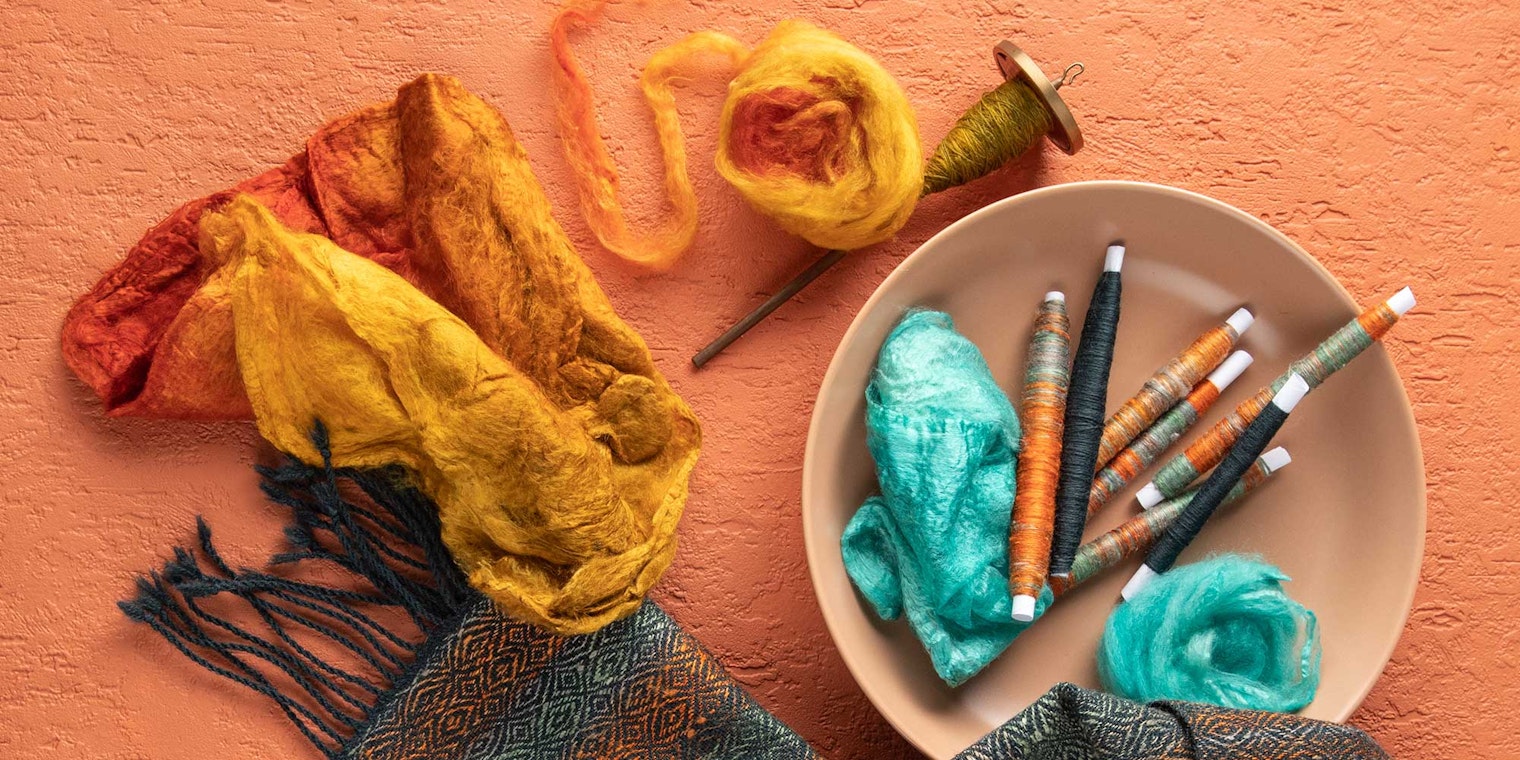
Chances are you already have a couple of dyed silk hankies tucked away in your stash—perhaps they were too alluring to pass up, even though you weren’t quite sure what to do with them. Silk fiber can be slippery and challenging to spin, but spinning silk hankies or mawata is a whole different experience.
Today’s Skill Guide will give you a solid foundation. As you read, you’ll learn about:
Every item we’ve selected for this guide is part of your All Access program and will help you get the most out of your subscription. Check out the Spin Off Library and our video course website for more learning opportunities.
Cheers!
–Spin Off editors
Adapted from an article by Amanda Berka and Amy Clarke Moore
Silk hankies or mawata are made from silk cocoons that are intact but not suitable for reeling. Any remains of the worm are removed and the cocoon is stretched out and eased over a small wood frame. Each layer in a hankie is composed of one or more cocoons.
 Photos by Joe Coca
Begin by separating out one translucent, filmy layer from the silk hankie with which to work. If it is too thick, it will be difficult to draft.
More from Spin Off
From the Library





Comments
No comments yet — be the first to share your thoughts.
Sign in to join the conversation — commenting is for signed-in members.