
Loading the latest stories…
Devin Helmen encourages you to conquer your fear of spinning silk and shares tips for spinning silk hankies and top.
Devin Helmen5 min read
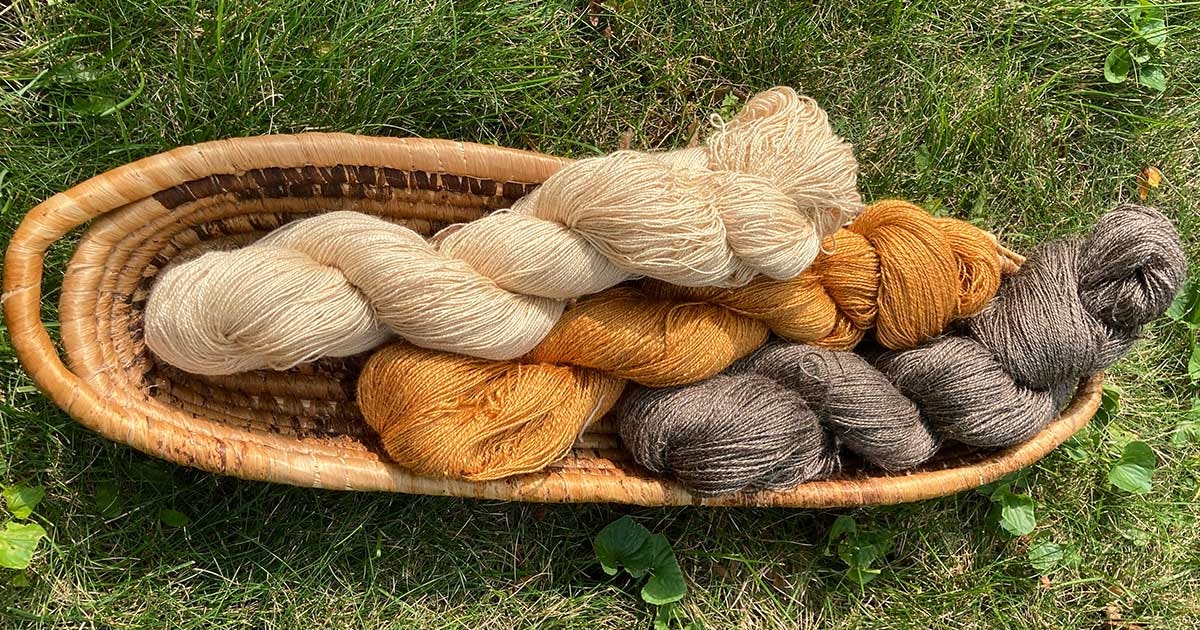
When I was a new spinner, I stuck to what was familiar, and what everyone told me was the easiest fiber to spin—wool. Wool fiber seems to assist the new handspinner in making a continuous thread, and at the time, I admit that I was intimidated by other fibers. Eventually, my curiosity got the better of my fear, and I started sampling camelid, bast, and silk fibers. Silk ranked second only to cotton in my preconceptions of difficulty. Whenever I imagined spinning silk, I visualized a slippery fiber escaping my control or snagging on my garden-rough hands. But I was determined to try it and purchased some tussah top and beautifully hand-dyed silk hankies at a fiber festival—the colors and shine overcoming my hesitation.
Silk Top
At the time, all of the resources I consulted said to spin silk top from the end, using a short forward draw. I tried this at my spinning wheel and on a spindle but had great difficulty drafting an even yarn and getting enough twist to hold the yarn together without making it wiry and overtwisted. (And silk is a fiber that can take a large amount of twist when spun fine.) I was so frustrated. I put the silk top aside to wait for a time when I felt more comfortable. One thing I was pleased to see was that the silk did not stick to my calluses or the roughness of my hands. The elaborate salt- or sugar-scrub recipes to smooth hands, which I had read about when looking up information on spinning silk, were not needed, at least not for me.
Silk Hankies
I did not let my struggles with top dissuade me. Next, I tried the silk hankies. I dutifully pre-drafted my hankies by making a hole in the middle and easing it wider and wider and attenuating until there was a break in the stretched-out fibers. Personally, I hated doing this; it hurt my wrists and my hands. Also, I had a very hard time keeping the attenuated-silk hanky from tangling. Spinning the pre-drafted hanky was just adding twist and was not something I enjoyed doing. But I was determined to spin something from the silk hankies, so I took the remaining hankies and a spindle to a weekly spin-in with a friend who worked near me. We met over lunch and spun. I tried different methods of working with hankies, until eventually, I found the one that worked for me.
My way of spinning silk hankies is specific to spindles, as that is my favorite way to spin them.

Devin hooks a hankie.

Devin attenuates the hankie with his palm up.

Devin pinches off the fiber supply.
Slubby, irregular luxury yarn spun from silk hankies is one of my favorites, and I am currently in the process of spinning indigo-dyed silk hankies to use as a slubby weft for a woven piece.
I still had silk top sitting in my stash, waiting for a second try, and I was lucky enough to get Sara Lamb’s advice on how to spin it. Following her guidance, I spin the silk top using a supported, or modified, long draw from the fold. To do this, I spin across my lap, using my forward hand to control the twist and my rear hand to draw out the new fiber sideways, creating almost a right angle. I then dance my fingers letting the twist into the fiber supply as I draft. I spin with a high-twist for both singles and plied yarn, and on a wheel, I prefer to use a lace flyer to insert twist rapidly. The Practical Spinners Guide—Silk (Interweave, 2014) by Sara Lamb provides everything one could want to know about spinning silk in one place. As I sampled other varieties of silk, I found that wild silks, such as eri, muga, tussah, and peduncle, are the easiest for me to spin. They seem to me to be more “toothy” than cultivated silk and more friendly to the spinner.

Devin spins silk top from the fold, using a modified long draw, and across the body.
If you’re still nervous about spinning silk, I think blends are a great way to start. The combination of silk adds sheen and luxury to the base fiber and yarn, and the presence of a more familiar fiber gave me the confidence to start spinning silk. Two of my favorite blends to spin are yak/silk and Polwarth/silk, and one of my favorite fabrics I’ve woven with handspun yarn has a warp of yak/silk.

Devin enjoys weaving with yarns spun from silk blends.
I encourage you to try spinning silk. It is not scary and can be a relaxing delight.
Devin Helmen has been immersed in fiber since learning to spin at age 8. They spin, knit, and weave in beautiful Minnesota. Devin enjoys writing and teaching about fiber arts and has a passion for spindles and everyday textiles. They blog, intermittently, at www.afewgreenfigs.blogspot.com.
Try your hand at spinning and working with silk with these great resources:
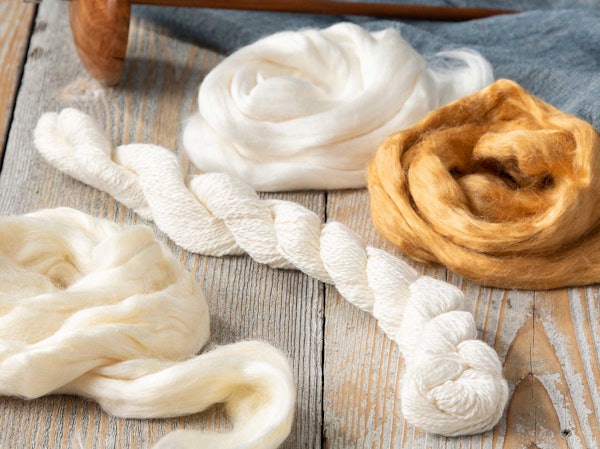
Spin-Off Presents: All About Silk (eBook) and Peace Silk Beret and Cowl to Knit (Pattern Download)
More from Spin Off
From the Library


Comments
No comments yet — be the first to share your thoughts.
Sign in to join the conversation — commenting is for signed-in members.