Loading the latest stories…
Dream of starting your own Kickstarter campaign? Denise Frame Harlan offers some valuable tips.
Denise Frame Harlan9 min read
Ukrainian designer Anna Marinenko ran a 2015 Kickstarter campaign for her arm-knit blankets. Her company, Ohhio, aimed for $20,000, but she raised $200,000! While Marinenko’s success is not typical, many fiber artists are experimenting—and succeeding on a smaller level—with crowdfunding.
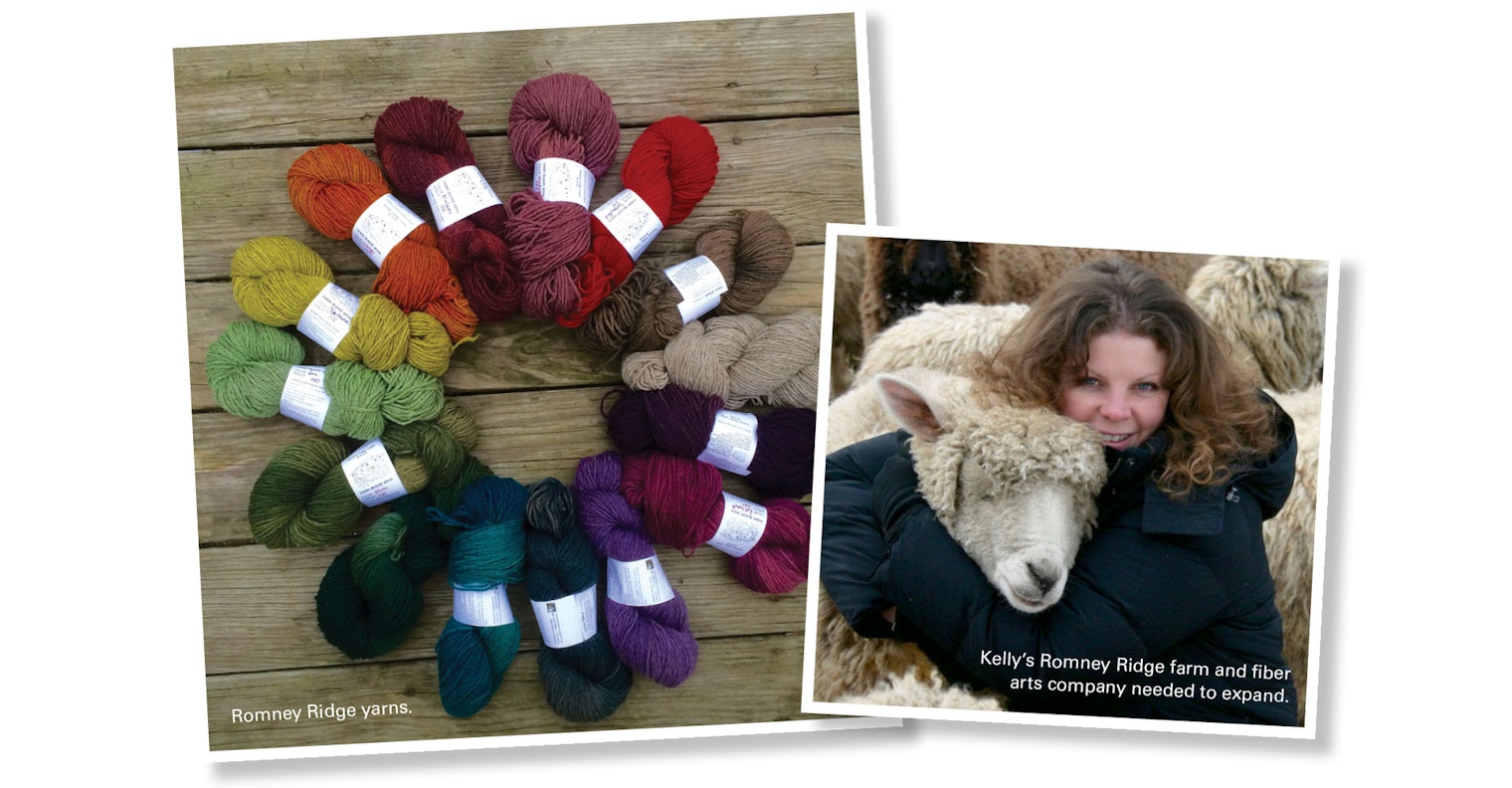
In the spring of 2016, Kelly Corbett packed her car with dyeing equipment: hot plates, vats, dyes and mordant, drying racks, and the all-important yarn, yarn, and yarn. With her car stuffed, she drove her traveling dye-works toward her Boston class from her farm in Woolwich, Maine.
Kelly’s fiber arts business, Romney Ridge Yarns & Wool, included a brick-and-mortar dye studio, but she needed portability. She talked with the food-truck owners at Boston’s SoWa award-winning outdoor marketplace, where she sold yarn on Sunday afternoons. With the food-truck owners’ advice, she sketched a pull-behind trailer, smaller than a food truck, but with counter space and storage.
She wished that instead of putting up cash for the project she could trade skeins of hand-dyed yarn. How many skeins would equal one traveling dye studio? She started to do the math.
In Kansas City, Missouri, Amber Wilson saw a market for hundreds of woolen stockings at historic reenactments. Several brands of hand-crank sock-knitting machines were manufactured in the early 1900s, and a knitter with a circular sock machine (CSM) could make a pair in under an hour. Modern reproductions cost around $2,000, and CSM owners describe “a steep learning curve” to get started.
Both Kelly and Amber could purchase equipment if they had enough advance orders. In March 2015, Amber launched a Kickstarter campaign for The Sanguine Sock. In May 2016, Kelly launched a Kickstarter campaign to add a portable studio/shop to her Romney Ridge business.
Kickstarter is the largest Internet-based crowdfunding company. The Kickstarter website provides a home base and online tools to arrange public funding for business start-ups. In short, Kickstarter spreads the news of a new business idea and gathers all the financial transactions. The project creator (in this case, a craftsperson) supplies a financial plan and incentive gifts for financial backers. Kickstarter vets the project for practicality.
With Romney Ridge, Kelly already maintained a customer base of four thousand Facebook followers in addition to her contacts in the Maine wool industry. For her Kickstarter video, she created a slide show from photos on her regular website. Amber began from scratch, developing a logo for The Sanguine Sock. Her Kickstarter video features Amber sitting by the fireplace and talking about her business plan (along with some humorous outtakes).
Both Amber and Kelly offered incentive awards directly related to their projects’ financial goals: socks from Amber and hand-dyed yarn and knitting patterns from Kelly.
Like Amber and Kelly, project creators construct a menu of incentive gifts for the project’s financial backers. They make the project available online until a funding deadline (usually 30 days). Backers make credit card pledges. If a project falls short of its financial goal, no credit cards are charged. If the project successfully meets its financial goal, Kickstarter drops a lump sum into the craftsperson’s bank account, less 8 to 10 percent Kickstarter fees and credit processing fees for the total amount. (Other crowdfunding platforms may have different models and pricing structures.)
After fund-raising, the project creator sends a survey to each backer through Kickstarter for details such as color choices or sock sizes. Kickstarter maintains a detailed report, tracking which incentives have been fulfilled. The creator provides project updates, including photos and videos, forming a sort of “progress blog,” until the work is complete. According to Kickstarter, projects launched on the site “are permanently archived and accessible to the public.” Projects—including failed projects—cannot be removed or edited. In addition, Kickstarter offers “no guarantee that people who post projects on Kickstarter will deliver on their projects. . . . Kickstarter advises backers to use their own judgment.” Despite these cautionary words, thousands of consumers surf Kickstarter daily, seeking new businesses to support.
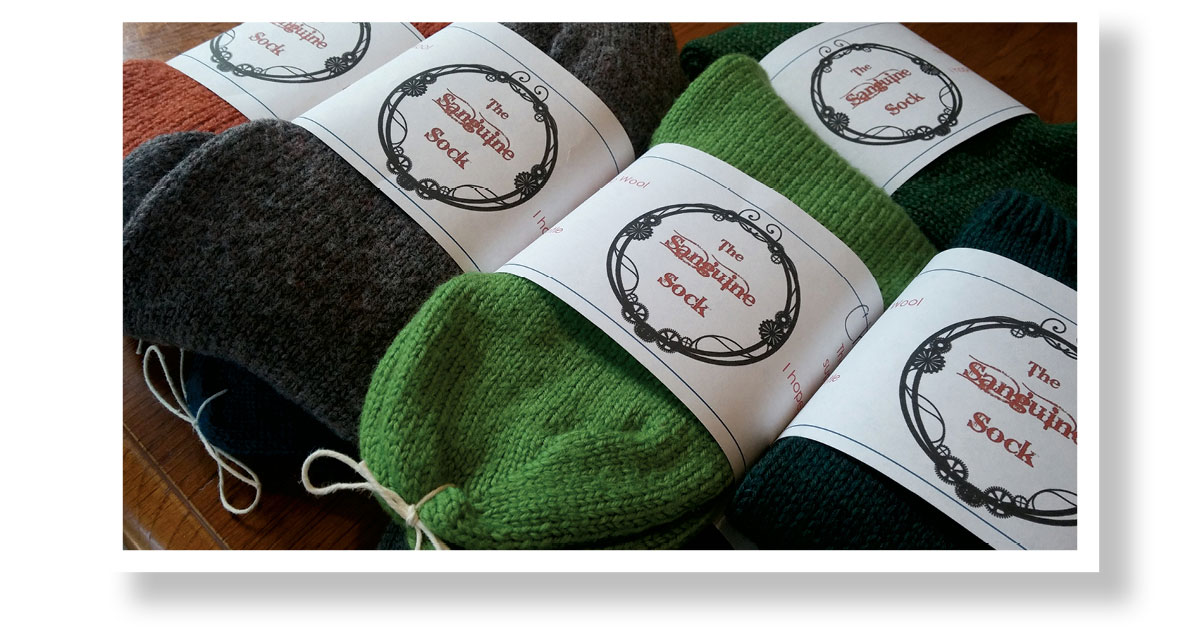
Amber’s Sanguine Socks are quick to knit on her new circular sock-knitting machine, but knitting a hundred pairs was a major undertaking. Photo courtesy of Amber Wilson
The Sanguine Sock campaign surpassed Amber’s goal, giving Amber $4,000 for nearly a hundred pairs of custom-knitted historic-style socks. Amber purchased an Erlbacher Gearhart knitting machine from the manufacturers in Cape Girardeau, Missouri, and she began knitting.
Kelly’s Kickstarter journey is a bit more dramatic. Even with her extensive network, she struggled to find funding for the $16,000 customized trailer. After an initial wave of backers, Kelly felt like she was begging, week after week. At the deadline, she was $10,000 short. According to Kickstarter’s rules, she received nothing. The credit card transactions were cancelled, and she still had no trailer.
Like any good business owner with $5,000 of pledged support, though, Kelly picked up her pencil and drew a smaller trailer with fewer features. With less customization from the dealership, she would do her own labor on the trailer. She launched a second Kickstarter for $8,000 within two weeks, and this time her backers exceeded her goal.
While Kelly ran her Kickstarter campaign, she moved her flock of sheep to a farm south of Boston and her children to a school district north of Boston, all while tending sales and farmer’s markets. Because fiber art is a full-time business for Kelly, she drew many incentive gifts from her existing inventory. With winter on its way, Kelly postponed her delivery from the trailer distributor, so her incentive gifts will be shipped long before the new trailer arrives in her driveway in spring of 2017.
For The Sanguine Sock, Amber fit her machine-knitting boot camp between other commitments. Most new CSM knitters require ten to twelve weeks of concentrated effort to consistently craft socks to size. In retrospect, Amber thinks that she started her business “at the worst possible time.” A dear family member died after an extended illness, and Amber’s progress slowed in a way she could not have foreseen. The sock machine is an amazing piece of engineering, but it does not manufacture more energy. Amber is still glad for her business start-up, but she feels disappointed that the project has taken longer than she promised. As of autumn 2016, Amber continued to knit her incentive socks.
About two-thirds of Kickstarter backers report that their incentives are delivered “in a timely manner,” leaving roughly one in three backers who receive incentives later than expected. As an example, the owner of Humboldt Bay offered commercially knitted socks from homegrown wool before learning that her knitting mill had an eight-month wait-list! The socks were delivered one year after the $1,100 campaign.
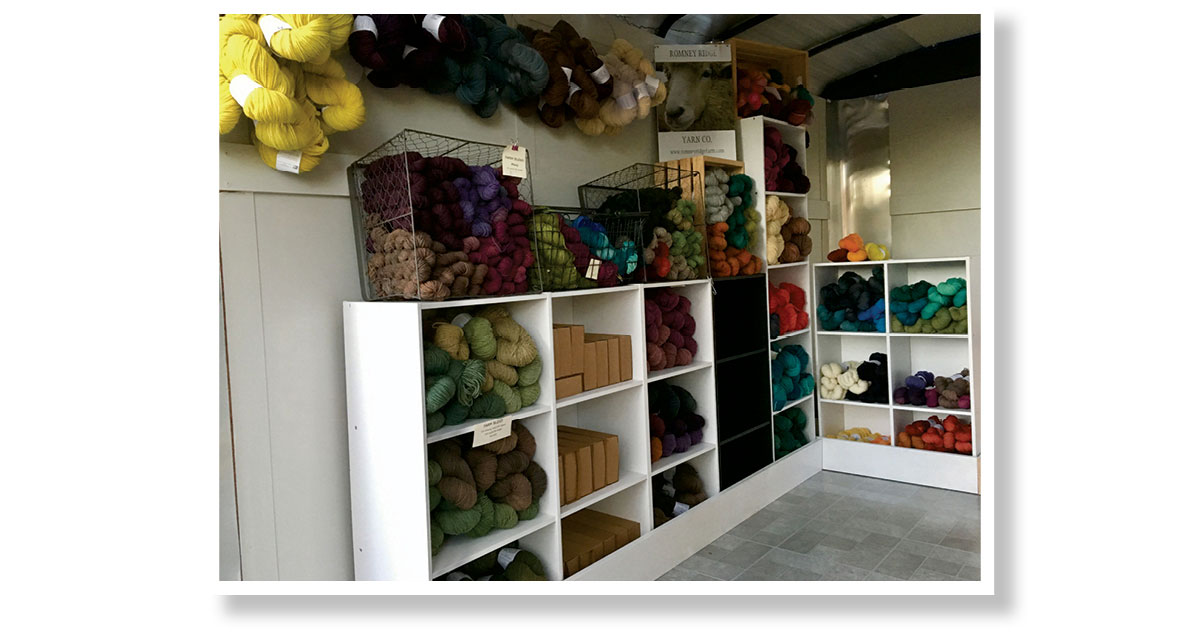
Romney Ridge Yarns & Wool launched a Kickstarter campaign to bring their beautifully dyed yarns to farmers markets and wool shows. Photo by Kelly Corbett
I had planned to launch a sock business before I saw The Sanguine Sock Kickstarter in spring 2015, but I didn’t want to compete with a similar campaign. Instead, I watched her campaign for inspiration. I sketched the Stockingfoot Knits logo, aiming my patterned wool socks toward families and children at my nearby Waldorf school.
Stockingfoot Knits launched in September 2015, drawing $4,000 for 165 pairs of socks. My backers include friends from kindergarten, from my first job, and from the Waldorf School of Moraine Farm. I bought a New Zealand Auto Knitter and began to work.
Between work and an illness in the family, I averaged knitting six pairs per week, far short of my ten-pairs-per-week goal. I completed my incentive packages in January 2017, and my financial backers have been deeply supportive despite my missed deadlines. I am beginning to collect testimonials from backers who love their socks. I now sell socks through a waiting list on a Stockingfoot Knits business page on Facebook. I plan to make forty pairs of socks per month in 2017.
Both Amber and I shaped home businesses with tribes of supporters, though our socks were not completed by the promised time. Kelly’s Kickstarter put a dent in her inventory, but she has already made up the difference.
What is success? For me, each pair of socks is a treasure of color and texture. Knitting is still fun, more than 250 pairs of socks later. When I mail the last sock package to the last person on my waiting list, I will stock up more socks for craft fairs. A stockpile of socks will feel like success. I cannot wait.
Meanwhile, Kelly moved Romney Ridge Farm about five miles from my house. She will lead dye workshops this year to furnish her new trailer.
Denise Frame Harlan writes from her studio in the corner of an upstairs bedroom. She knits from her sock-knitting studio in the corner of the living room. In addition to writing and knitting, Denise teaches first-year college students, and she coaches international high school students through Common Application for colleges in the United States.
More from Spin Off




Comments
No comments yet — be the first to share your thoughts.
Sign in to join the conversation — commenting is for signed-in members.