
Loading the latest stories…
If you want to grow your spinning skills, competitive spinning at state and county fairs is a great place to start.
Andrea Deck2 min read
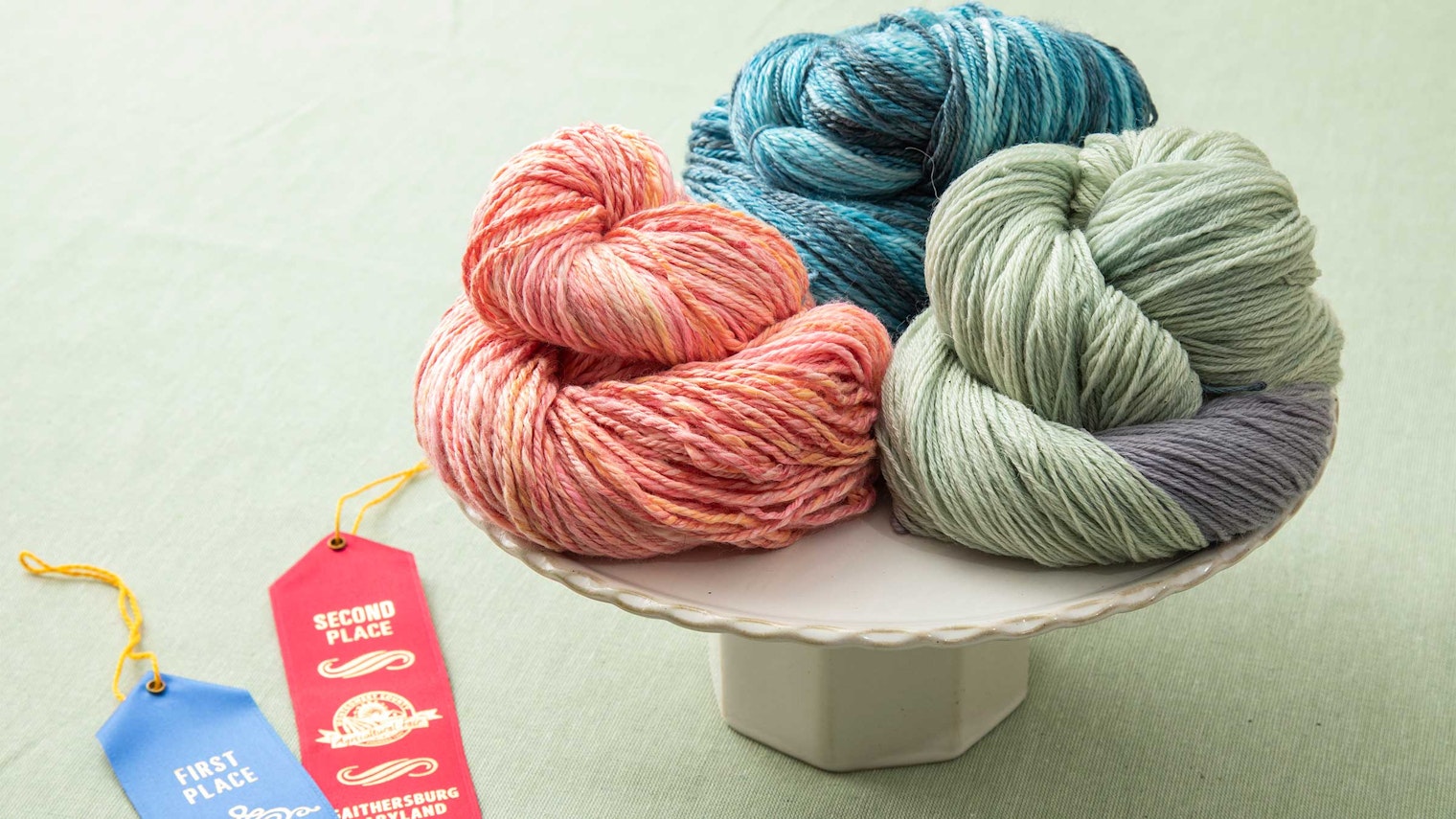
Let’s go to the fair! If you have a county or state fair nearby, you may have strolled the aisles of winning quilts and jams before. As a spinner, you can join in! The first step is research. What qualifies you to enter, what are the due dates, and what categories do you want to enter?
No matter if your category is “fiber arts” or “2 oz of 2-ply alpaca handspun,” make sure you’re following any directions really closely for things like size of skein, how many categories you can enter, and if there’s a specific type of tag or tie. Be sure to prepare your skeins exactly as instructed—making them as pretty as possible! Here are a few of the skeins I’ve entered into fairs over the years.
Wild Hare Fibers Vegan Smoothie is a 40/40/20 blend of microfiber nylon, bamboo rayon, and soybean fibers. I chain-plied the singles. The final skein is four ounces and 275 yards. This skein won second place in the Vegetable Fiber, More than One Ply category at my county fair.
 Andrea’s Wild Hare Fibers Vegan Smoothie skein. Photos by Pamela K. Schultz unless otherwise noted
This superwash wool is three ounces of two-ply yarn. I dyed it with cochineal and entered it into two different fairs. It won first place in the Botanical Dye category at the county level.
 Andrea’s cochineal-dyed skein.
Greenwood Fiberworks Shades of Turquoise in a 50/50 Merino/Tencel blend. This skein is 250 yards that I chain-plied. It won first place in the Wool Blends, More than One Ply category at my county fair. Even though it won first place, there’s still room for improvement—I got a note back that I need to work on blending my chain-ply loops into the yarn.
 Andrea’s Greenwood Fiberworks Shades of Turquoise spin.
And last but not least, this wool skein was first dyed in a fresh-leaf ice bath from indigo grown in my garden. Then I overdyed it with logwood. It won first place in the Handpainted Multi-Ply category at my county fair. I went on to display it at two other fairs, but I did not enter it into competition in those fairs—I was doing demos and didn’t consider it. . . fair to also compete.
 Andrea’s indigo ice-dyed skein, which she overdyed with logwood.
Even if I don’t leave with ribbons, I leave with pages of notes from expert judges who really looked at my yarn and gave great advice! It’s a fun way for me to meet other spinners, challenge myself with new types of fiber and quality, and really scrutinize my skills with an expert.
Want more tips for entering your handpsun in competitions? Don’t miss Joan Sheridan’s article, “Spin to Win,” in the upcoming Summer 2026 issue!
More from Spin Off
From the Library



Comments
No comments yet — be the first to share your thoughts.
Sign in to join the conversation — commenting is for signed-in members.