
Loading the latest stories…
Carded wool cloud is famously forgiving to spin—woolen, worsted, and any drafting technique in between are all options to try.
Kate Larson2 min read
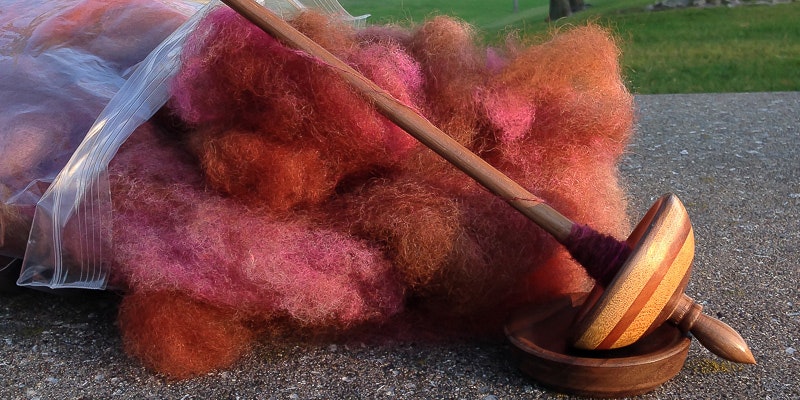
Previously, I shared some of the ways I enjoy preparing carded cloud for spinning. Now let’s see what happens when we put those techniques into practice. Here are three yarn recipes:
 Left: The twist is between your hands as you draft a staple length or less for a semi-woolen yarn. Right: Snazzy 2-ply yarns.
Best effect: Texture and distinct color.
Cloud preparation: Spin straight from the cloud.
Try changing the cloud preparation as little as possible. Carded wool can become a bit compacted as it travels from the carding machine to your spinning wheel. Simply pull the fiber out of the bag, fluff it just a bit, and begin spinning. I often see spinners using a semi-woolen draft with these fibers. Plying these somewhat textured singles into 2-ply yarns will highlight the handspun charm more than a 3-ply or beyond, which yields a rounder, smoother yarn.
 Left: Rolags for woolen longdraw. Right: 4-ply cabled yarns.
Best effect: Lightweight and increased durability.
Cloud preparation: Rolled into a rolag.
Spinners often find that their first cabled yarns are quite dense and heavy, but they need not be. Opening and teasing your carded wool cloud and even rolling it into a rolag will allow you to spin this lovely prep with a woolen longdraw. This will give you a delicate, soft singles. However, creating a cabled yarn, such as a 4-ply cabled yarn, increases durability and can add loft and elasticity. I love this bouncy yarn and its mixed-color effect.
 Left: Corespinning carded wool cloud around a millspun fingering-weight wool yarn. Right: Corespun can be smooth or funky, left as a singles-like yarn, or plied to create further effects.
Best effect: Typically a heavier gauge but deceptively lightweight yarn.
Cloud preparation: Drawn into roving.
Cloud is a treat to spin into corespun yarns. Pulling it into a roving allows me to manage the core, twist, and fiber wrapper more easily with less fiber to manage. Pulling these fibers into roving also attenuates and organizes, so the finished yarn is smoother and more consistent.
Kate Larson, editor of Spin Off, teaches handspinning around the country and spends as many hours as life allows in the barn with her beloved flock of Border Leicesters.
Originally published May 21, 2018; updated July 29, 2024.
More from Spin Off
From the Library




Comments
No comments yet — be the first to share your thoughts.
Sign in to join the conversation — commenting is for signed-in members.