Loading the latest stories…
Calculating the yardage for a project needn’t be a challenge. Meet a handy tool every handspinner should have: the yarn balance.
Emonieiesha Hopkins4 min read
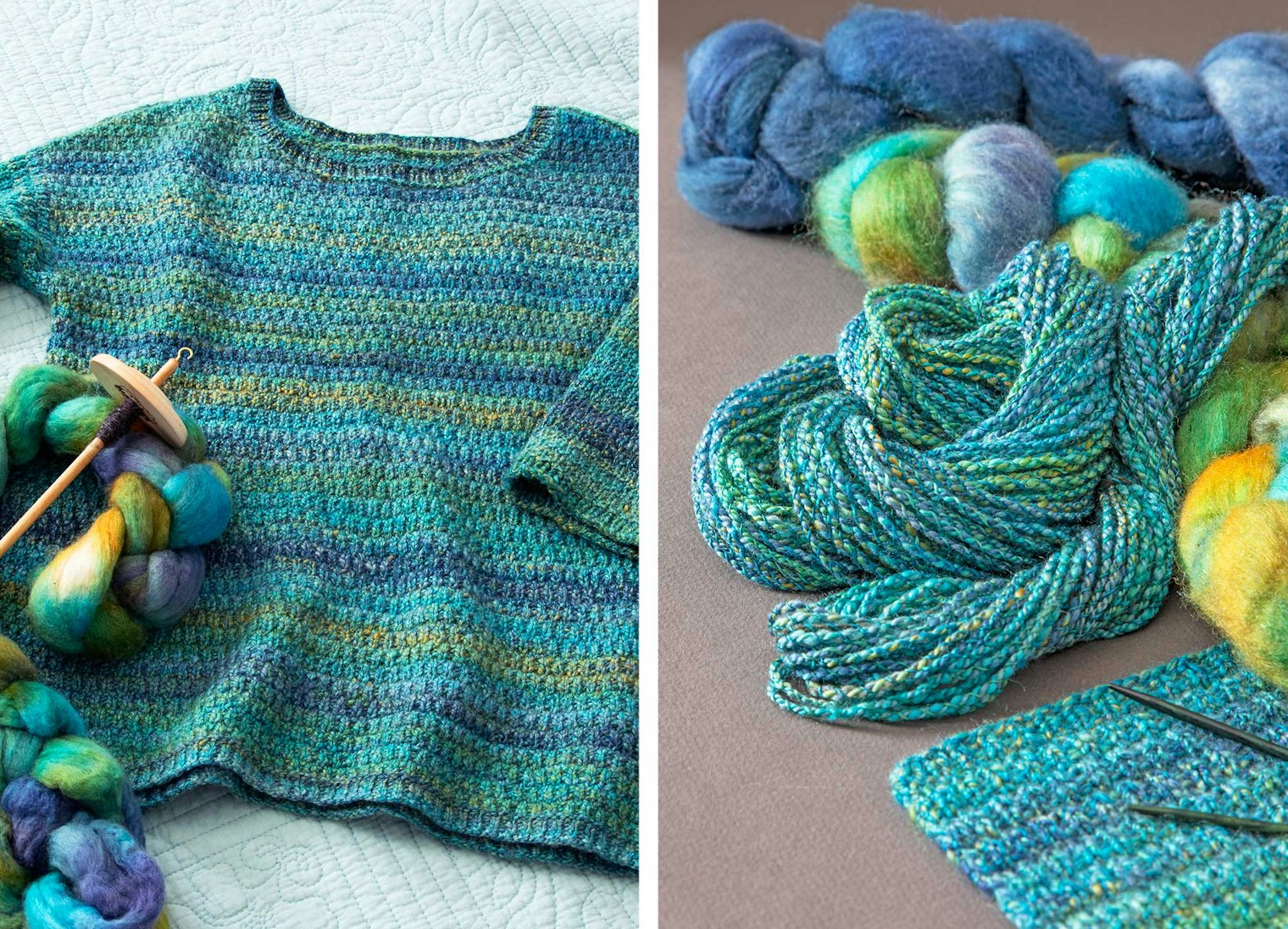
In my experience, there are two types of spinners: those who spin and create and those who spin just to create! I want to connect with those of you who spin and create, the intentional spinners. When we have eyed a project that we just can’t live without, the next question is often, “How much fiber do I need?” A yarn balance can help you answer that question and bring your project to life. So, let’s look at this essential yet simple tool that can answer some of the most important questions when planning a project.
In the past, when I thought of measuring my handspun for a project, I used to automatically run to my yarn swift with an attached yardage counter or a yardstick, but then I discovered a yarn balance. A yarn balance, or McMorran balance, is a nifty tool that helps calculate yards per pound using only a small sample of yarn. What does that mean to the handspinner? This little gem of a tool and a little simple math can tell us the number of yards of handspun that can be (or has been) spun from a specific weight of fiber. Genius! Say goodbye to the dreaded game of yarn chicken. This definitely feeds my must-have-all-the-spinning-gadgets soul!
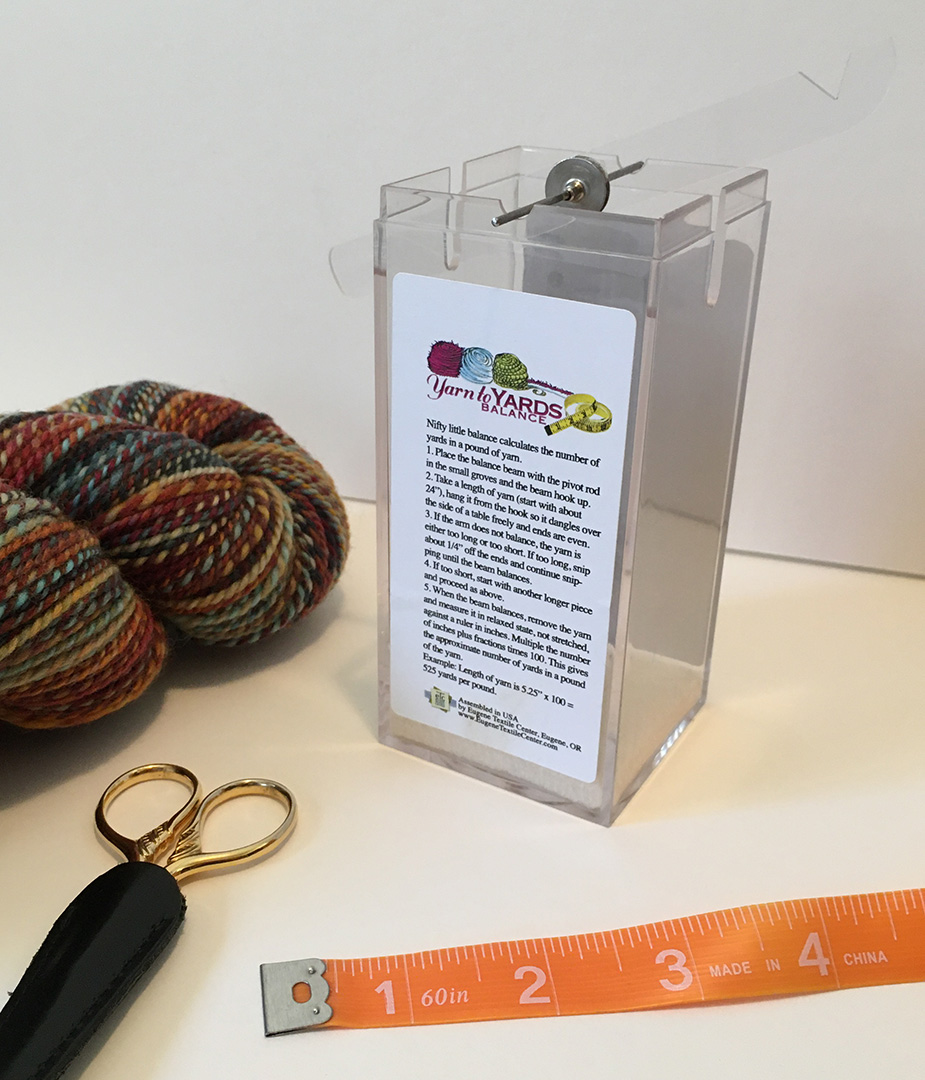
To calculate the yards per pound of your sample yarn, all you need is a yarn balance, a measuring tape, a pair of scissors, and a length of your handspun yarn. Photo by Elizabeth Prose
I think a yarn balance should be a part of every handspinner’s toolbox, and here’s why: It’s a small, portable, and easy-to-use tool that’s readily available, and it’s much more affordable than a yardage counter. There are several articles on how to use a yarn balance, so I will not repeat those instructions here, and some models, such as the Yarn to Yards model shown above, have the instructions written on the tool itself, which is extremely handy.
 Although a yarn balance works best on evenly spun yarn, there are some workarounds, as Emonieiesha describes below. Photo by Emonieiesha Hopkins
A yarn balance works best on evenly spun yarn, whether singles or plied. However, if you have some lumps and bumps (intentionally or unintentionally), repeating the measuring process multiple times will give you values that can be averaged to produce a more accurate answer to your yardage questions.
I would also suggest using another method to measure art yarns, highly textured yarns, or very bulky-weight yarns. The bulky and often uneven nature of these yarns will skew the results when measuring a sample on a yarn balance. Winding onto a swift or even measuring with a yardstick will give you more accurate yardage information.
When a handspinner plans a project, we have many factors to consider, such as breed, fiber preparation, wheel or spindle choice, and color. And then, after taking into consideration all of that, we have to be concerned about spinning a consistent yarn! But somewhere in all of this planning, we need to know how much yarn we need to spin for our project. In other words, how many yards do we actually need?
As handspinners, we have the option to purchase fiber in ounces, grams, or pounds, which is helpful, especially when planning a big project. No one wants to play yarn chicken, so be sure to purchase about 15 to 20 percent more fiber than your calculation says you need, just to be safe.
Happy project planning!
Emonieiesha Hopkins is a Chicago, Illinois, fiber evangelist. She loves to gather her wool and good fiber friends, any time, any place. Emonieiesha can be reached on Facebook @Emonie Hopkins or on Etsy at Hopkins Sewing Studio.
Originally published November 6, 2020; updated July 1, 2024.
More from Spin Off
From the Library


Comments
No comments yet — be the first to share your thoughts.
Sign in to join the conversation — commenting is for signed-in members.