
Loading the latest stories…
Learn how three baths and a spin keep your wool fiber full of life and vitality.
A. Sabine Schröder-Gravendyck5 min read
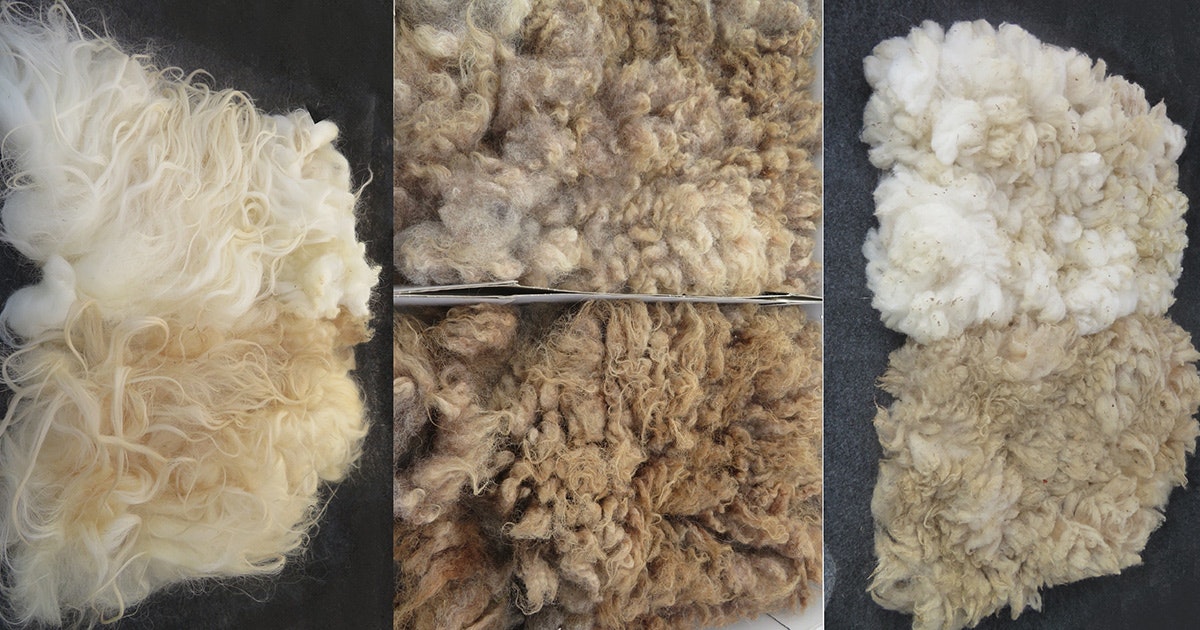
You can wash a fleece to death.
Once I bought the leftover wool from a summer camp. It was an awesome camp, offering woodworking, painting, and wool spinning. The kids enjoyed it very much. They used raw local wool and washed it in tubs. After the camp was finished, I bought the rest of the wool. The money went into the fund for next year’s camp. My motivation was to put the wool to use and support the camp.
At home, I unpacked the wool and checked it out. It was rough and parched (very dry), without elasticity and smoothness. I gave it a try and spun and finished a small skein. It showed what had been obvious before; the wool was lifeless. Cause: total degreasing of the wool fleece due to overwashing.
A raw fleece contains fiber, lanolin, suint, water, and dirt. How much depends on the breed, the food, the environment, the weather, and other factors. Generally speaking, most fine-wool breeds have a lot of grease; medium and primitive breeds have less.
Grease is a vital part of wool. Too little grease makes the wool stiff, dull, and hard to draft. Too much grease will make the wool sticky, smelly, and hard to draft. The right amount of grease makes the wool vivid, resilient, and fun to spin!
Here some key points to keep in mind:
Here is one quick and easy method I use for washing wool fleece in a bucket or your sink. In fact, I don’t consider it washing but bathing.
I use hot water for soaking, washing, and rinsing to avoid temperature changes that may lead to felting; about 140° to 150° Fahrenheit is a good temperature range. Hot water is necessary to remove the grease and avoid redeposition. The soaking-bath water provides an excellent fertilizer for the plants in your yard and garden after it cools down. The spinning step is an essential part of the process. Remaining dirt is removed with the water, and afterward, the fleece dries quickly.

Bagging
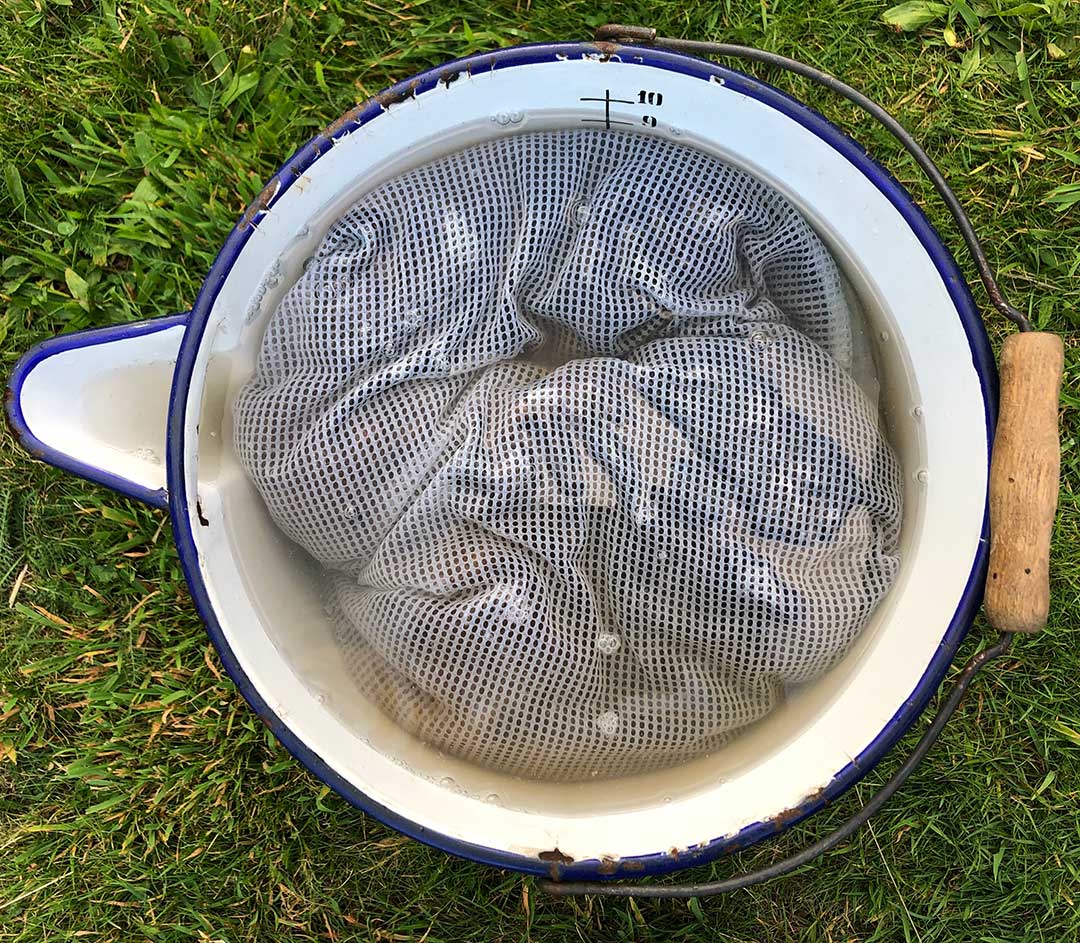
Place the wool fleece in a mesh bag. The bag needs to be large enough to keep the fiber pretty loose and fit into your sink. My bag usually contains 5 to 7 ounces of fiber.
Soaking
Fill a bucket or sink with hot water. Place the bag of wool on the surface and let it sink in. You may push it down slowly and gently. Set your timer for 20 minutes.
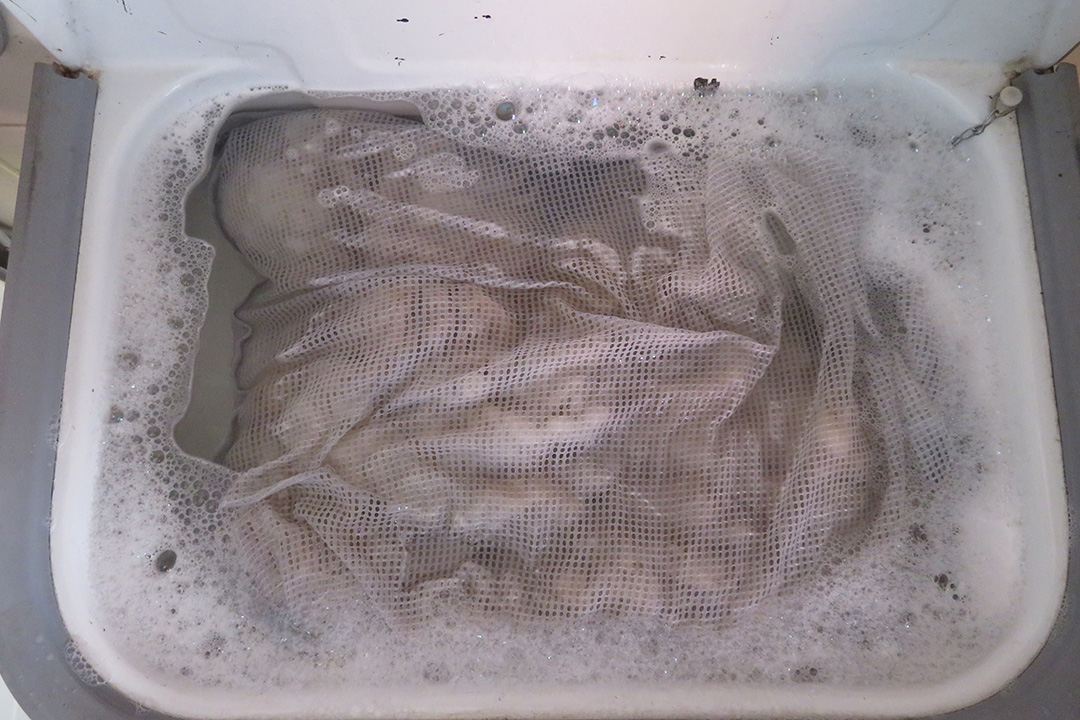
When the timer is close to elapsing, prepare the washing bath. Fill another sink or bucket with hot water, add a neutral detergent, and stir. When the timer elapses, take the bag of wool out of the soaking water, drain it a bit, and continue to the next step.
Washing Bath
Place the bag of wool on the surface and let it sink in. You may push it down slowly and gently. Set your timer for 20 minutes.
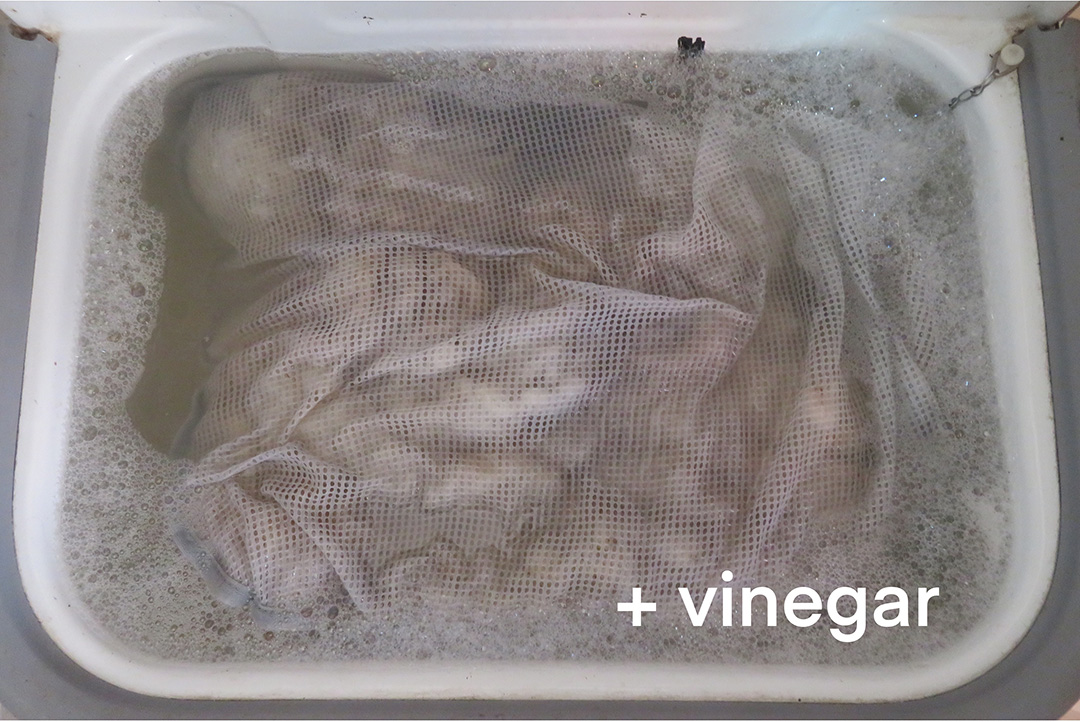
When the timer is close to elapsing, prepare for the rinsing bath. Fill a bucket, or a second sink, with hot water, add a tablespoon of white vinegar and stir. When the timer signals the end of the wash, take the bag of wool out of the washing bath, drain it a bit, and continue to the next step.
If you want to use the same sink for the rinsing bath, take the bag of wool out and place it in a bowl while you prepare the rinsing bath, as described above, then place the bag of wool in the bath, and continue to the next step.
Rinsing Bath
Place the bag of wool on the surface and let it sink in. You may push it down slowly and gently. Set your timer for 20 minutes. When the timer elapses, take the wool bag out of the water and put it into a bowl for transporting. Continue to the next step.
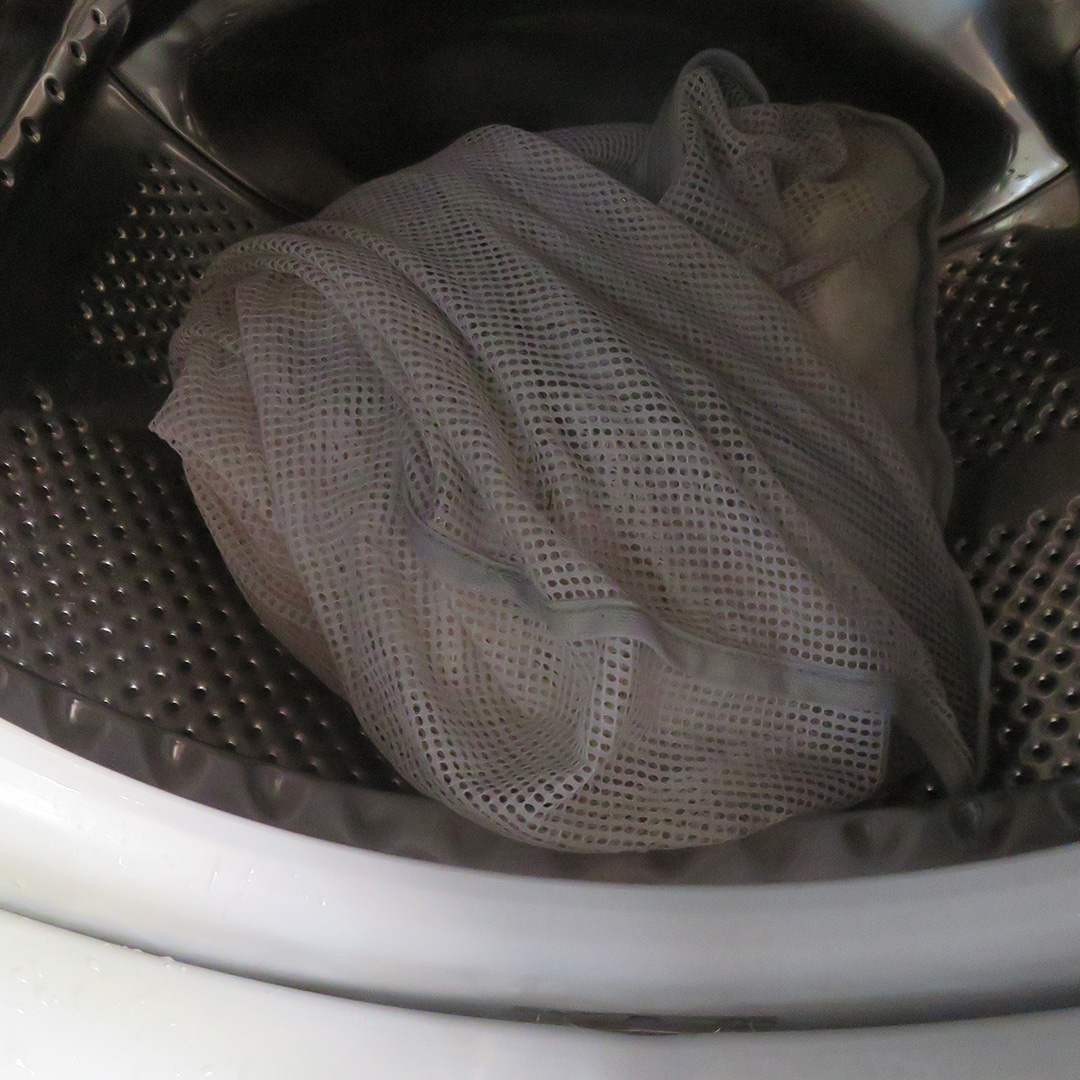
Spinning Out the Water
Transfer the bag of wool to your washing machine or use a salad spinner or one of the lovely, old spin dryers. Spin the wool at a moderate speed, about 400 to 800 revolutions per minute.
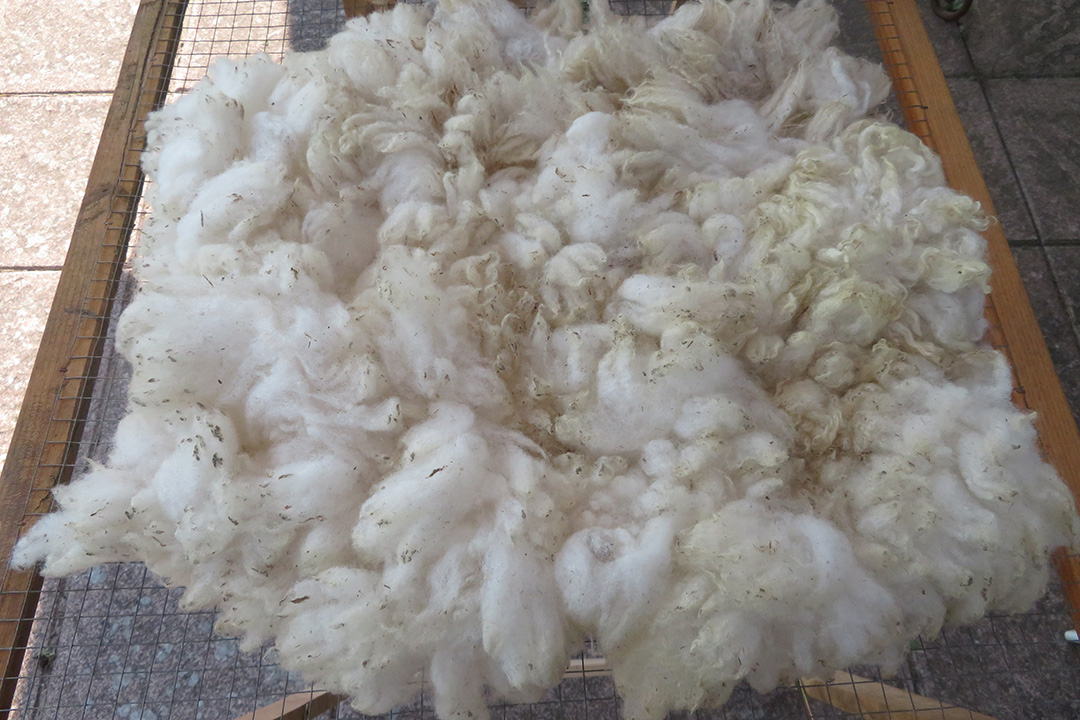
Drying
Remove the wool from the bag, spread it out on a drying rack, and let it dry.
Most laundry detergents are too harsh for washing wool fleece. Many are overloaded with chemicals. This is not always the case, so check the label. Also, avoid most wool detergents intended for garments and shampoo; they often contain silicones, enzymes, softeners, phosphates, and preserving agents. These all can damage your fiber. Also, I avoid using washing soda when washing wool. Dissolving washing soda in water makes a strong base, which can damage wool.
Detergents designed for washing raw wool are milder and include pH neutral (pH 7 to 8) soaps, detergents, and liquid dish soaps. Name brands vary depending on your location.
 Sabine uses about 10 milliliters of pH neutral liquid dish soap, or about 1/3 of an ounce, to wash about 100 grams, or 3½ ounces, of raw fiber.
Amount of Detergent
As a rule of thumb, I use about 1/3 of an ounce of neutral liquid dish soap per 3½ ounces of raw fiber. This amount works fine for landraces and middle greasy fiber. For a greasier fiber, I double the amount of detergent. The important thing is not to use too much. There shouldn’t be a lot of foam at the end of the washing bath, only a bit.
Also, your water quality (hardness or softness) may be very different from mine. You may need to experiment and try another amount of detergent, temperature, or to make other adjustments to get the desired results. And every breed’s fleece is different.
Try washing using my method and compare the wooly results. Take notes. Write down what worked for you and what did not. Washing your fiber is a big part of getting to know your fiber. Soon, you will get a feeling for what suits your fleece.
Learn more about what is often called “wool grease”—a mixture of suint, dirt, grease, and more—in “Wool Basics: What is Grease?”
A. Sabine Schröder-Gravendyck, D.V.M., makes her home on Germany’s North Sea coast where she works as a naturalist and educator in sustainability and ecology. She is always looking for new ways to help people merge their personal spaces with nature. You can find more about Sabine on her website, www.florafauna.pro.
Originally published August 17, 2020; updated June 23, 2025.
More from Spin Off
 Tour de Fleece 2026: Check Point, Plus How Do You Tour?We’re checking in on Tour de Fleece progress, planning for Tour de Femmes, and we want to hear from you!Stefanie Johnson · July 17, 2026
 Twisted Love: An Artist Measures Twist & GristJoin Sahara as she talks about her approach creating yarns for a variety of projects.Sahara Briscoe · July 15, 2026
 Getting Started with Wool CombsJoin us as we start a new course with expert instructor Heavenly Bresser, and discover the secrets to successful wool combing.Pamela K. Schultz · July 8, 2026
 Spin Off Submissions Summer 2027: Summer BreezeTell us how you make summer spinning and fiber prep a breeze. Submit your idea for the Summer 2027 issue today!Pamela K. Schultz · July 6, 2026
 Wrapping Up 5 Ways to Prep and Spin a Braid As this course comes to an end, the Spin Off community reflects on colorful discoveries and celebrates the joy of learning through hands-on experimentation.Spin Off Editorial Staff · July 3, 2026
 Tour de Fleece 2026: Getting StartedWhether you want to spin a little or a lot, there’s space for you in the Tour de Fleece!Stefanie Johnson · July 1, 2026
 Choosing the Whorl to Make the Yarn You WantMake your wheel work for you by learning how ratios help you spin yarn with just the right amount of twist and thickness.Rudy Amann · June 26, 2026
 How to Use a Chain Plying BallChain plying got you down? Try a simple technique to help you make it easier!Pamela K. Schultz · June 24, 2026
 Fresh Bands, Smooth Spin How do you know when to replace your drive band or brake band?Amy Tyler · June 19, 2026
 Matching Your Combs to Your FiberIf your goal is perfectly aligned fibers for worsted spinning, combs have no equal. But how you select your combs and fiber matters, too.Heavenly Bresser · June 17, 2026
From the Library


Comments
No comments yet — be the first to share your thoughts.
Sign in to join the conversation — commenting is for signed-in members.