
Loading the latest stories…
Not all bamboo fibers available to handspinners are processed in the same way. Maggie Casey explores how regenerated bamboo, bast bamboo, and carbonized bamboo spin and knit up.
Maggie Casey4 min read
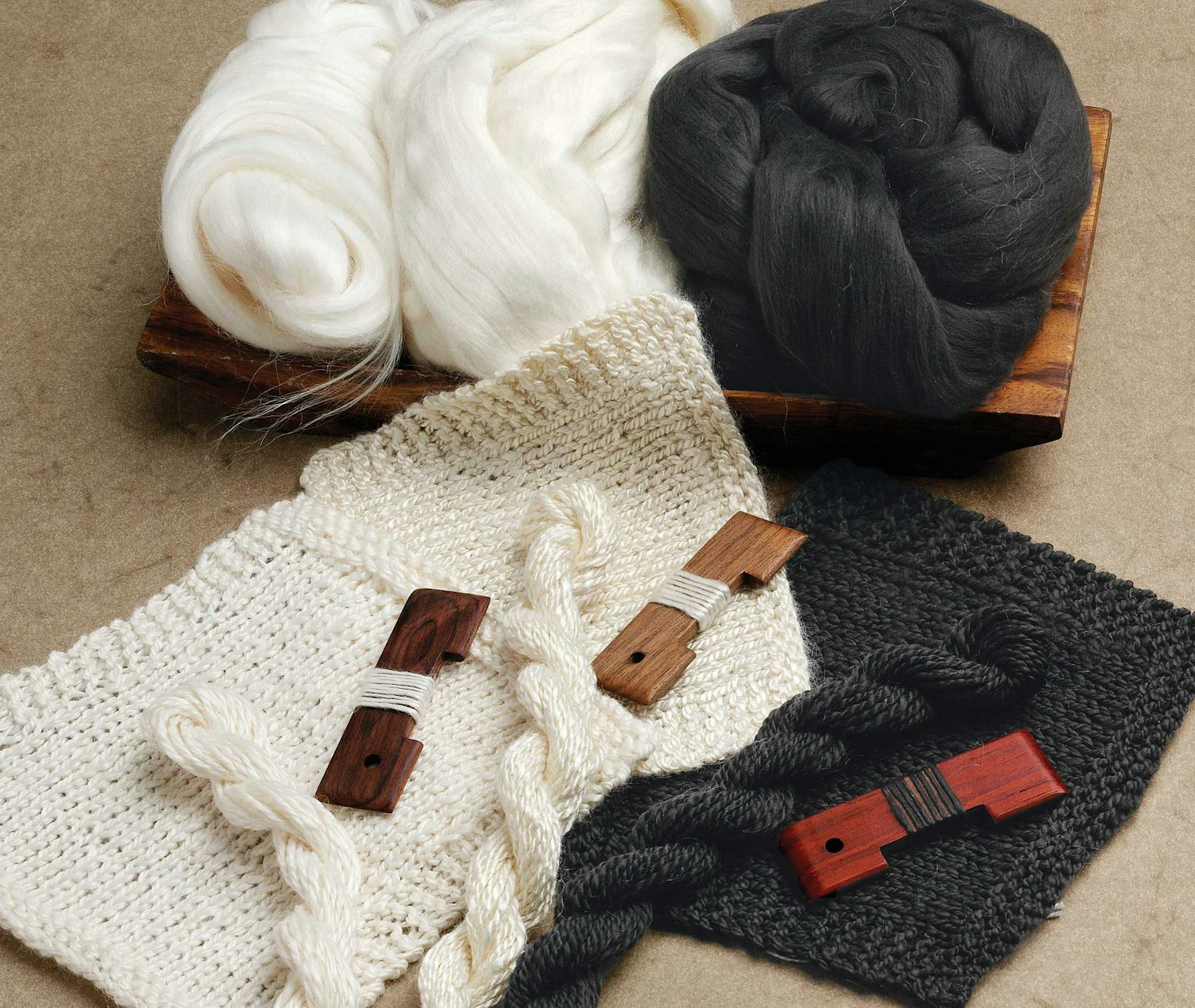
Bamboo is bamboo is bamboo—right? Well, it depends! The way bamboo is processed makes a huge difference in the fiber and yarn. We spinners have choices—we can spin regenerated bamboo, bast bamboo, or carbonized bamboo. How do you choose? I couldn’t decide, so I tried all three.
To understand the differences in the fiber, I decided to spin the fibers all the same way and the same size. All of the fibers came as roving and two of them were combed top, so I spun all the samples as a worsted yarn, and by that I mean that I used a short forward draft and didn’t allow any twist between my front and back hands. I spun the samples on my scotch-tension wheel with an 11:1 drive-wheel ratio.
After spinning and plying each sample, I washed the yarns in warm water with hand dishwashing detergent, rinsed them twice with warm water, and hung the skeins to dry without weight. I knitted each yarn into a swatch, and the swatch was washed, allowed to dry flat, and lightly steamed.
This is the most common type of bamboo fiber available to spinners. It is a regenerated fiber, meaning that leaves and other parts of the plant are dissolved in a caustic solution and turned into a viscose solution. The solution is then extruded and hardened into fibers. The pearly white fiber is very smooth and has a high sheen.
These fibers were soft and slippery and (in dry, arid Colorado) full of static electricity. I spun them with a worsted draw keeping the twist between the orifice and my front hand to accentuate the luster and drape of the fiber. It took some time to adjust my wheel to get just the right amount of twist into the fibers.
After washing, the yarn was silky and smooth; it bloomed a bit and had a little elasticity.
Bast bamboo is processed in a mechanical method similar to flax and other bast fibers. The fibers are separated from the outer woody part of the plant, retted, and then combed into a spinnable fiber. The roving is bright white and combed, but the fibers seem coarser than in the other samples, and some of the fibers were different lengths, very much like flax roving.
This bamboo spun very much like flax roving, but the fibers seemed to be softer and finer than linen. I spun a worsted yarn with no twist between my hands. Not all the fibers were the same length, and there were occasional noils. The fibers were much stiffer than in the other preparations, and if a little twist would get between my hands, the twist could really lock those fibers together. When I plied, I added a little extra twist because when I let my freshly spun singles yarn twist back on itself, the ply was so open that my knitting needles would have constantly split the yarn as I knitted.
When I washed the yarn, it had much more body than the other bamboos and even less elasticity. It softened a little in washing but was still a little stiff, and it did not bloom at all.
According to Judith MacKenzie in her book The Intentional Spinner (Interweave, 2009), carbonized bamboo fiber is created by impregnating bamboo fibers with very fine carbonized bamboo powder. The fibers seem similar to rayon bamboo. They are very soft and have a low sheen.
When I predrafted some of these fibers, they almost squeaked as they slipped past one another in my hands. I spun the fiber as a worsted yarn with no twist between my hands. The fibers drafted out nicely, but there was some resistance as I drafted that had nothing to do with the twist. While the rayon bamboo was very smooth and a little slippery, this fiber had some tooth to it. When I would drop the yarn, the twist didn’t run out as quickly as I expected.
After washing, the yarn had quite a bit of loft and a surprising amount of elasticity.
I had no idea that there would be so much difference between the three fibers when I embarked on this project, and as I admired my swatches, I immediately started planning on ways to use each one. I can imagine a scarf woven from the rayon bamboo, a summer top knitted from the bast bamboo, and maybe a sweater from the carbonized bamboo. Now which one should I start first?
Maggie Casey is co-owner of Shuttles, Spindles & Skeins in Boulder, Colorado, and spends her evenings starting more projects than she can ever finish. She’d like to thank Jim Laski from Ashland Bay for answering all her questions.
This article was published in the Winter 2014 issue of Spin Off.
More from Spin Off
 Spinning the New Fibers: Adventures in Soy, Bamboo, Banana, Steel, and MoreWhat are you spinning right now? We'll bet it's not bananas!Patsy Zawistoski · October 16, 2021
 Candy for Spinners: Carding Wool PunisStephanie Stratton · July 15, 2019
 Closet Full of WHAT??: Spinning Bamboo & Dyeing TencelAlthough I’d spun bamboo before, it had been in small quantities. For this project, I spun about a pound of bamboo from the fold, making this slippery fiber much easier to manage.Deb Gerish · April 4, 2019
 Spinning Silk Guide for Knitting, Crochet or Embroidery ProjectsLearn everything about spinning silk yarn in this free guide on how to spin silk for knitting, crochet, embroidery, and more with expert advice!Amy Clarke Moore · August 8, 2018
 Use a Blending Board for Rolags and MoreWhether you prefer smooth and subtle or funky and chunky blends, the blending board can produce a variety of fiber preparations. Here’s Deborah Held with more.Deborah Held · July 6, 2018
 Why Spin Off MattersSpin Off magazine is turning 40! We’ll observe it officially with the Fall 2017 issue, but at this age, you should never wait to celebrate.Anne Merrow · October 25, 2017
 Handspinning Textured Yarns: Art Yarns for Practical PeopleSince cabled sweaters dominate my knitting queue, they don’t offer much incentive for handspinning textured yarns.Deb Gerish · October 17, 2017
 Natural Fibers: Free Spinning Projects on Alternative Fibers and MoreLearn how to prepare and spin natural fibers for spinning in this exclusive, FREE eBook that includes free projects on alternative fibers and more.Spin Off Editorial Staff · July 11, 2017
 All About FiberNovember 14, 2015
 Spinning what comes naturallyNovember 10, 2015
From the Library
Comments
No comments yet — be the first to share your thoughts.
Sign in to join the conversation — commenting is for signed-in members.