
Loading the latest stories…
SUBdyed fibers
Modify the color of your dyed fibers by adding iron and tannin post-dye.
Magan Wilson7 min read
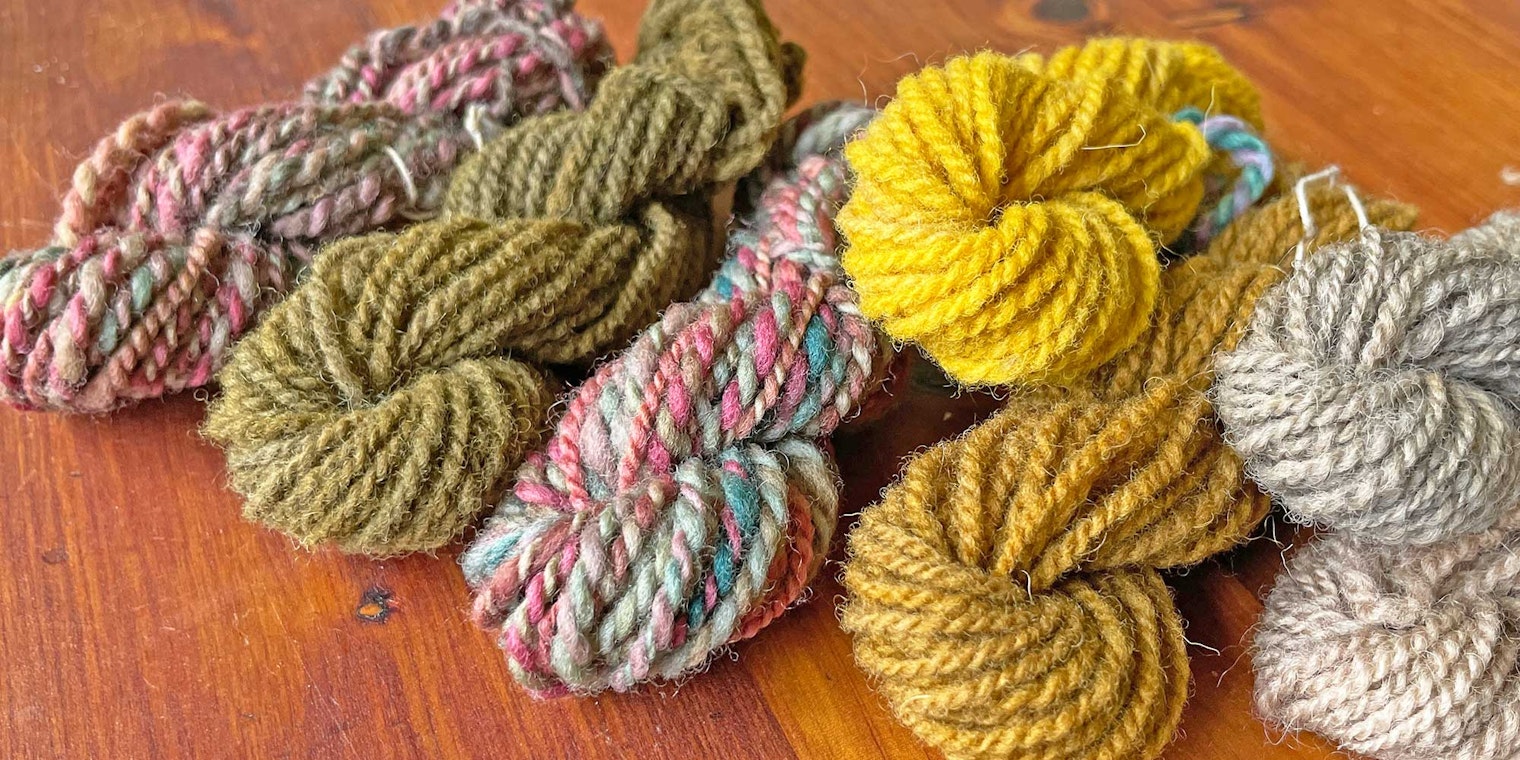
As a dye-focused fiber artist, I ponder ways to incorporate all of my knowledge to create appealing designs and color palettes from start to finish. Everyone has their own personal palette. Some of us love the bright jewel tones of acid dyes, while for others it’s the nuanced hues of natural dyes. Or maybe you prefer to employ the sheep themselves as a “dye artist.”
I find that most people have an awareness of color aesthetics, despite how often people claim to lack this skill. A slight change in hue can be the difference between a purchase and a skein missing the chance to find a home. What if we had the ability to darken hues we might consider too pastel or subdue overly vibrant shades into more muted, complex colorways? We can! It does not take an excessive amount of knowledge, time, or materials to imbue our fiber with tannin to add a brown cast or tannin plus iron to create a gray shade.
Tannin functions as a natural sunscreen for the fibers. It forms bonds with both cellulose and protein fibers, and it can be used on its own or in combination with iron. The tannin provides a structure for iron to bond to, which occurs inside of the fibers and then precipitates (becomes insoluble). When the iron precipitates, it changes the tannin’s hue from brown to gray, modifying the color of the fiber. Each type of tannin—such as tea, gallnut, and pomegranate—and the amount of iron used will create different effects.
Kate Larson put the instructions here to work on a series of samples from her stash. Here’s what she found.
“I pulled three skeins—undyed, naturally dyed, and acid dyed—from my stash to try modifying with tannin and tannin plus iron. I wound five sets of sample skeins: a control set and four test sets. Magan uses tea and gallnut as her tannin sources here, but lacking gallnut, I used tea from my cupboard and pomegranate extract from Maiwa. The results were fantastic! If I were to repeat this, I might dilute the iron bath first—as Magan suggests—to create more delicate grays. All of my samples created with the recipe below retained their soft hand, but iron can create a harsh hand and can damage fibers if used in certain forms and concentrations. Use as little as possible to get the effect you like.”
 Kate started with three stash skeins to overdye. From left: Undyed Polwarth, Columbia mordanted with alum and tartaric acid and dyed with marigolds, and Polwarth spun from an acid-dyed braid.
 The same three yarns were treated in four different ways: tea, tea + iron, pomegranate, and pomegranate + iron. The tea created warmer tans and grays, while the pomegranate created cooler browns and grays.
The instructions here will work for all natural fibers and may also work on acrylic fibers. Iron and soda ash must be used with care. Carefully read the handling instructions and warnings provided by the manufacturer or vendor. Note that the bonds created during this process can be broken by acidic solutions, such as lemon juice. If you’ve explored natural dyeing, you may already have these materials:
 Magan’s studio supplies and a bit of handspun yarn. Photo by Magan Wilson
Alternatively, common household ingredients create a similar effect. Using these ingredients comes with the acceptance of nonrepeatable results. Embrace it!
More from Spin Off
From the Library


Comments
No comments yet — be the first to share your thoughts.
Sign in to join the conversation — commenting is for signed-in members.