
Loading the latest stories…
2 min read

Knitting Traditions are Spinning Traditions
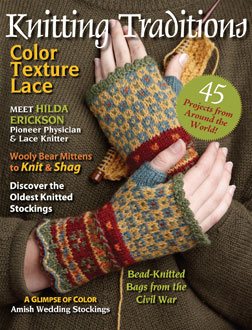
A note from Amy Clarke Moore: I've invited Jeane Hutchins, the editor of_PieceWork magazine (one of_Spin-Off's sister magazines), to talk about the bookazine she's been working on this winter, the beautiful and inspiring second edition of Knitting Traditions. This 148-page special issue includes new content as well as some selected and pulled together from back issues of_PieceWork and Interweave books. Sit back and enjoy the historical highlights in_Knitting Traditions that Jeane describes—and keep this in mind: before the industrial revolution and the invention of the spinning mule in 1779 by Samuel Crompton in England, every stitch of clothing people wore was made from handspun yarn.
 | |
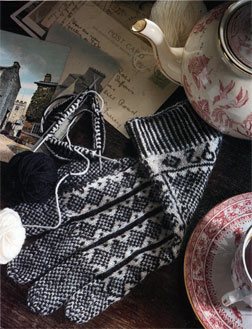 The reproduction of Mary Allen's gloves. Photo: Joe Coca. | |
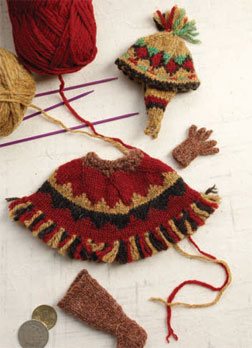 Elements from the Andean figure purses. Photo: Joe Coca. | |
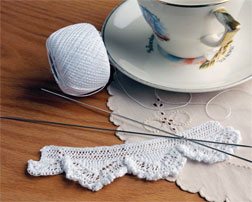 The scalloped edging C. E. Hobert used on his knitted lace. Photo: Joe Coca. | |
| Welcome to Knitting Traditions! I'm so pleased to have this opportunity to introduce you to the second edition of this 148-page special issue from Spin-Off's sister magazine PieceWork. Putting it together was an amazing journey for me. I got to vicariously travel back in time, starting in the late Iron Age (circa 500–1 B.C.), and to places far and wide—from the Arabian Peninsula to Europe and the Americas. The entire trip just re-emphasized how amazingly rich the history of knitting is. Here are a few highlights:
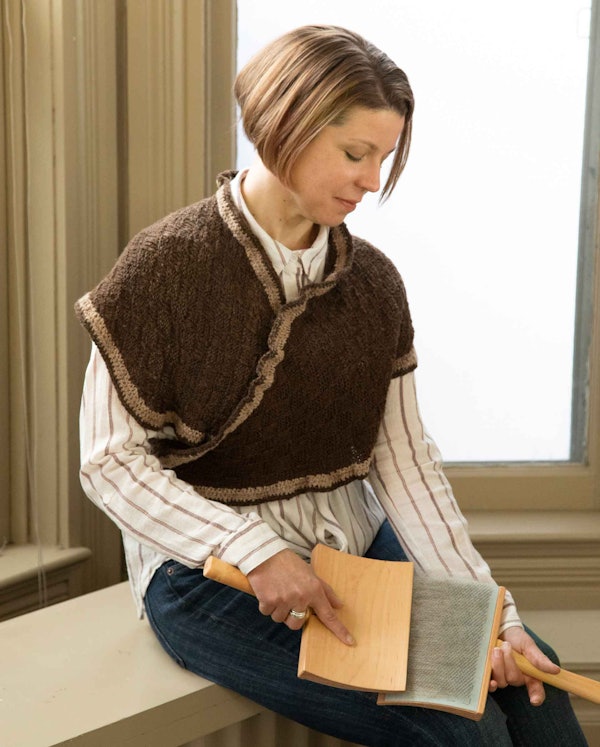
In all, you'll find instructions for forty-five projects, including Mary Allen's gloves, a hat and cape from one of the Andean figure purses, and the edging C. E. Hobert used in his knitted lace in Knitting Traditions. You'll also find a host of knitting history facts and lore like the ones above. I do hope you'll take your own Knitting Traditions journey and join me in this celebration of knitting and the knitters who came before us!
|
More from Spin Off
From the Library





Comments
No comments yet — be the first to share your thoughts.
Sign in to join the conversation — commenting is for signed-in members.