
Loading the latest stories…
Opposites attract in this unusual blend of protein and plant fibers.
Anne Merrow2 min read
When you were a kid, did you let different foods touch on your plate or did you try to keep them separate? When we talk about spinning natural fibers, we generally handle them separately. Yet spinning fiber blends expands a spinner’s horizons exponentially, even when they seem like an odd couple. Like peanut butter and bacon or salt and caramel, an odd mix of fibers can be delightful.
 Left to right: Flax stricks; photo by Matt Graves. Gray Merino pin-drafted roving; photo by Kate Larson
A combo of 60% Merino/40% flax takes the cake as one of the most unexpected fiber blends. These two natural fibers have opposite properties: Merino, a protein fiber, takes acid dyes, but the cellulosic flax doesn’t. Known for softness and warmth, Merino warms you in winter, but the cool crispness of flax says summer. Spinners worry about felting Merino with aggressive finishing, while flax only relaxes into softness when it’s roughed up.
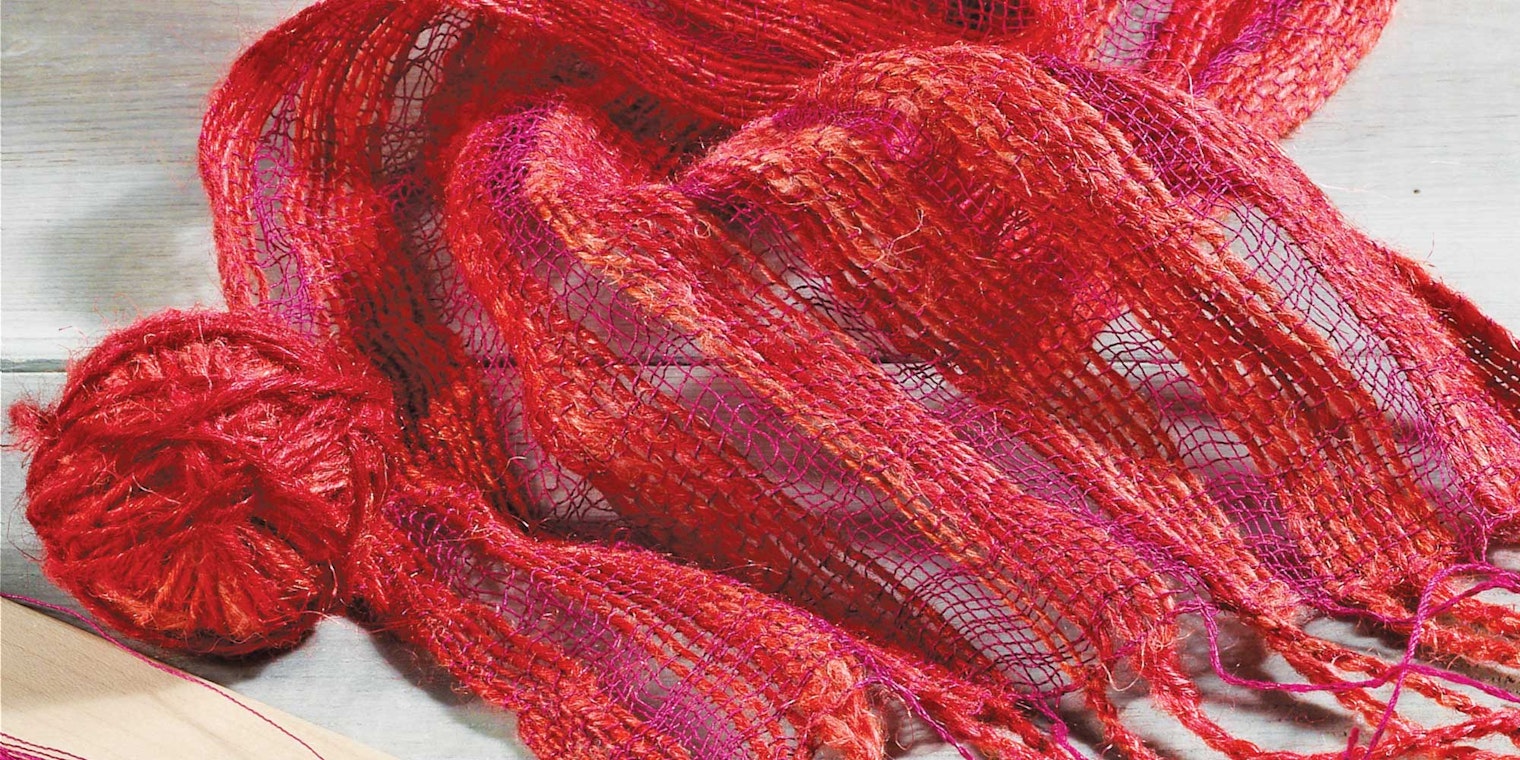
 The wool/flax blend in the Lobster Pot Scarf is perfect for summer.
Although it is neither fish, flesh, nor good red lobster, one of my favorite handspun scarves has plenty to recommend it to a spinner. (Forgive me. I couldn’t resist tweaking the Elizabethan idiom “neither fish, flesh, nor good red herring” for my own use.) The unusual wool/flax fiber blend in the Lobster Pot Scarf produces a singles yarn that has more tooth than straight Merino, and the difference in dye absorption gives it a heathered look. Warping a rigid-heddle loom straight off the spinning bobbin—no plying or setting—makes the scarf quick to start. Pairing the handspun yarn with a silk/stainless steel blend commercial yarn stretches the handspun and adds another textural dimension.
Expect the unexpected in this scarf, you rebel.
Anne Merrow is editorial director and a co-founder of Long Thread Media.
Originally published October 5, 2017; updated June 13, 2025.
More from Spin Off
From the Library






Comments
No comments yet — be the first to share your thoughts.
Sign in to join the conversation — commenting is for signed-in members.