Loading the latest stories…
There are many ways to begin a new knitting with handspun project and work through the process of designing yarn, estimating fiber needed, choosing pattern and gauge, and staying consistent. I’ll share my approach with you step-by-step in a post series.
Kate Larson2 min read
Summer spinning and knitting projects mean new cozies for fall! After I saw the new issue of knit.wear, the Moonflower Dolman immediately rocketed to the top of my queue. There are many ways to begin a new knitting with handspun project and work through the process of designing yarn, estimating fiber needed, choosing pattern and gauge, and staying consistent. I’ll share my approach with you step-by-step in a post series. Spin along with me!

I firmly believe there are no hard and fast rules about plies or twist required to spin a successful sweater. Instead, I see it as a spinner’s challenge to balance fiber, yarn design, and pattern to create a fabric that makes you happy. Moonflower Dolman—what do I see with my spinner’s eye?
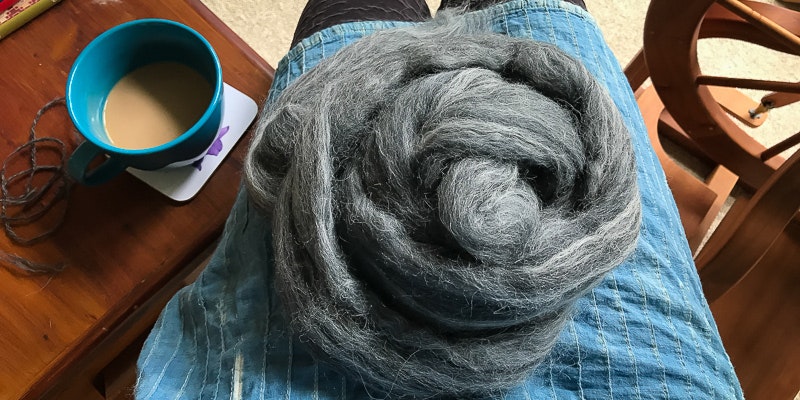
I fell in love with Ashford’s Alpaca/Merino sliver at a fiber festival last year. This blend is fuzzy and luscious, but I will need to be careful using it for this project. From experience, I know that alpaca blends need to have enough twist to prevent the soft fibers from pilling, but not so much that all the air is squeezed out, causing the yarn to lose elasticity. I’ll have to find that happy spot.

Kate’s notebook. I was having trouble deciding on color. After purchasing the pattern, I printed out a black-and-white copy of the picture to see it in gray. And how about a little pop of color on the wrists?
How much fiber should I buy? To answer this question, I need to estimate grist, or yards per pound. The pattern says I need about 1,200 yards of finished handspun for my size. I looked in my notes and found a worsted-weight 3-ply handspun merino combed top yarn that was about 1,000 yards to the pound. This yarn is similar, but the alpaca blend will be heavier. So, I plan to purchase 13/4‒2 pounds so I know I have plenty. If I was using a fiber blend I use more frequently, my estimate could be more exact.

When I spin quick samples, I usually end up with a little row of yarns on my knee. I can compare them quickly and start to narrow down my choices. Alpaca/Merino cabled yarn it is!
Next up: swatches that don’t take ages! Check back to see how I streamline my sample process to take up as little time and fiber as possible.
—Kate Larson
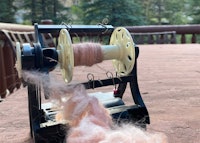
Featured Image: Jumping in with both feet on the treadles! Photos by Kate Larson
More from Spin Off
From the Library


Comments
No comments yet — be the first to share your thoughts.
Sign in to join the conversation — commenting is for signed-in members.