
Loading the latest stories…
With bated breath, we tie off our newly skeined handspun, carefully slide it off the niddy-noddy, and marvel at its beauty. After a little wash and time to dry, we consider our skein of handspun yarn completed. But is it really finished? That depends on w
Deborah Held2 min read
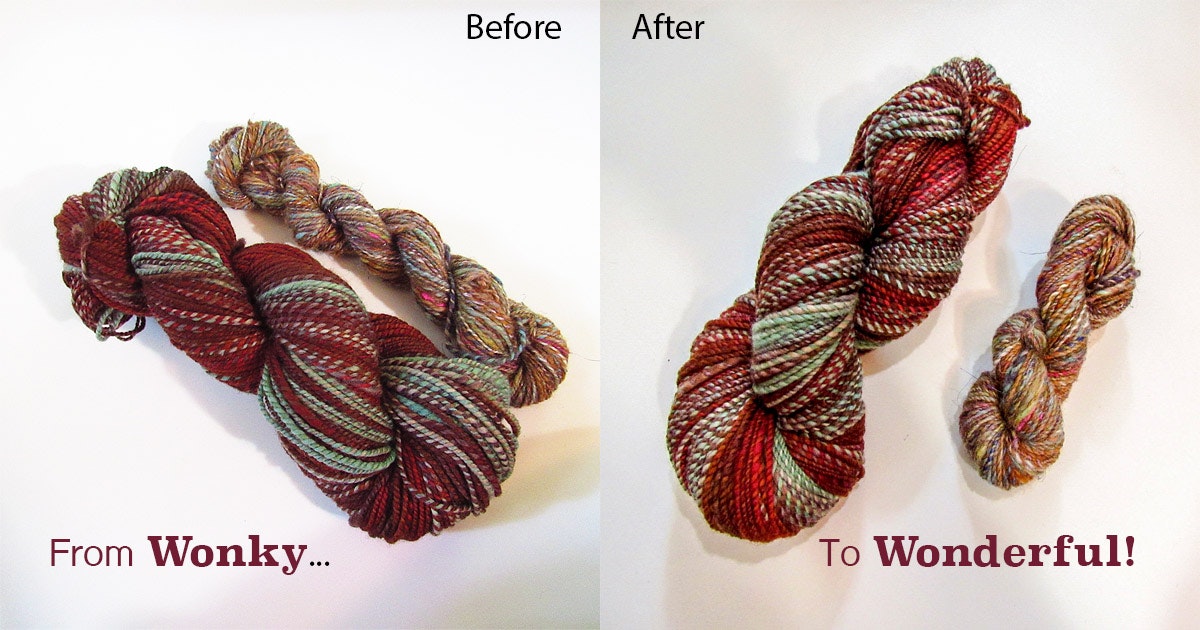
With bated breath, we tie off our newly skeined handspun, carefully slide it off the niddy-noddy, and marvel at its beauty. After a little wash and time to dry, we consider our skein of handspun yarn completed. But is it really finished? That depends on who you ask, but industry insiders will tell you that technically speaking, you should reskein your yarn before you consider it complete.
You might not have known this, or if you did, you might’ve just skipped it—I’ll admit that until recently, taking time to reskein my handspun yarn was a final step I simply chose to ignore. But then I did my own testing, and I discovered why I do need to reskein, and just how much time that actually takes.

Handspun sample before I took the time to reskein.
Wet finishing causes an organic shifting within the yarn itself; that’s why we do it. Soaking the skein allows the individual fibers to open up, relax, and resettle into their more natural crimp. When dry, handspun yarn often looks fuller and feels softer. You might also find that your hank loses a touch of twist and some length. After all of these changes, you might want to reskein.
Along these same lines, the yarn’s relaxing and resettling will likely cause your once carefully tensioned loops (wound onto your niddy-noddy or skein winder) to look less perfect once dry. Does it really matter? That’s up to you. If you’re selling handspun or entering a fiber-related competition, then yup, it sure does. Both customers and judges deserve your best efforts at skeining—and so do you. After all the energy and time you’ve put into your handspun, why not take that last step and avoid points off in scoring? In this case, taking time to reskein could mean all the difference in taking home a ribbon and prize money.
Some shorter fibers, as well as purposely fulled skeins of yarn, have a tendency toward self-stickiness upon drying. If you’ve spun a fine, fulled yarn, for example, and don’t intend to use it right away, it might be easier to reskein now rather than after it has languished in the bottom of a basket.

Handspun sample after reskeining—wonderful!
So, how long does all this rewinding and reskeining take? Depending on my level of focus and the yardage of the yarn, it takes me about twenty minutes.
First I wind a cake using a ball winder and swift, and then I reskein that cake onto my niddy-noddy. Depending on your yardage and other factors, your results will vary, but probably not by more than a few moments. I recommend trying it out for yourself, at least a couple of times. There are certainly rewards to be gained from the investment.
Will I reskein all of my handspun going forward? Probably not all of it, though the fact that it makes for a far prettier finished photo is indeed compelling. (We all have our vices.)
Debbie
Featured Image: Go from this, to this! Photos by Deborah Held.
More from Spin Off
From the Library





Comments
No comments yet — be the first to share your thoughts.
Sign in to join the conversation — commenting is for signed-in members.