
Loading the latest stories…
SUBTOC
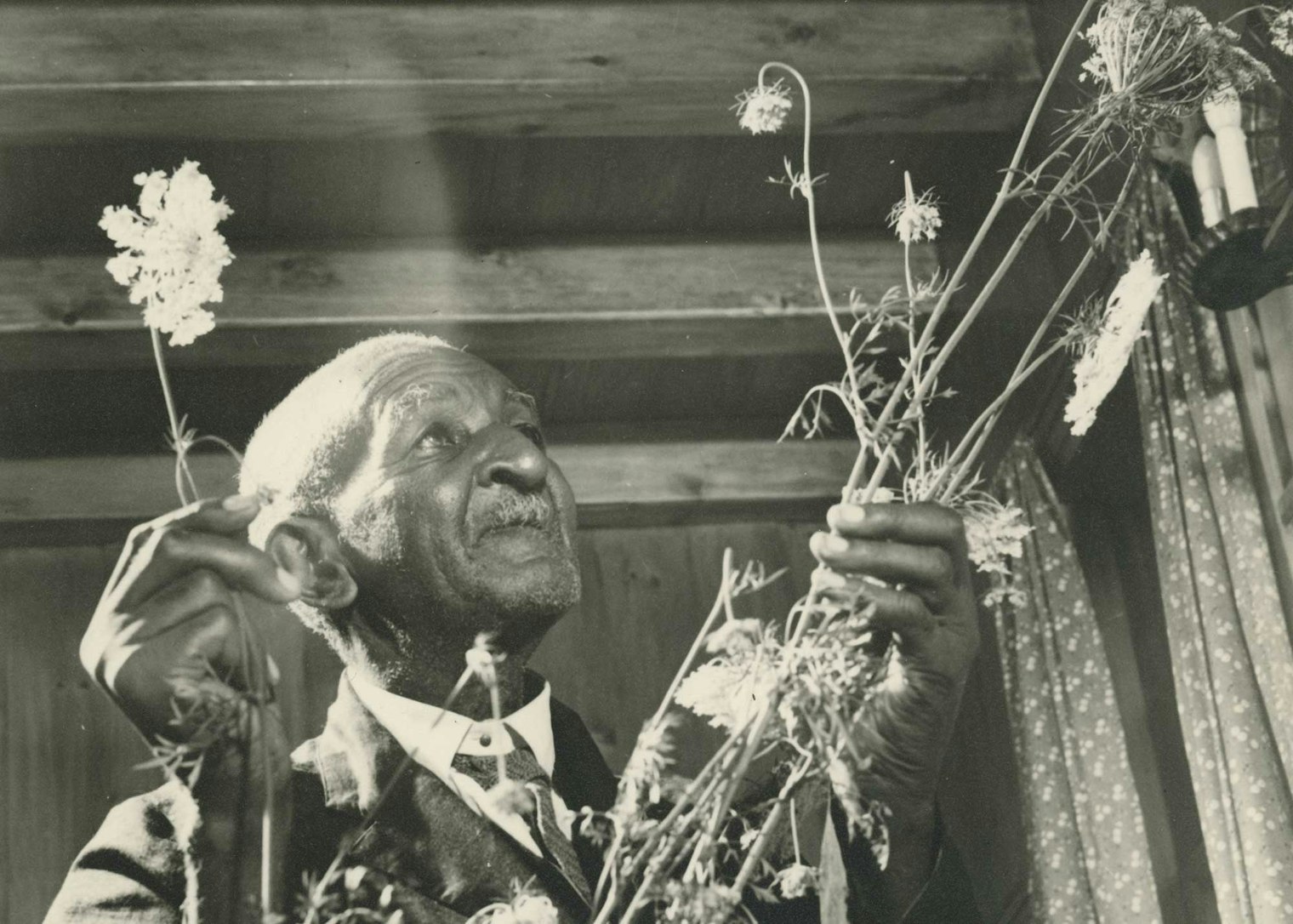
Known for his work in agronomy, George Washington Carver had a lifelong passion for art, textiles, and natural dyes.
Nancy Nehring8 min read
This is the third and final article in a series on the life and textile work of George Washington Carver by Nancy Nehring. To learn more, visit the first installment, “The Scientist Who Crocheted: George Washington Carver’s Unexpected Legacy.”
—Spin Off editors
George Washington Carver (about 1864–1943), the famous African American agronomist from Tuskegee Institute (now Tuskegee University), spent his career working to improve the lives of poor Southern farmers. But as a young man, Carver envisioned himself becoming a professional fine art painter and enrolled in college as an art major in 1890. Although he went on to pursue a life in the sciences, Carver’s artistic talents rippled throughout his lifetime of work.
One of his many avenues of research was in creating new and improved dyes from locally available plant materials. Carver had experience with natural dyes early in life and sought to develop methods that would allow poor farm families to increase the value of farm crafts. This facet of his work was part of a much larger rural outreach program at Tuskegee. Having begun his life on a successful Missouri farm, Carver understood the importance of integrating creative household economy, such as dyeing, crochet, and embroidery, with useful new crops and sustainable agricultural methods.
 George Washington Carver wearing one of his crocheted cravats. Carver dyed the yarn and crocheted the tie himself. He used the ties to test the colorfastness of his dyes. July 29, 1942, Dearborn, Michigan. Image from the Collections of The Henry Ford
George Washington Carver was born near the end of the Civil War to Mary, an enslaved woman, on a farm near Diamond Grove, Missouri. (See note 1) The 240-acre farm settled by Moses and Susan Carver is now the site of the George Washington Carver National Monument. George only lived on the Carver farm until he was eleven years old, but it was there that his lifelong interests in science, nature, art, and craft were born. As he stated in a 1931 letter to Isabelle Coleman, “If I had leisure time from roaming the woods and fields, I put it in knitting, crocheting, and other forms of fancy work.” (See note 2)
More from Spin Off




Comments
No comments yet — be the first to share your thoughts.
Sign in to join the conversation — commenting is for signed-in members.