
Loading the latest stories…
Have you ever wondered “What’s that sound and where is it coming from?” Learn what parts of a spinning wheel need lubrication for sound effect–free–spinning.
Heavenly Bresser4 min read
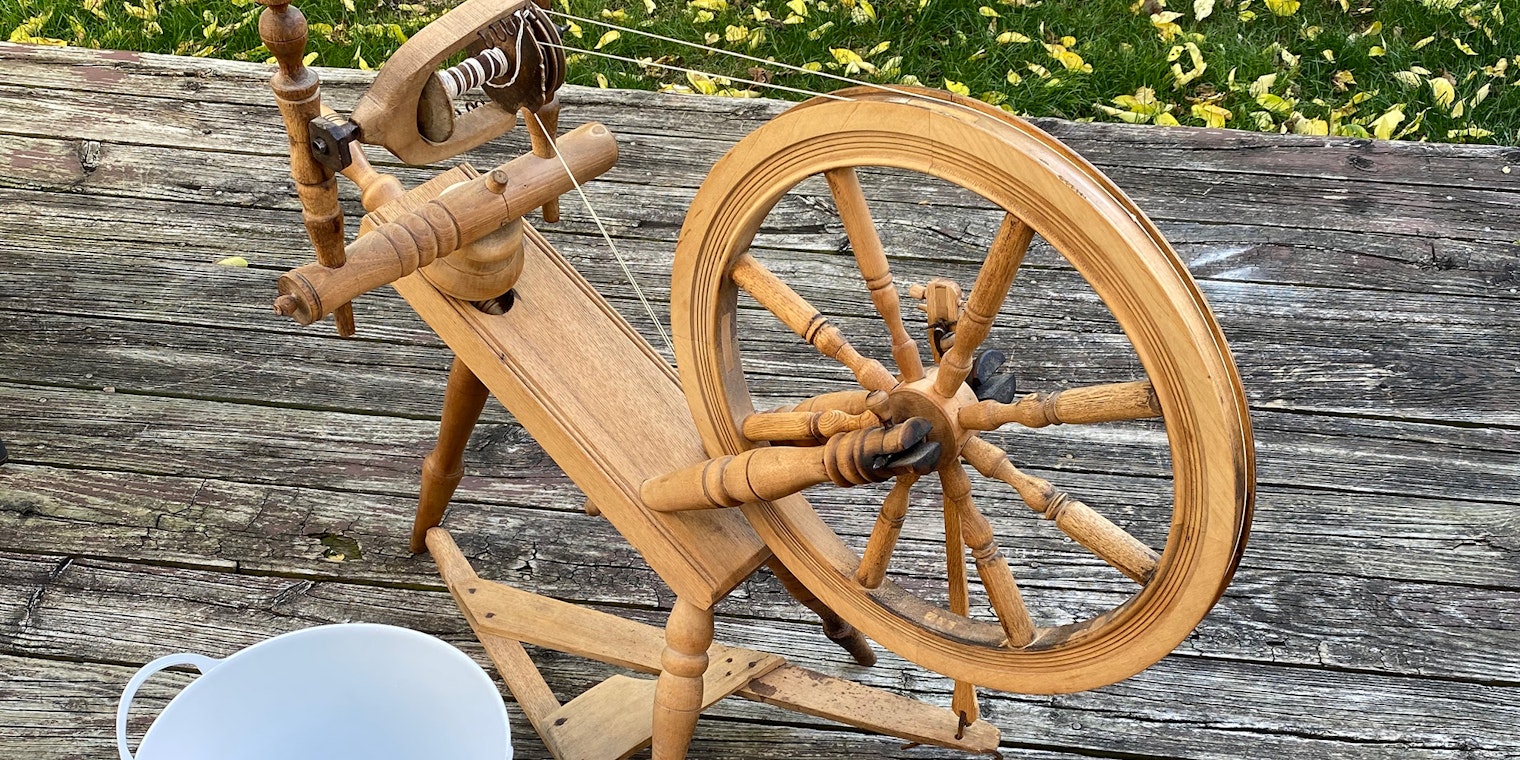
Our beloved spinning wheels are great communicators. They readily inform us when something has gone awry. The occasional squeak or unexpected screech is a spinning wheel’s cry for a little bit of love and care—and lubricant! When applied to very specific moving parts, a fresh application of lubricant, such as spinning-wheel oil, will more than likely settle the shrieks of a cranky spinning wheel.
The specifics of spinning-wheel lubrication are often a topic of hot debate, but most spinners agree that most spinning wheels work more efficiently with less stress on moving parts when lubricated. The majority of manufacturers will indicate how to lubricate your wheel, so start there first. However, many spinners, including myself, own antique wheels or those whose makers are not available for guidance. Here are a few things I’ve learned along the way.
Don’t wait until your spinning wheel makes unpleasant sounds to lubricate its parts. Oiling your wheel should be part of a regular maintenance routine. The spinning wheel should be free of dust, dirt, old grease, fiber, and debris before you apply a fresh coat of oil or other lubricant to the various parts mentioned below.
Spinning wheels vary in their needs and frequency of maintenance. My personal preference is to lubricate my spinning wheel before a spinning session as well as during a session, going no longer than two hours without a fresh application to specific parts.
 Heavenly keeps a variety of lubricants on hand for her wheel’s different parts.
Choosing oil, wax, grease, or petroleum jelly is a matter of preference and depends on the location you need to lubricate. There are oils made especially for spinning wheels by wheel manufacturers. Sewing-machine oil and 30-weight motor oil are also good options. Your choice of lubricant will also impact how often you need to apply it. For example, a lightweight oil, such as sewing-machine oil, might require more frequent use. Note: Always follow the directions in the manual (if there is one) provided by your spinning wheel’s maker.
Where exactly should you oil a spinning wheel? Sometimes this can be confusing, especially on vintage wheels that lack a manual. A few key parts of a wheel benefit from an application of lubricant. Here are the most common locations:
 Oil the metal pins where the treadle and spinning-wheel leg meet.
 Add a drop or two of oil to the orifice.
 Add oil where the shaft connects to the wheel.
 Add oil to the flyer’s shaft every time you change the bobbin.
 Lubricate the metal parts of the drive wheel if you do not have a sealed bearing.
Just a few minutes of care will keep your beloved spinning wheel in tip-top shape and spinning beautifully.
Happy spinning!
Heavenly Bresser is the owner of Heavenly Knitchet. She is an award-winning handspinner and teacher at major fiber events all over the United States. Aside from spinning and teaching, she can be found dyeing fibers and making jewelry. Her goal is to inspire, encourage, and uplift other fiber artists. Visit her online at heavenlyknitchet.com.
Originally published October 19, 2020; updated December 28, 2022.
More from Spin Off


Comments
No comments yet — be the first to share your thoughts.
Sign in to join the conversation — commenting is for signed-in members.