
Loading the latest stories…
Sampling a new-to-you spinning fiber provides valuable information about what your finished handspun yarn will look like. Devin shares why this extra step is worth the effort.
Devin Helmen3 min read
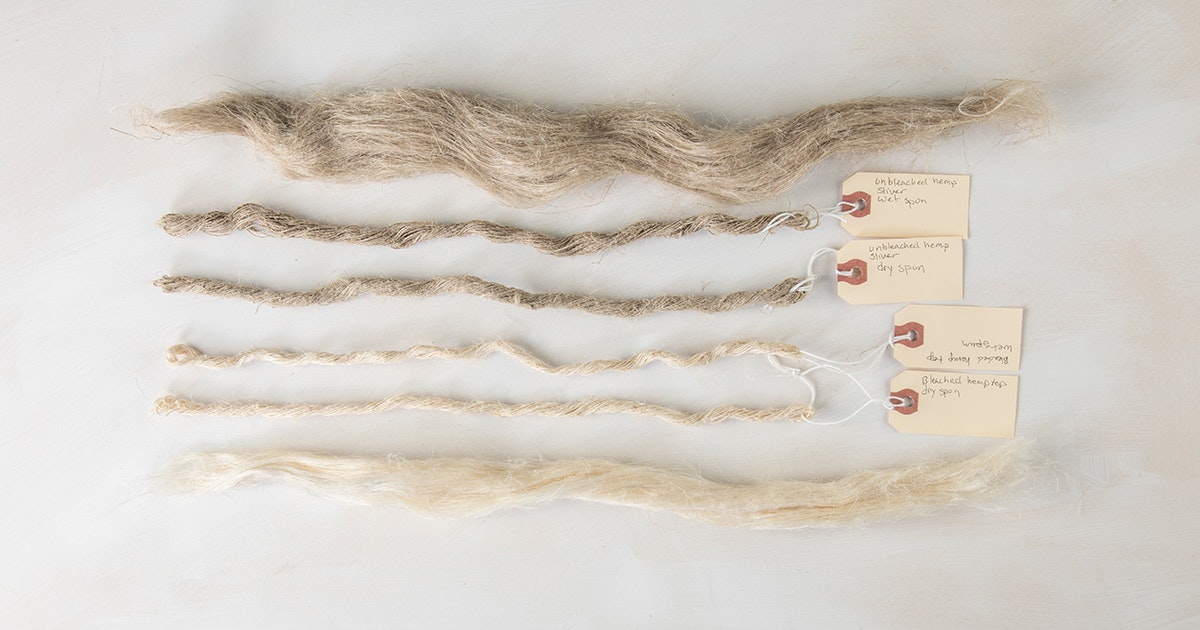
I do not always sample, but when I am looking for more information about a fiber and making decisions about how I want to spin it, sampling is essential. Whether I am starting with a new-to-me fiber, spinning an unfamiliar preparation, opening a fresh fleece, or using fiber from a new supplier, sampling helps me to familiarize myself with the fiber and determine the best way to approach it. Sampling can be as simple as trying a couple of drafting methods on already prepared fiber. Or it can be more involved, such as trying different ways of preparing a fleece for spinning.
When I get a new-to-me fiber preparation, I will sacrifice a small amount of fiber to see how it spins up using different drafting methods to see what the resulting yarn is like. I spin only a yard or two of each drafting method and make a plyback sample. I usually begin with a short-forward, or backward, draw. Next, I give long draw a try, and sometimes, I’ll spin the fiber from the fold.
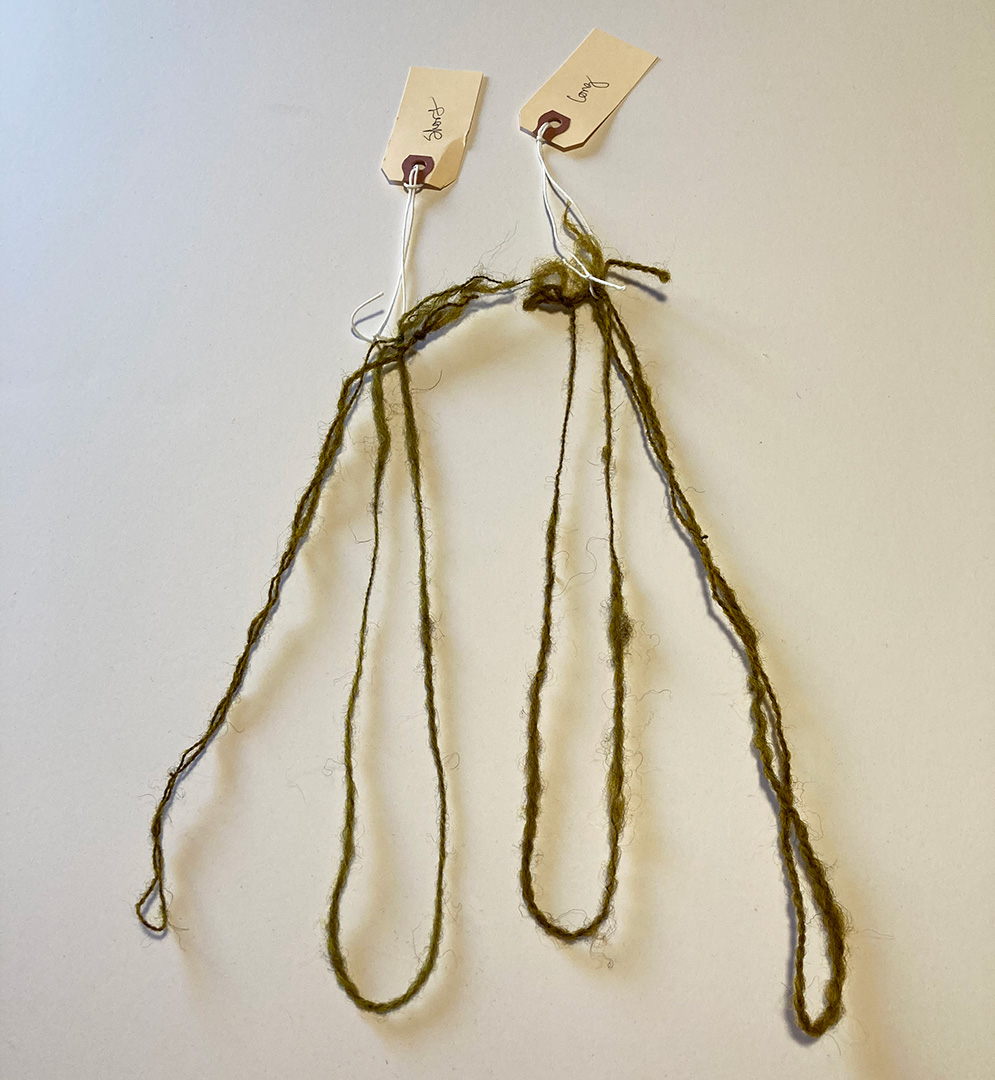
When sampling commercially prepared fiber, try several drafting methods and make plyback samples to evaluate the finished yarn. Labeling your samples helps keep things organized. Photo by Devin Helmen
I love spinning wool that I have prepared myself. Each fleece spins differently based on the breed, environment, health of the sheep, and skill of the shearer. Once I have washed the fleece, I will sample several different ways of preparing the fiber:
Not every fleece lends itself to being prepared using every method. For instance, if I have a long wool fleece with a staple length of more than 5 inches, I might choose to only prepare it by flicking and combing since the staple length lends itself best to those preparations. Once the fiber is prepared, I spin them using the drafting methods described above.
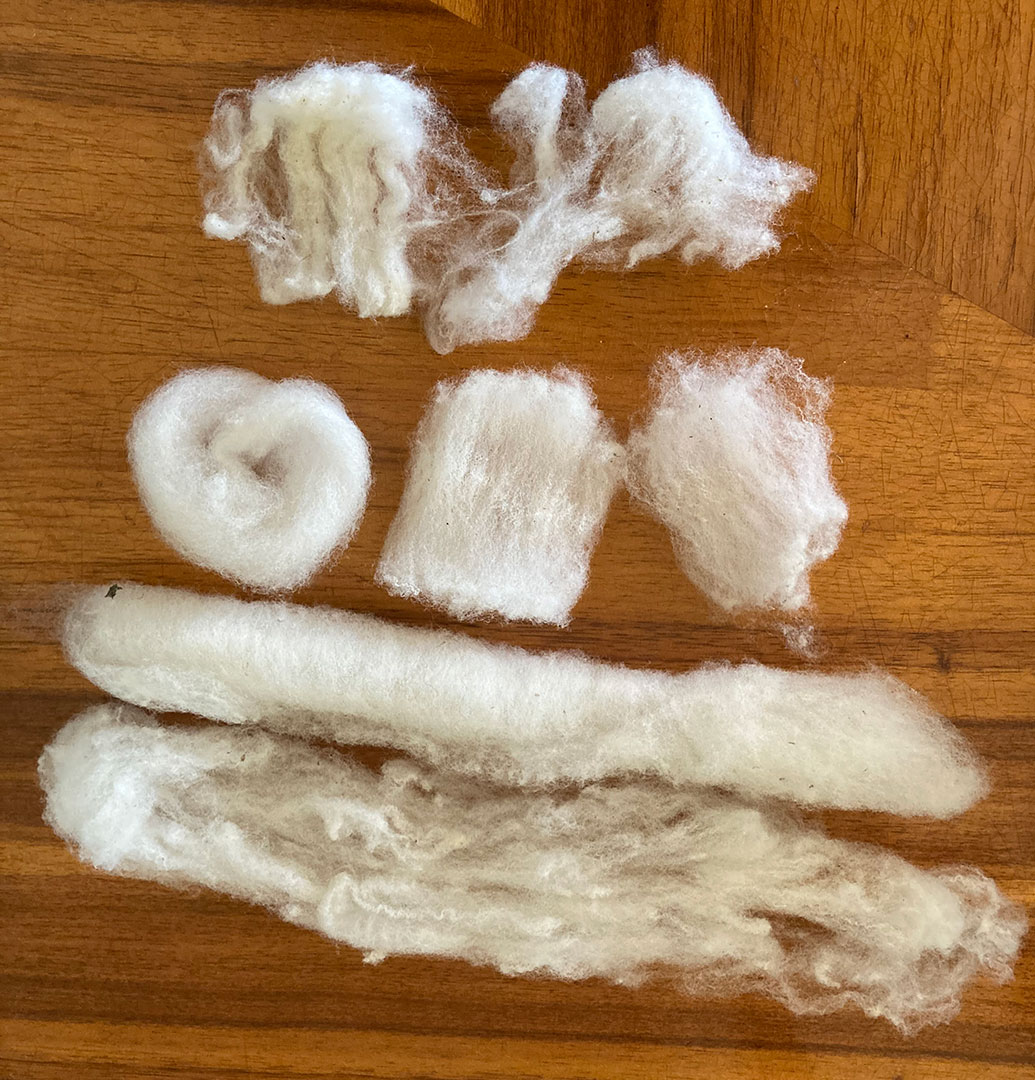
When sampling a new-to-you fleece, try several methods of fiber preparation. Photo by Devin Helmen
Finally, wet finishing the yarn will provide the most accurate information about the finished yarn. The twist will even out, and the yarn will bloom to its finished grist. A tip that I learned while taking a class from Kate Larson is to use the steam from a travel steamer to finish small samples of yarn. You’ll be able to see what the finished yarn looks like without having to fully wash the yarn and wait for it to dry.
I don’t have a travel steamer, but I do have an electric kettle for heating water and have adapted Kate’s method using a tool I already have on hand. To steam my sample, I move the yarn back and forth in the steam coming from the spout. I do this very carefully to avoid burning myself. The yarn changes right in front of my eyes, and I am able to fully evaluate the finished yarn quickly.
Once I have the information provided by sampling, I can then approach the fiber knowing what techniques produce the finished yarns I want—no guesswork. Sampling is worth the effort.
Devin Helmen has been immersed in fiber since learning to spin at age 8. They spin, knit, and weave in beautiful Minnesota. Devin enjoys writing and teaching about fiber arts and has a passion for spindles and everyday textiles. They blog, intermittently, at afewgreenfigs.blogspot.com.
More from Spin Off
 Tulle & Tools for Blending BoardsTake your blending board skills to the next level with a few easy-to-find accessories.Amy Tyler · October 13, 2025
 The Ins & Outs of Diz DesignDoes it matter which way your diz faces? Do you need more than one? Discover diz best practices with real-life examples to help you improve your fiber-prep experience.
From the Library







Comments
No comments yet — be the first to share your thoughts.
Sign in to join the conversation — commenting is for signed-in members.