
Loading the latest stories…
In the Fall 2020 issue of Spin Off, passionate wool comber Kim McKenna makes a case for often omitted steps when combing, such as oiling, planking, and two passes through a diz.
Kate Larson2 min read
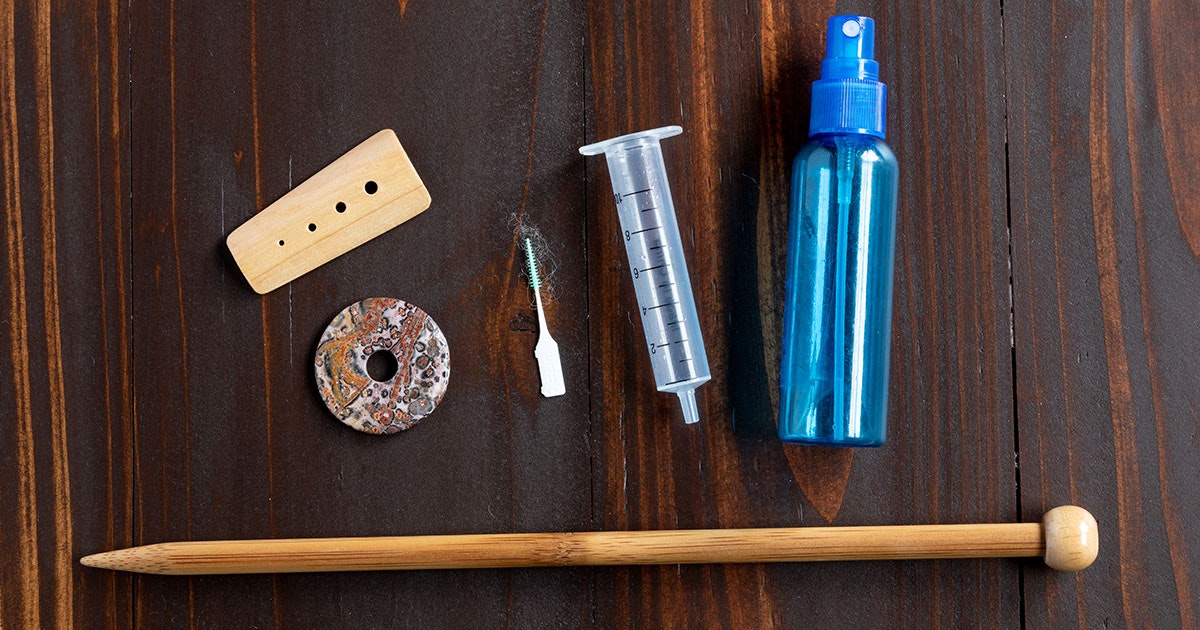
Kim McKenna’s fabulous article, “Wool Combing & the Importance of Planking” in Spin Off Fall 2020, includes several steps that many modern wool combers skip, including two separate passes through a diz. Kim takes a thoughtful approach to wool combing, and the extra effort creates more attenuation, alignment, and consistency than the short-but-sweet approach.
One of the things I really appreciated about the article is Kim’s clear description of her dizzing style and preferences. The first dizzing, described below, uses a lightweight diz with a larger orifice and results in a larger, shorter sliver. The second dizzing is through a lightweight diz with a smaller orifice to create a finer, longer finished sliver. (Both dizzes pictured above.)
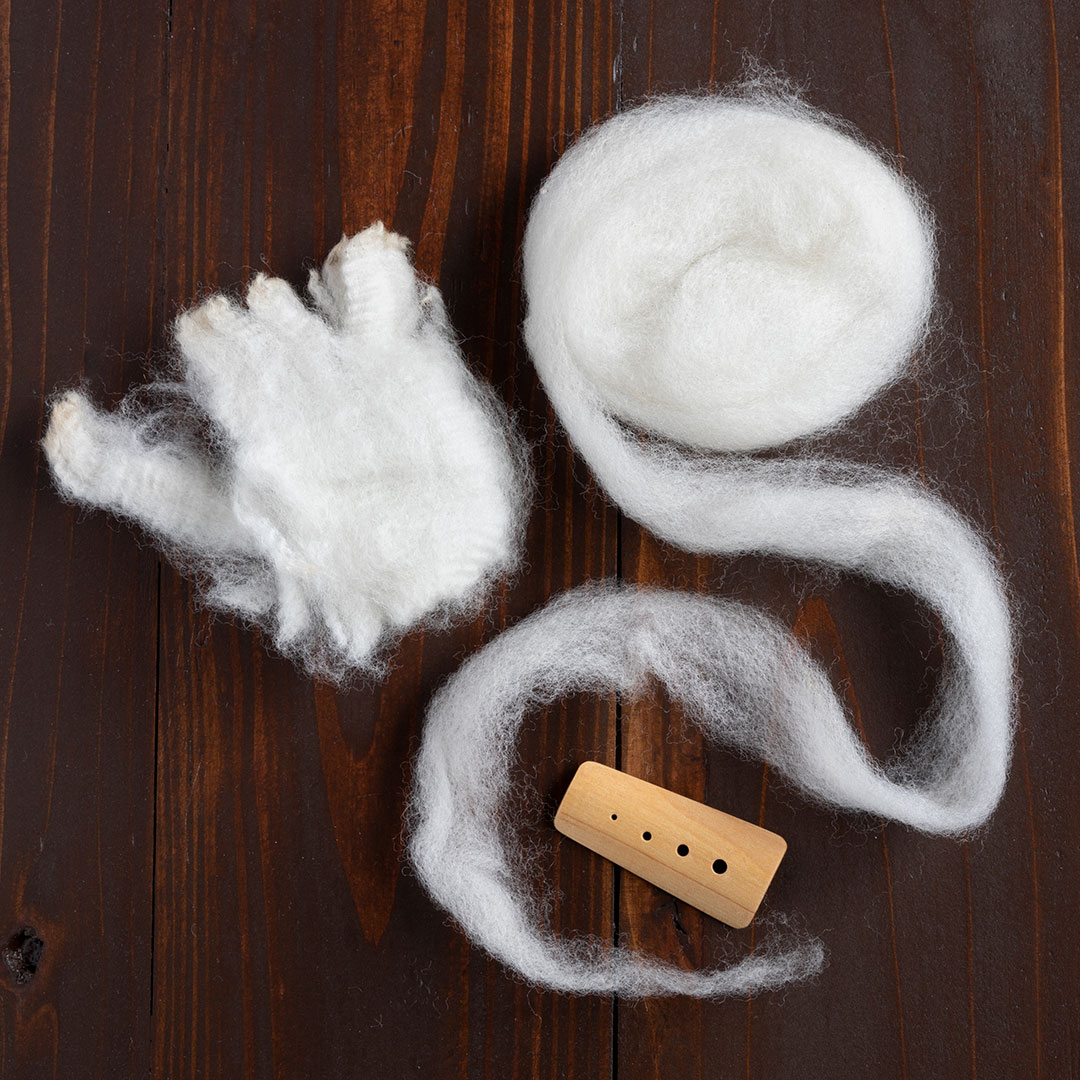
A wooden diz with a traditional curved shape and three small orifice options.
“I prefer to use a diz with a large orifice that is light enough to sit on the sliver without being held. For this technique, one hand pinches the sliver from side to side and the other from top and bottom to create a nice even sliver with few thin spots.
“First, give the fiber a few light strokes with your hands to gently coax the fiber into a triangular shape. With the curved face of the diz facing the combs, draw the tip of the fiber through the orifice. With your right hand only, pinch the fiber from top and bottom, draw the fiber toward you about half a staple length, then using the left hand, slide the diz toward the comb along the drawn out section of fiber, pinch the fiber with the left hand side to side, draw the fiber toward you, slide the diz toward the comb with the right hand. Repeat to create a continuous sliver. (Reverse right and left hand if you prefer.)”

Well-scoured locks make combing easier.
I meet many spinners who struggle with the dizzing action, which can be difficult to capture in step-by-step instructions and illustrations. I created a quick video from my own studio to show you my take on Kim’s dizzing method.
To read more wool-combing content—oiling, planking, winding slivers onto distaffs, and more—check out the Fall issue!
—Kate
More from Spin Off
 Getting Started with Wool CombsJoin us as we start a new course with expert instructor Heavenly Bresser, and discover the secrets to successful wool combing.Pamela K. Schultz · July 8, 2026
 Matching Your Combs to Your FiberIf your goal is perfectly aligned fibers for worsted spinning, combs have no equal. But how you select your combs and fiber matters, too.
From the Library



Comments
No comments yet — be the first to share your thoughts.
Sign in to join the conversation — commenting is for signed-in members.