
Loading the latest stories…
California cotton breeder Sally Fox is most widely known for organic cottons that grow in a luscious range of tans, greens, and warm browns. Sally also keeps a growing flock of natural color Merinos roaming her Capay Valley fields—such fleecy goodness!
Kate Larson1 min read
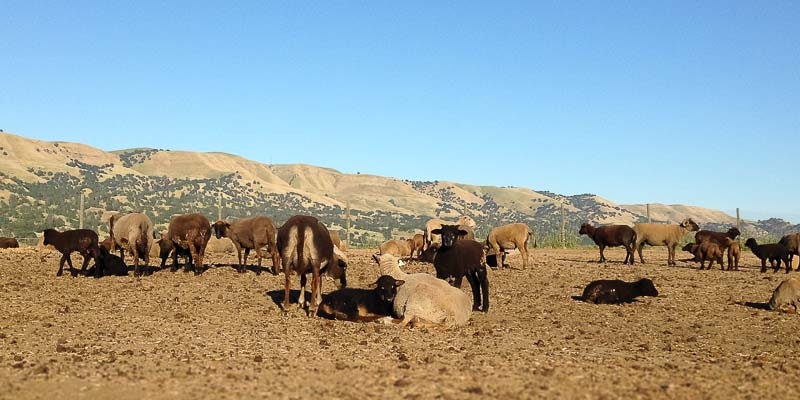
California cotton breeder Sally Fox is most widely known for organic cottons that grow in a luscious range of tans, greens, and warm browns. Sally also keeps a growing flock of natural color Merinos roaming her Capay Valley fields—such fleecy goodness!

Cotton sliver (Buffalo variety) and grey Merino pin-drafted roving that Kate can’t wait to spin.
Like many members of the spinning community, I’ve followed Sally Fox’s work over the years, enjoyed spinning her gorgeous cotton slivers, and lusted after her small-batch fabrics. Her work in cotton genetics has led to many accolades, including being named an American Inventor by the Smithsonian Institution. In researching Sally’s cotton journey for a 2014 Spin Off article, “Enduring Color: Sally Fox, natural-color cotton, and the politics of diversity,” I learned about the fine-fleeced flock that roams Sally’s farm.
The farm is uses organic practices and crop rotations to build and maintain soil. Fields might have cotton one year and wheat or pasture the next. When in pasture, the flock grazes forage through the year, transforming it into two important products: fine, natural color wool and the precious manure that fertilizes the fields, feeding soil microbes and increasing the soil’s ability to hold water and nutrients.
Sheep can help us maintain or revitalize agricultural spaces when managed well. And we receive the gift of wool in return. You can learn more about Sally’s lovely finewool flock in my book, The Practical Spinner’s Guide: Wool.
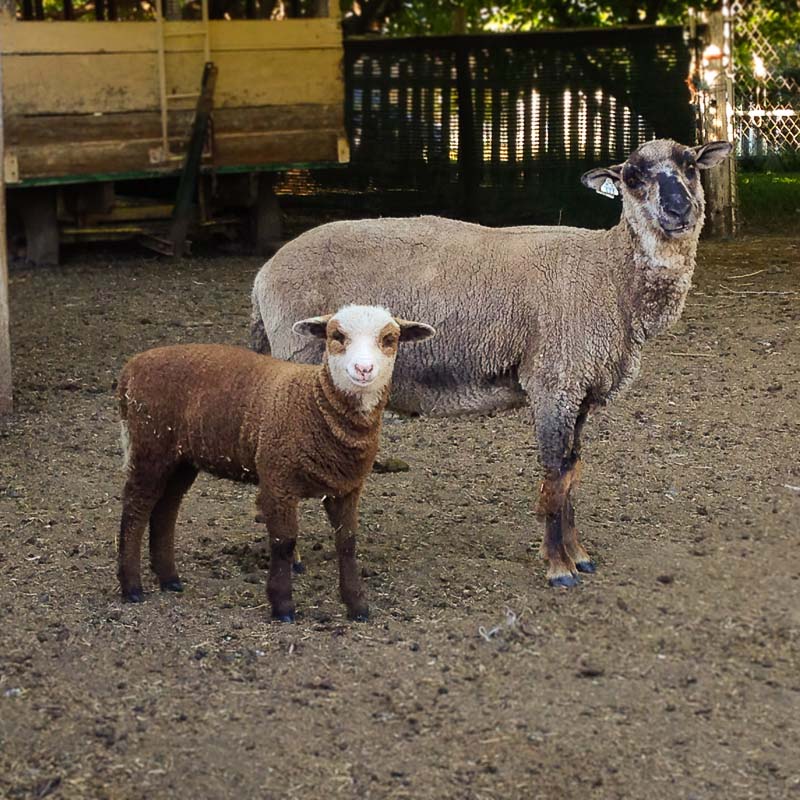
Kate visits the Viriditas Farm.
—Kate
Featured Image: The natural ovine colors mirrored in the springtime hills of California’s Capay Valley, northwest of Sacramento. Photos by Kate Larson
More from Spin Off
 A Short Spin on Natural DyeingSurprise and delight are often a given in natural dye experiments. But this author also found solace and healing.Linda Perry · April 24, 2026
 Meet the Jacob: Robin Lynde in Black and White (and Lilac)Meet the Jacob sheep, a rare breed known for its multiple horns and soft, lofty, spotted fleece that’s favored by handspinners.Robin Lynde · April 8, 2026
 Spin Off Submissions Spring 2027: Back to BasicsJoin us as we celebrate 50 years of Spin Off in our annual color issue.Pamela K. Schultz · April 1, 2026
 3 Reasons to Spin and Weave Your Own Bands (and an eBook to Help You Do It!)Find out why you should try spinning for bandweaving—plus get a handpicked collection of articles and projects to inspire your next band.Kate Larson · January 13, 2026
 Spinning for Bandweaving: 3 Ways to Weave Gorgeous RibbonsGet tips for spinning for woven bands, and check out our newest course! Kate Larson · December 31, 2025
 7 Tips for Knitting with Energized YarnIs there such a thing as too much energy in your singles? Discover the potential in energized singles, and find tips for working with them.Amy Tyler · December 26, 2025
 What is Back-Bar Crochet?The back bar has always been there, just waiting to be worked. Learn a new way to create a familiar stitch! Katrina King · November 19, 2025
 Are You Stuck on Superwash?Learn more about the superwashing process, and explore handspinner's options like preshrinking your knits. Cynthia Craft · October 13, 2025
 Ready for Texture? Try Garneting In This New Mini-CourseLearn how to spin luscious handspun textures using recycled bits of yarn, silk, and more! Spin Off Editorial Staff · July 3, 2025
 The Tour de Fleece Is Coming! Are You Ready?Even after many years, the goal of the Tour de Fleece remains the same: Challenge yourself. Spin. Have fun.Star Athena · June 18, 2025
From the Library
Comments
No comments yet — be the first to share your thoughts.
Sign in to join the conversation — commenting is for signed-in members.