Loading the latest stories…
Curious about spinning bast fibers, such as flax and hemp, but don’t know where to begin? Devin offers tips for getting started.
Devin Helmen3 min read
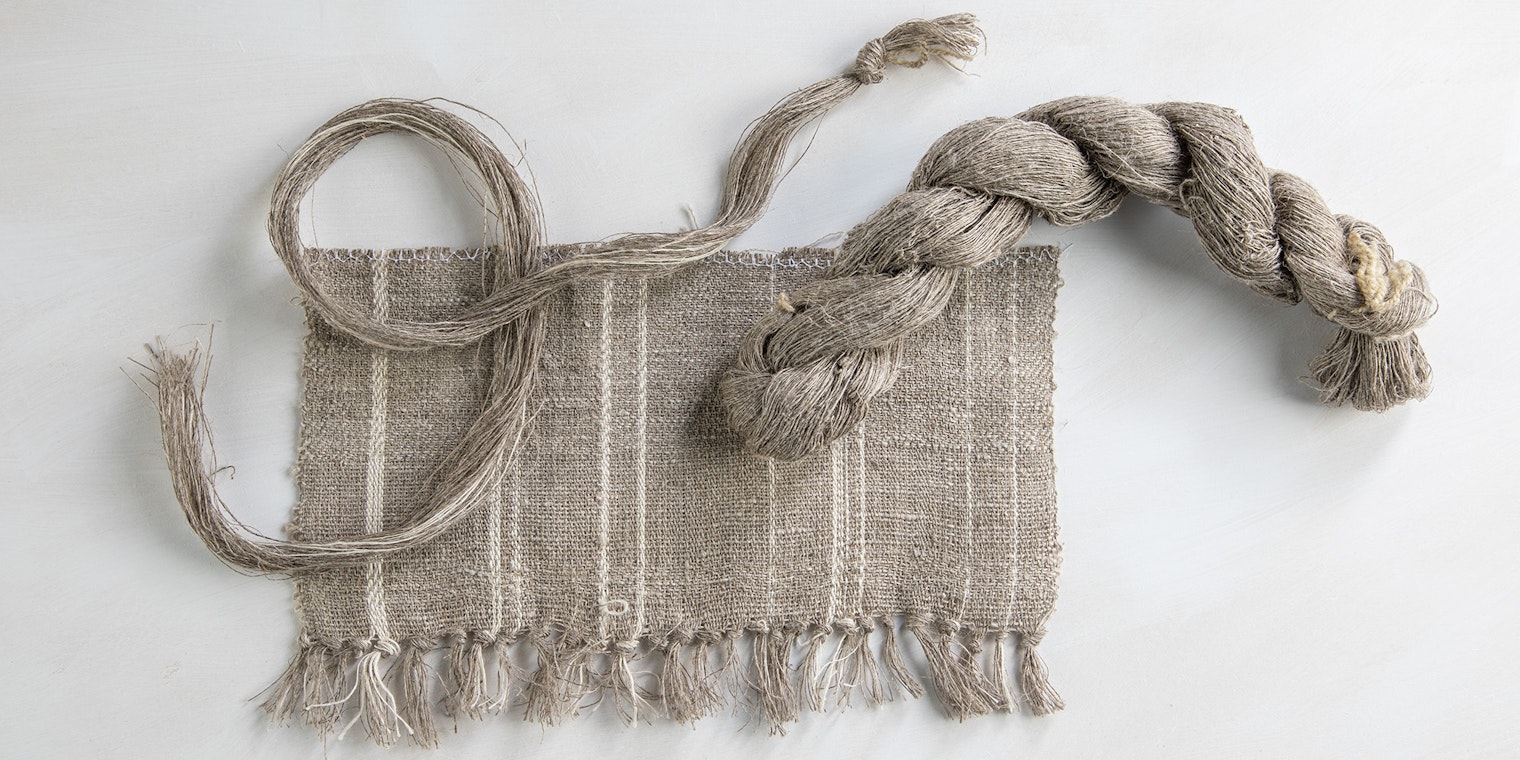
Bast fibers are becoming more and more available to handspinners, and I, for one, could not be happier about it. Bast fibers wear well, are resistant to mildew, and have been used to create fabrics fine and coarse since the depths of prehistory. Yarns spun from these plant fibers can be woven, knitted, or used in other forms of cloth construction.
For centuries, people in parts of the world where bast fibers were grown and used for textiles wore a base layer of bast-fiber clothing under outer garments because the bast-fiber layer could easily be laundered and was comfortable against the skin. Coarser bast fibers were used for rope, canvas, coarse household textiles, and more.
I use my coarser handspun hemp yarns as garden twine or to knit spa cloths. The rough texture of the spa cloths exfoliates the skin nicely, and their resistance to mildew and speed of drying make them ideal for humid shower environments.

Bast fibers left to right: unbleached hemp sliver, bleached hemp top, and unbleached flax top. Photo by Devin Helmen
Bast refers to the phloem, or tissue that grows along the stems or trunks of plants. Bast can be extracted from the inner barks of some trees, vines, and plants, such as hemp, nettle, and flax. The fibers are traditionally separated from the other plant material through a process called retting. Flax and hemp are the most commonly available bast fibers prepared for spinning. Note: Although bast fibers are cellulosic, not all cellulose fibers are bast. Cotton, bamboo, and human-extruded plant fibers, such as lyocell, are not bast fibers.
The flax plant (Linum usitatissimum) provides the fiber that is spun into linen. The earliest evidence of its use is 30,000 years ago in its wild form, and domesticated flax is seen 9,000 years ago.
For handspinners, flax is available as line flax, tow, and top. Line flax preparation contains the longest fibers, which have been aligned and produce the finest linen yarns. Line flax fibers can be 2 feet or more long and are stored in a twisted mass called a strick. Tow are the shorter, coarser fibers left over from producing the line flax, and they produce a rougher yarn. Tow often comes in a disorganized mass and can be carded into rolags. Top can be fine or coarse, and this prep is a good introduction to spinning flax because it is aligned like line flax but is shorter like the tow, which makes it easier to handle.
Fiber from the hemp plant (Cannabis sativa) can be used for textiles and other goods. This is not the same plant as Cannabis indica, which is known for its medicinal and psychoactive substances. Using hemp in textiles goes back at least 10,000 years, and it has been made into canvas, rope, household textiles, paper, and cloth, sometimes interchangeably with linen.
Hemp is available to the modern-day spinner as sliver or top. In my experience, hemp sliver is coarser with shorter misaligned fibers and spins into a rougher yarn, and hemp top produces a finer, smoother yarn. Because of the variable fiber lengths in sliver, I guide spinners who are new to spinning hemp to start with a top preparation, which is easier to spin because it usually has more aligned and consistent fibers.

Yarns from top to bottom: unbleached hemp singles, bleached hemp two ply, and flax singles. Photo by Devin Helmen
Learn more about hemp in Devin’s article “Spinning and Weaving with Hemp,“ available in Spin Off Summer 2020.
Also, remember that if you are an active subscriber to Spin Off magazine, you have unlimited access to previous issues, including Summer 2020. See our help center for the step-by-step process on how to access them.
Originally published October 26, 2020; updated January 7, 2026.
More from Spin Off


Comments
No comments yet — be the first to share your thoughts.
Sign in to join the conversation — commenting is for signed-in members.